
Daniel Handler (Lemony Snicket) — author of A Series of Unfortunate Events
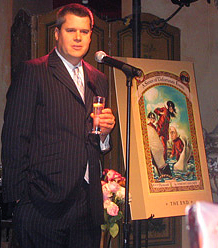
Daniel Handler, known by his pen name Lemony Snicket, is an American writer and narrator best known for the thirteen‑book series A Series of Unfortunate Events and for work for adults and younger readers.
Overview
Daniel Handler (born February 28, 1970) is an American writer and musician best known for creating the fictional narrator and pen name Lemony Snicket. Under that persona he authored the thirteen‑volume saga A Series of Unfortunate Events, a darkly comic set of children's books that mixes gothic atmosphere, wordplay, and metafictional asides. The Lemony Snicket name functions as both a narrator and a fictional author figure with his own backstory, and Handler has used that conceit to produce supplementary texts and public readings that extend the series' fictional universe.
Image gallery
3 Images

Early life and education
Handler was born and raised in San Francisco. As a child he sang in the San Francisco Boys Chorus and later attended Lowell High School. He matriculated at Wesleyan University, graduating in 1992. Those formative experiences in a culturally active city and in musical training are frequently cited as influences on his rhythmic prose and theatrical presentation.
Writings and style
Handler writes both for children and adults. His work under the Lemony Snicket byline adopts a distinct narrative voice that blends dry humor, melancholy, and elaborate vocabulary used for ironic effect. The Snicket books employ metafictional techniques: direct addresses to the reader, parenthetical clarifications, and a narrator who comments on the act of storytelling. Published books under his own name include adult novels and other works for younger readers; these vary in tone but commonly display Handler’s interest in language, irony, and moral ambiguity.
Major works and adaptations
The thirteen books of A Series of Unfortunate Events remain Handler’s best‑known project. The narrative follows the Baudelaire orphans through a succession of misfortunes while a conspiratorial backstory unfolds around the narrator’s investigations. Beyond the central series, Handler has produced additional Snicket‑branded volumes and a later prequel/detective sequence for younger readers that expands the fictional continuity.
The series reached broader audiences through screen adaptations, including a major motion picture in the 2000s and a later television adaptation on a streaming service. Handler participated in aspects of adapting his work for performance and has taken part in readings, stage presentations, and multimedia events that highlight the performative quality of his narration.
Personal life and collaborations
Handler is married to illustrator and author Lisa Brown. The couple have collaborated informally and have a child, Otto, born in October 2003. Reader speculation has sometimes linked figures in the Snicket frame—such as a recurring dedication to a Beatrice—with people in Handler’s life, although such identifications are treated cautiously and often remain part of the fictional apparatus rather than straightforward biography.
Reception and legacy
Handler’s work provoked discussion about the place of dark themes and complex language in children’s literature. Critics and educators have debated whether exposing middle‑grade readers to bleak events and ironic commentary is appropriate; others have argued that his books encourage sophisticated reading habits and moral reflection. The separation between Daniel Handler (the author) and Lemony Snicket (the narrating persona) is central to critical readings of the work and has become a notable example of authorial play and metafiction in contemporary juvenile fiction.
Further reading and resources
- For texts and interviews attributed to the fictional narrator see published Snicket volumes and official collections that expand the series universe.
- Biographical information about Handler’s life and career can be found in published interviews, literary profiles, and library catalogues that treat his output for both juvenile and adult readers.
- For context on institutions connected to his early life see material about Wesleyan University and the cultural history of San Francisco.
Handler’s ongoing presence in literary discussions stems from his dual role as an author of books for different age groups and as the creator of a durable fictional narrator. Readers interested in the interplay of persona, voice, and genre in contemporary children’s literature often begin with the Snicket books and then explore Handler’s broader bibliography for contrasts in tone and technique.
Related articles
Author
AlegsaOnline.com Daniel Handler (Lemony Snicket) — author of A Series of Unfortunate Events Leandro Alegsa
URL: https://en.alegsaonline.com/art/117030
Sources
- californiabirthindex.org : "Daniel J Handler, Born 02/28/1970 in California"
- barclayagency.com : "Daniel Handler"