
Clemente Yerovi: Interim President of Ecuador and Agricultural Reformer
Clemente Yerovi Indaburu (1904–1981) was an Ecuadorian politician who served as interim president in 1966 and earlier as Minister of Economy, noted for conciliatory leadership and support for agricultural development.
Clemente Yerovi Indaburu was an Ecuadorian politician who served as interim president of Ecuador from March 30 to November 16, 1966. His brief administration is commonly remembered as a transitional, conciliatory government that sought to restore institutional stability after a period of political turbulence and to prepare conditions for a return to orderly civilian rule.
Image gallery
1 Image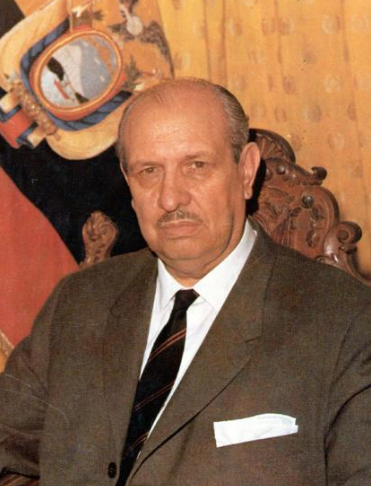
Early life and education
Yerovi was born on August 10, 1904, in Barcelona, Spain, where his parents lived temporarily while his father served as consul general of Ecuador. He returned to Ecuador in childhood and completed his secondary studies at Vicente Rocafuerte High School in Guayaquil and at San Gabriel High School in Quito. His bicontinental birth and upbringing in both coastal and highland cities informed a broad regional awareness that shaped his later public service.
Public career before the presidency
Yerovi held a number of administrative and policy posts through the mid-20th century. Between 1948 and 1950 he served as Minister of Economy under President Galo Plaza Lasso. In that role he was associated with efforts to increase agricultural production and to promote measures intended to improve rural productivity and economic stability. His work in economic administration earned him a reputation as a pragmatic technocrat and a respected figure across several political currents.
Interim presidency (1966)
Called to preside over a provisional government in 1966, Yerovi led a short-term administration whose main objectives were political stabilization and the reestablishment of functioning civil institutions. Rather than pursuing sweeping ideological reforms, his government emphasized practical measures to calm social tensions, maintain public services and lay groundwork for subsequent electoral processes. Contemporary accounts often emphasize the conciliatory tone and consensus-building approach of his leadership.
Policies and priorities
- Maintenance of public order and basic services during the transition to civilian rule.
- Support for agricultural development and rural improvement, continuing themes from his earlier public service as an economic minister.
- Administrative measures to organize civil institutions and enable future electoral steps.
Personal life and later years
Yerovi married Victoria Gómez Ycaza and the couple had four children. After leaving the presidency he remained a respected elder statesman and an observer of national affairs, though he did not again seek high office. He died on July 19, 1981, in Guayaquil, Ecuador, reportedly of heart failure at the age of 76. His career is frequently cited in studies of mid-20th-century Ecuadorian efforts to balance economic development—especially in agriculture—with political stability.
Historical context and assessment
Clemente Yerovi’s tenure must be seen against a broader backdrop of frequent government changes and social demands in Ecuador during the 1950s and 1960s. Leaders of that era confronted challenges including the need to modernize agricultural production, to expand basic infrastructure and to manage competing political forces. Yerovi’s short, centrist administration is often judged as having contributed to a relatively orderly handover of authority and to the reestablishment of civilian rule during a delicate period.
For more detailed study, consult primary archival collections and scholarly works on Ecuadorian political and economic history of the mid-20th century; these can provide fuller context on Yerovi’s policies as Minister of Economy and on the transitional government he led. Additional resources and biographies are available through national libraries and historical institutes.
Related articles
Author
AlegsaOnline.com Clemente Yerovi: Interim President of Ecuador and Agricultural Reformer Leandro Alegsa
URL: https://en.alegsaonline.com/art/116691