
Chuck Close (1940–2021): American painter and portraitist
Chuck Close was an influential American artist known for monumental, photo-based portraits, grid-based techniques, and the adaptations he made to continue working after paralysis.
Overview
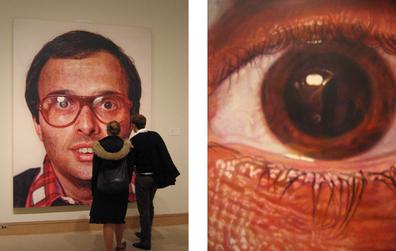
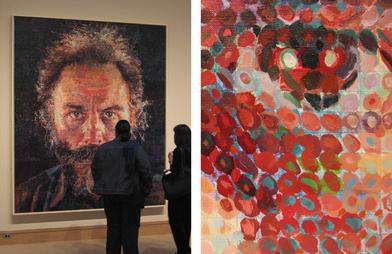
Charles Thomas "Chuck" Close (July 5, 1940 – August 19, 2021) was an American painter, photographer and printmaker best known for large-scale, photo-based portraits that combine near-photographic appearance from a distance with visible abstract or modular elements up close. His work blurred boundaries between painting and photography, foregrounding process, scale and the mechanics of likeness.
Image gallery
5 Images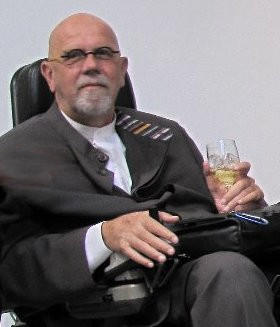


Early life and education
Close was born in Washington state and trained in art at the university level. Early in his career he worked from photographic sources, using cameras and transparencies to make large-scale portraits. His disciplined, systematic approach emphasized intensive observation and an interest in how small marks and color relationships could resolve into a convincing likeness when viewed as a whole.
Techniques and practice
Closely associated with a grid method, Close divided photographic images into many squares and translated each cell into a discrete mark, tone or color unit. Over his career his methods evolved: he used airbrush and brush painting, layered color modules, fingerprint-like marks, mosaic-like tiles, prints and woven tapestries. Later works often appear pixelated or mosaic-like up close while forming coherent faces at typical viewing distance.
Later life and adaptations
In 1988 Close suffered a spinal artery collapse that left him severely paralyzed. He adapted by working with assistants and by developing techniques and tools that allowed him to continue painting, including straps and modified implements. Despite physical limitations he produced substantial bodies of work afterward and remained a prominent figure in contemporary art.
Reception, controversy and legacy
Close received significant recognition during his life, including major fellowships and retrospective exhibitions. His work influenced debates about portraiture, representation and the role of photographic source material in painting. In the late 2010s allegations of sexual misconduct against him led some museums and institutions to reconsider exhibitions and acquisitions, adding complexity to his public reputation. His paintings and prints remain widely discussed and are held in major collections, studied for their technical rigor and for the questions they raise about perception and artistic process.
Representative themes
- Perception: how local marks cohere into a face
- Process: systematic, often modular working methods
- Persistence: adaptation of practice after paralysis
Related articles
Author
AlegsaOnline.com Chuck Close (1940–2021): American painter and portraitist Leandro Alegsa
URL: https://en.alegsaonline.com/art/116574
Sources
- nytimes.com : "The Mysterious Metamorphosis of Chuck Close"
- books.google.com : "Close to the Edge"
- nytimes.com : Following the Light, and Making Faces
- wsj.com : "An Artist Finds the Perfect Red"
- nymag.com : Buy, Rip, Repeat