
Charles VIII of France: youth, Italian campaign, and dynastic consequences
Charles VIII (1470–1498) reigned as King of France from 1483 to 1498. His short reign included a powerful regency, the marriage that tied Brittany to France, the first French invasion of Italy and a sudden accidental death.
Charles VIII (30 June 1470 – 7 April 1498) became king of France as a teenager after the death of his father Louis XI. Born at the Château d'Amboise, he inherited a kingdom consolidated by his father's policies but still shaped by powerful nobles and the influence of the royal household. His reign is best known for its sudden and dramatic foreign venture into the Italian peninsula and for dynastic events that brought the Duchy of Brittany under French control.
Image gallery
7 Images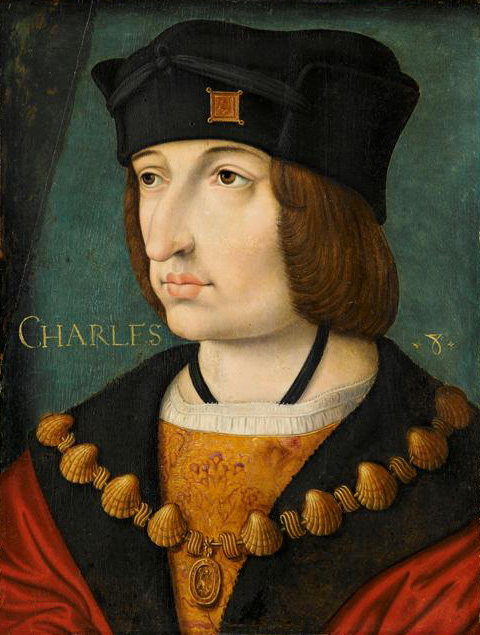




Early life and regency
Because Charles was only thirteen at his accession, real power was exercised by his elder sister, Anne of Beaujeu, who acted as regent and guided royal government during his minority. The regency preserved the centralizing policies of Louis XI, curtailed noble unrest and maintained royal authority until Charles reached majority. These years set the administrative foundations on which the young king later relied when he assumed direct rule.
Marriage and the union of Brittany
One of the defining events of Charles's reign was his marriage to Anne of Brittany in 1491. The duchy of Brittany was a wealthy and semi-independent polity; Anne had been courted by other courts and was briefly allied by marriage to Maximilian of Habsburg by proxy. France moved decisively to prevent outside dynastic control of Brittany and compelled the duchess to wed the king. The marriage brought Brittany into a closer personal union with the French crown and shaped French territorial policy for decades.
Italian expedition and military impact
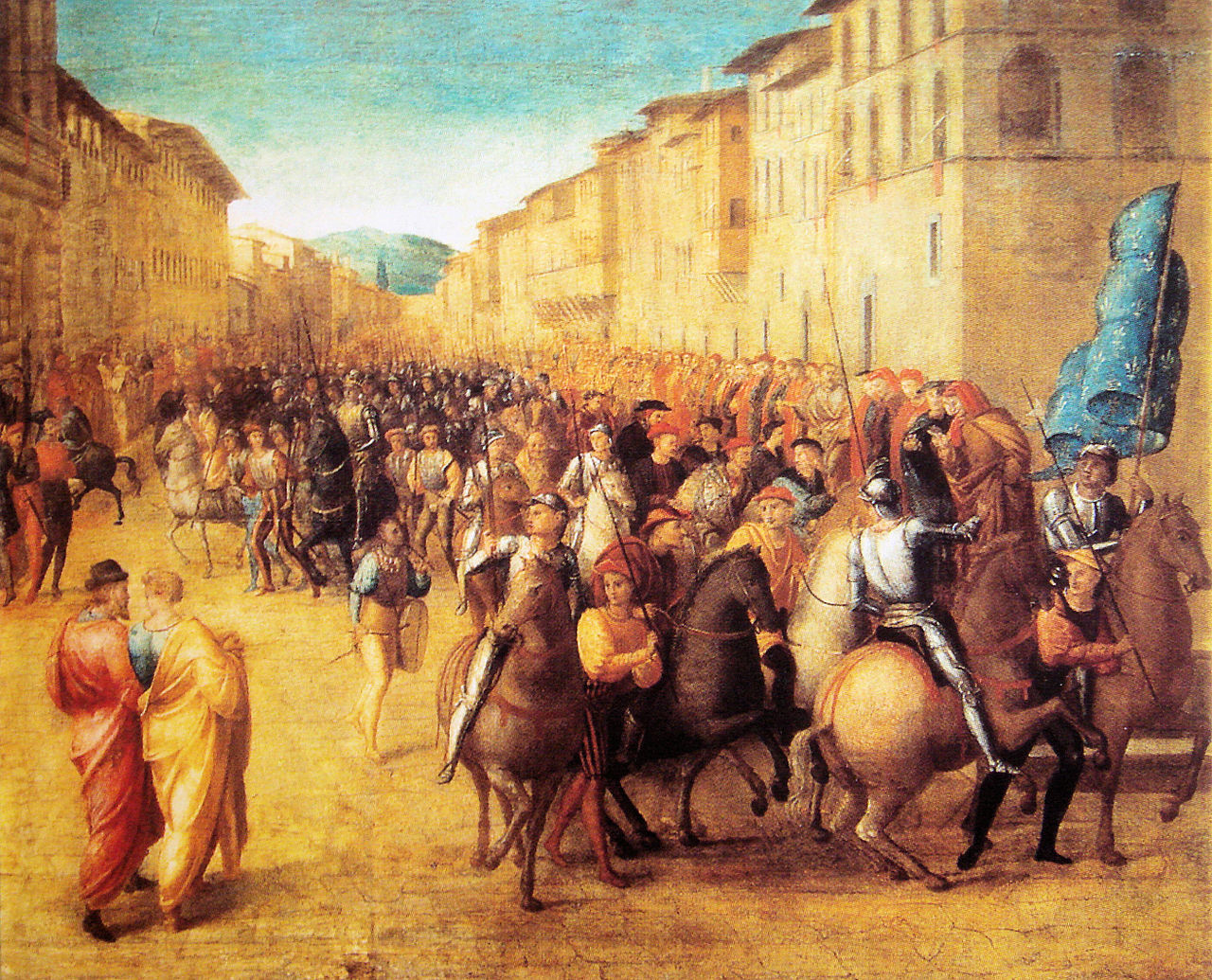
In 1494 Charles led a rapid invasion of Italy, claiming dynastic rights and seeking to secure a kingdom in Naples. The campaign of 1494–1495, often cited as the opening phase of the long Italian Wars, saw French forces advance swiftly through northern Italy and briefly occupy Naples. The campaign culminated in the encounter at Fornovo, where Charles's army withdrew in the face of a coalition formed by several Italian states and their allies. Although the expedition produced short-lived territorial gains, its more lasting effect was cultural: the presence of French troops and nobles in Italy accelerated the transfer of Renaissance art, ideas and architecture northward.
The invasion is commonly described in summaries of the Italian campaign of 1494–1495. Military historians note both the tactical successes of rapid movement and the logistical limits that prevented France from converting the campaign into durable control of Italian kingdoms.
Death, succession and legacy
Charles's domestic life was marked by misfortune: his children by Anne of Brittany died in infancy, leaving no direct heir. In April 1498 the king suffered a fatal accident after hitting his head at the royal lodging in Amboise and died soon after. With no surviving son, the throne passed to his cousin, who became Louis XII. Louis would marry Anne of Brittany, ensuring the duchy's continued union with the crown.
- Regency: Anne of Beaujeu's rule preserved royal authority during Charles's minority and resisted noble revolts.
- Dynastic policy: marriage to Anne of Brittany was decisive for French territorial unity.
- Italian Wars: Charles's expedition inaugurated a long period of French involvement in Italy and opened cultural exchange with the Renaissance.
- Sudden end: his unexpected death reshaped succession and French foreign policy under his successor.
Charles VIII is remembered as a youthful monarch whose military ambition reshaped European diplomacy and whose reign helped transmit Italian artistic and architectural influences into France. For further reading on places and events connected to his life see related entries on the regency of Anne, the Italian campaign, and contemporary accounts of his time in Italy.
Related articles
Author
AlegsaOnline.com Charles VIII of France: youth, Italian campaign, and dynastic consequences Leandro Alegsa
URL: https://en.alegsaonline.com/art/116247
Sources
- wikidata.orgQ134452.html : wikidata.orgq134452.html
- catalogue.bnf.fr : cb125374988
- data.bnf.fr : (data)
- d-nb.info : 118776762
- hls-dhs-dss.ch : 029213
- isni.org : 0000 0001 2127 4535
- id.loc.gov : n82158482
- data.bibliotheken.nl : 070397309
- libris.kb.se : 208842
- idref.fr : 028693914
- viaf.org : 34569564
- worldcat.org : lccn-n82158482