
Charles Nicolle — French physician and Nobel laureate in typhus research
Charles Jules Henri Nicolle (1866–1936), director at the Institut Pasteur de Tunis, demonstrated lice transmission of epidemic typhus and received the 1928 Nobel Prize for this work.
Charles Jules Henri Nicolle (1866–1936) was a French physician and microbiologist best known for establishing how epidemic typhus spreads among humans. As a research director and public-health practitioner, Nicolle combined laboratory study with field observation to turn a puzzling infectious disease into a preventable problem. His work had lasting influence on infectious-disease control in the early 20th century.
Image gallery
2 Images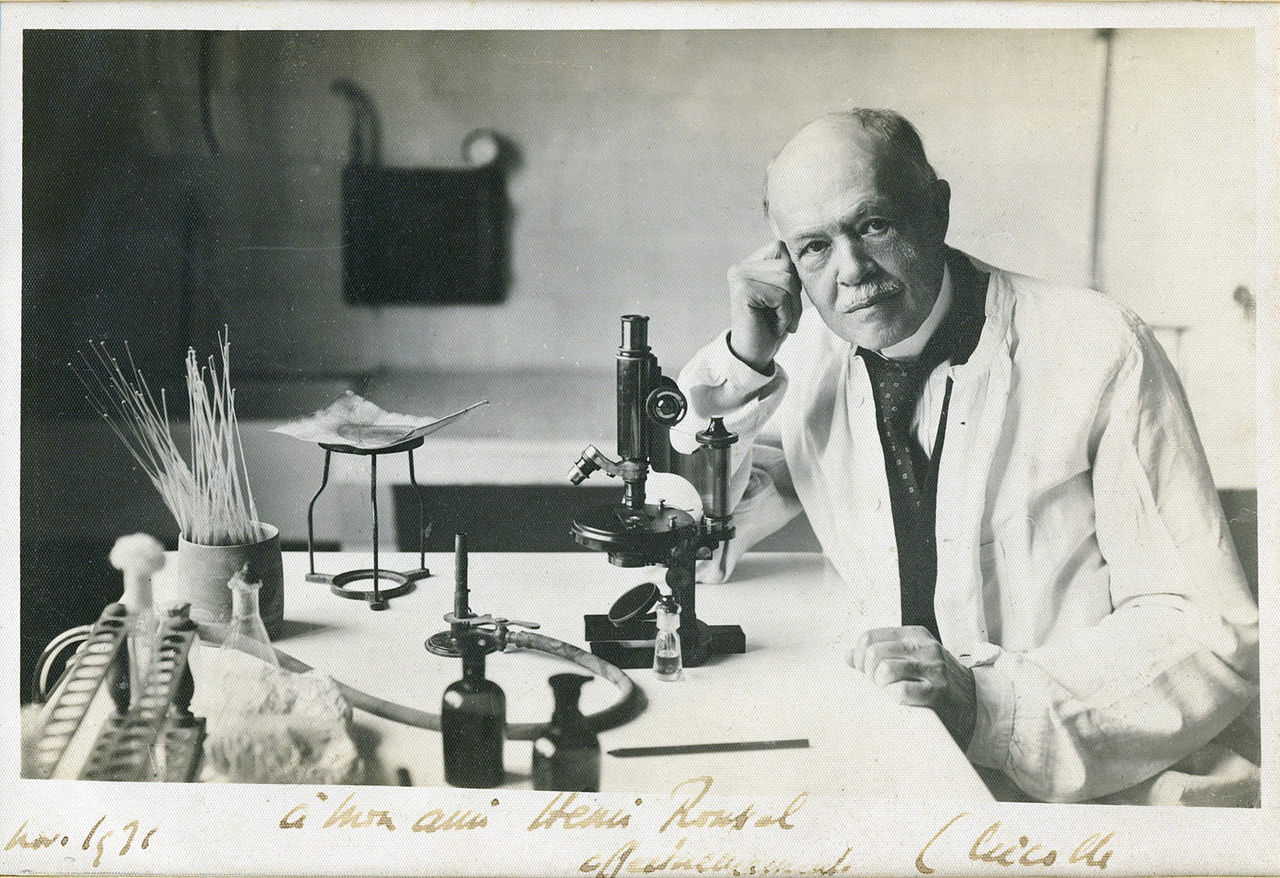

Life and career
Born in 1866, Nicolle trained in medicine and pursued bacteriological research during a period of rapid advances in microbiology. He spent much of his career at the Institut Pasteur in Tunis, where he served as director and led investigations into tropical and epidemic diseases. His administrative role complemented his scientific work, allowing him to introduce laboratory methods into public-health practice.
Key discovery and scientific significance
Nicolle's most important contribution was demonstrating that epidemic typhus is transmitted by human lice rather than by direct person-to-person contact or by rats. This insight clarified the disease's epidemiology and pointed directly to effective control measures: delousing, improved hygiene, and isolation of infected individuals. For this achievement he was awarded the Nobel Prize in Physiology or Medicine in 1928.
His approach emphasized careful observation, experimental verification, and practical solutions. Nicolle did not claim to identify every microscopic agent involved in typhus; rather, he established the transmission route that made prevention possible. That distinction shaped later laboratory work on the causative organisms and vaccines.
Legacy and selected works
- Recipient of the 1928 Nobel Prize in Physiology or Medicine for work on typhus.
- Longtime director of the Institut Pasteur de Tunis, where he trained researchers and promoted public-health measures.
- Authored scientific papers and reports that guided typhus control programs in Europe and North Africa.
Nicolle died in 1936. Histories of infectious disease and public-health practice continue to cite his combination of epidemiological insight and practical intervention. For further reading and archival material, see contemporary biographical and institutional sources: biographical entry, archival records, Nobel documentation, institutional history, scientific overview, and typhus background.
Related articles
Author
AlegsaOnline.com Charles Nicolle — French physician and Nobel laureate in typhus research Leandro Alegsa
URL: https://en.alegsaonline.com/art/116227
Sources
- nobelprize.org : "Biography of Charles Nicolle"