
Carmen Herrera: Cuban-American abstract and minimalist painter
Cuban-born Carmen Herrera (1915–2022) was a pioneering abstract and minimalist artist whose precise geometric canvases gained wide recognition late in life. Her work bridged Latin American and New York art communities.
Overview
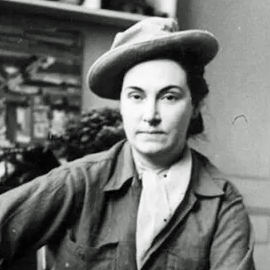
Carmen Herrera (May 31, 1915 – February 13, 2022) was a Cuban-American artist best known for spare, geometric paintings that belong to the language of abstraction and minimalism. Born in Havana, she spent important stages of her career in Paris and, from the mid-1950s, New York City — where she lived and worked for decades. For much of her life Herrera produced rigorously ordered canvases, but broad public recognition of her achievement arrived late, prompting a renewed critical reassessment of mid-20th-century abstraction.
Image gallery
3 Images

Style and characteristics
Herrera's work is frequently described as hard-edge or geometric abstraction. Her compositions emphasize clean lines, distinct planes of color, and strong contrasts between positive and negative space. Typical visual features include:
- Exacting geometry: diagonal and horizontal divisions that create tension and balance.
- Limited palettes: bold, often contrasting hues used in simple arrangements.
- Reduction: a focus on fundamental relationships of shape, line and color rather than narrative content.
Career, exhibitions and reception
Herrera exhibited work from the mid-20th century onward, including early appearances at the Salon des Réalités Nouvelles beginning in 1949. Despite active participation in artistic circles and persistent practice, wider institutional recognition remained limited until late in her life, when museums and galleries began to present retrospectives and place her works in public collections. Some of her paintings are in the holdings of major cultural institutions, including pieces accessible through the Smithsonian. Her trajectory — a long period of relative obscurity followed by late acclaim — has been discussed in the context of how gender and geography affected art historical visibility.
Notable works and themes
Among Herrera's better known canvases is Blanco y Verde (1959), a restrained abstract composition that has been interpreted as recalling the light and horizon of a Cuban oceanside. Across decades she produced series of paintings that explore variations on a formal idea, testing how small shifts in proportion and color change perception. Her work resists figurative description, inviting viewers to attend to formal relationships and optical effects.
Legacy and significance
Herrera is significant as a woman of Latin American origin whose formalist work contributes to the story of postwar abstraction. Her late-career recognition expanded representations of minimalism and geometric painting in museum narratives. Scholars and curators point to her disciplined practice, longevity, and the clarity of her visual language as reasons for renewed interest. Information about her life and work can be found through resources on Cuban artists and modernist abstraction, and in biographies and exhibition materials such as artist profiles and archives in New York institutions like New York City-based museums and galleries.
Life and final years
Herrera lived a long life, celebrating her 100th birthday in 2015 and continuing to work into advanced age. She died at her Manhattan residence on February 13, 2022. Accounts of her final years and obituary notices were reported by cultural outlets and local sources; a notice of her death referenced her Manhattan apartment in New York. Her story is often cited as an example of persistent artistic commitment and the shifting recognition of women artists in the 20th and 21st centuries.
Further reading
Related articles
Author
AlegsaOnline.com Carmen Herrera: Cuban-American abstract and minimalist painter Leandro Alegsa
URL: https://en.alegsaonline.com/art/116017
Sources
- npr.org : "Overlooked But Undeterred, A 101-Year-Old Artist Finally Gets Her Due"
- americanart.si.edu : "Our America: The Latino Presence in American Art"
- artnews.com : "'Don't Be Intimidated About Anything': Carmen Herrera at 100"