
Carme Chacón — Spanish politician; Minister of Defence and Housing
Carme Chacón (1971–2017) was a Catalan Spanish Socialist politician, Spain’s first female Defence Minister (2008–2011) and a former Housing Minister who later sought the PSOE leadership.
Carme Chacón (13 March 1971 – 9 April 2017) was a Catalan politician and member of the Spanish Socialist Workers' Party. She rose to national prominence in the 2000s through senior cabinet appointments and parliamentary service. Chacón combined roles in government with an active public profile, and her career is often remembered for breaking gender barriers in Spain’s defence and public life. Spanish Socialist Workers' Party (PSOE) and Socialist affiliations shaped her policy outlook and public commitments.
Image gallery
4 Images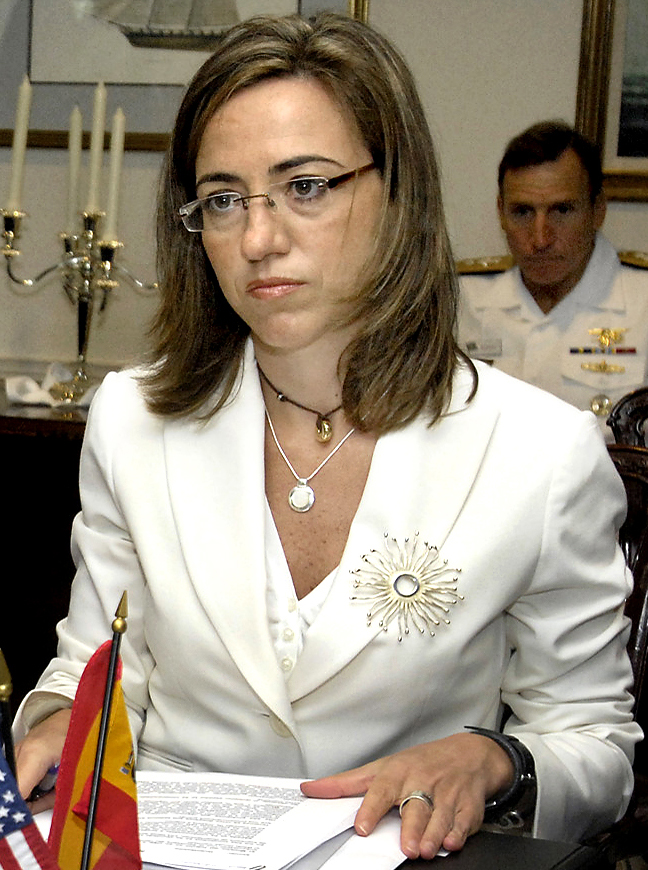


Political career and major offices
Chacón served as Minister of Housing from 2007 to 2008 and was appointed Minister of Defence from 2008 until 2011 in the cabinet of Prime Minister José Luis Rodríguez Zapatero. Her appointment to the defence portfolio was notable: she became the first woman to hold Spain’s defence ministry and her tenure occurred during a period of domestic political debate and international engagements. When the Socialist government was defeated in the November 2011 general election, Chacón left office and was succeeded as defence minister by Pedro Morenés in December 2011. José Luis Rodríguez Zapatero named her to the cabinet at a pivotal moment in Spanish politics.
Background, education and parliamentary work
Born and raised in Catalonia, Chacón trained as a lawyer and entered politics through the PSOE’s Catalan and national structures. She served as a member of parliament and worked on topics connected to housing, social policy and defence oversight. Her legal background informed her legislative work and contributions to debates on constitutional and public policy questions.
Leadership bid and later years
Following the PSOE’s 2011 defeat, Chacón sought the party’s top leadership. At the party’s 38th congress in February 2012 she contested the post of general secretary and narrowly lost to Alfredo Pérez Rubalcaba by a small margin in the delegates’ vote. The leadership contest highlighted divisions inside the party and placed Chacón among the prominent figures of her generation within Spanish social democracy. Alfredo Pérez Rubalcaba prevailed in that internal election.
Reputation, impact and legacy
Chacón was widely regarded as a trailblazer for women in Spanish politics, particularly because her role at the defence ministry challenged established expectations about gender and security portfolios. Her appointment attracted international attention and public discussion about work-life balance for senior politicians, as she was pregnant around the time she assumed the defence brief. Colleagues and commentators remembered her for directness in debate, a focus on social policy, and a profile that bridged regional Catalan politics and national office.
Death and final notes
Carme Chacón died in Madrid on 9 April 2017 at the age of 46. Reports indicated she had suffered from a rare form of heart disease. Her passing prompted tributes across Spain from political figures, former colleagues and civic groups. For further details about her life and work see party and archival materials and contemporary news coverage. Obituaries and reports and medical commentary referenced at the time discussed the cause as a rare cardiac condition.
Related articles
Author
AlegsaOnline.com Carme Chacón — Spanish politician; Minister of Defence and Housing Leandro Alegsa
URL: https://en.alegsaonline.com/art/116023