
Bertie Ahern
Irish politician who served as Taoiseach (1997–2008), leader of Fianna Fáil, a key negotiator of the Good Friday Agreement and a central figure during Ireland's Celtic Tiger economic expansion.
Overview
Patrick Bartholomew "Bertie" Ahern (born 12 September 1951 in Dublin) is an Irish politician best known for serving as Taoiseach and as leader of Fianna Fáil. His name in Irish is often rendered as Pádraig Parthalán Ó hEachthairn; see the Irish form at Irish name. He was born and raised in Dublin, which is often noted in biographical summaries (Dublin).
Image gallery
10 Images


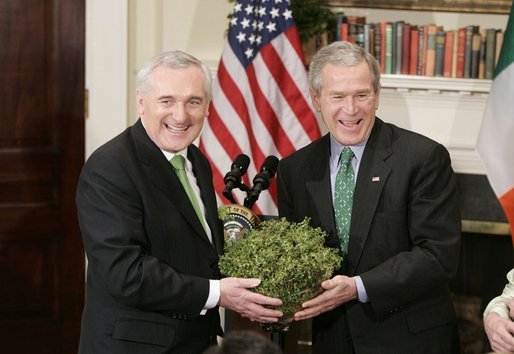

Career and leadership
Ahern rose through local and national politics and became leader of Fianna Fáil, the party that has been one of the principal forces in the Irish state. He held the office of Taoiseach, the head of government, from 1997 until his resignation in 2008. During his time in office he worked with coalition partners and presided over a period of significant change in Irish public life. The party he led is widely described in contemporary sources as the Republic's largest political formation (party overview).
Peace process and the Good Friday Agreement
Ahern is widely credited with playing an important role in the Northern Ireland peace process. He was a key Irish participant in negotiations that led to the 1998 Good Friday Agreement, an accord that established new institutions and helped reduce large-scale violence across the island. His involvement is regarded as one of the defining achievements of his political career.
Economy and policy
During Ahern's time as head of government Ireland experienced rapid economic growth, a period often called the "Celtic Tiger." Rising employment, foreign investment and construction reshaped the country. His governments pursued policies that supported market openness, investment incentives and infrastructural development, while also expanding public services in many areas.
Controversies and legacy
Ahern's later years in office and his retirement were accompanied by scrutiny of political funding and personal finances; inquiries and public debate examined aspects of transparency and standards in public life. He resigned as Taoiseach and party leader amid that pressure. Historians and commentators typically present his legacy as mixed: a prominent peacemaker and steward of rapid economic change, but also a figure whose career prompted important questions about political ethics and accountability.
Notable facts
- Long-serving leader within a major Irish political party (Fianna Fáil).
- Central participant in the 1998 Good Friday Agreement and the Northern Ireland peace process.
- Presided over years of strong economic growth and social change in Ireland.
Related articles
Author
AlegsaOnline.com Bertie Ahern Leandro Alegsa
URL: https://en.alegsaonline.com/art/115074
Sources
- trinity.edu : "Nobel prizewinners"
- Bertie Ahern