
Bessie Smith — life, music, and legacy of the Empress of the Blues
Bessie Smith (c.1892–1937), the 'Empress of the Blues', was a leading American blues singer of the 1920s and 1930s. This article covers her life, recordings, vocal style, influence, and legacy.
Bessie Smith was an American blues singer widely remembered as the "Empress of the Blues." Born in the 1890s (sources cite either 1892 or 1894), she rose from poverty in the American South to become one of the most popular and influential vocalists of the 1920s and early 1930s. Her powerful, emotive voice, strong sense of phrasing and commanding stage presence made her a defining figure in early commercial blues. For general background and biographical overviews, see biographical summaries.
Image gallery
6 Images


Early life and beginnings
Smith grew up in Tennessee in a large family. She began performing in local settings as a child and later joined traveling minstrel and vaudeville troupes common to African American entertainers of the era. These early experiences on the road helped shape her stagecraft and repertoire. By the early 1920s, a growing recording industry and an expanding urban audience for blues music offered new opportunities for African American performers.
Career, recordings and repertoire
Smith signed recording contracts in the early 1920s and made a series of successful records that reached broad audiences. She recorded dozens of sides for major labels of the time; some of her best-known numbers became standards and were widely covered by other artists. Her repertoire included blues ballads and up-tempo numbers that showcased both her dramatic interpretation and her ability to project emotion through economy of phrase.
- Commercial breakthrough: an early recording that brought her nationwide attention was an influential blues hit often cited in surveys of the period.
- Accompaniment and collaborators: her records frequently featured skilled jazz and blues instrumentalists; these sessions illustrate the close ties between blues singing and early jazz arranging.
- Reissues and discographies: decades after her recordings were made, collectors and scholars compiled discographies and annotated reissues; for details consult recording histories.
Musical style
Smith's singing combined raw emotional intensity with clear diction and a commanding middle register. She could convey vulnerability, defiance, longing and wry humor within a single performance, using timing and phrasing to heighten narrative effect. Her approach helped define the role of the blues vocalist as both storyteller and interpreter of communal experience.
Influence and cultural legacy
During her peak she was one of the highest-paid African American entertainers of her day. Her recordings and public persona set standards for blues singing that informed generations of vocalists in jazz, rhythm and blues, and later popular music. Music historians and performers frequently cite her work as a key link between early country and urban blues traditions and subsequent developments in American popular music. For contemporary commentary and critical accounts, see contemporary accounts.
Death and myths
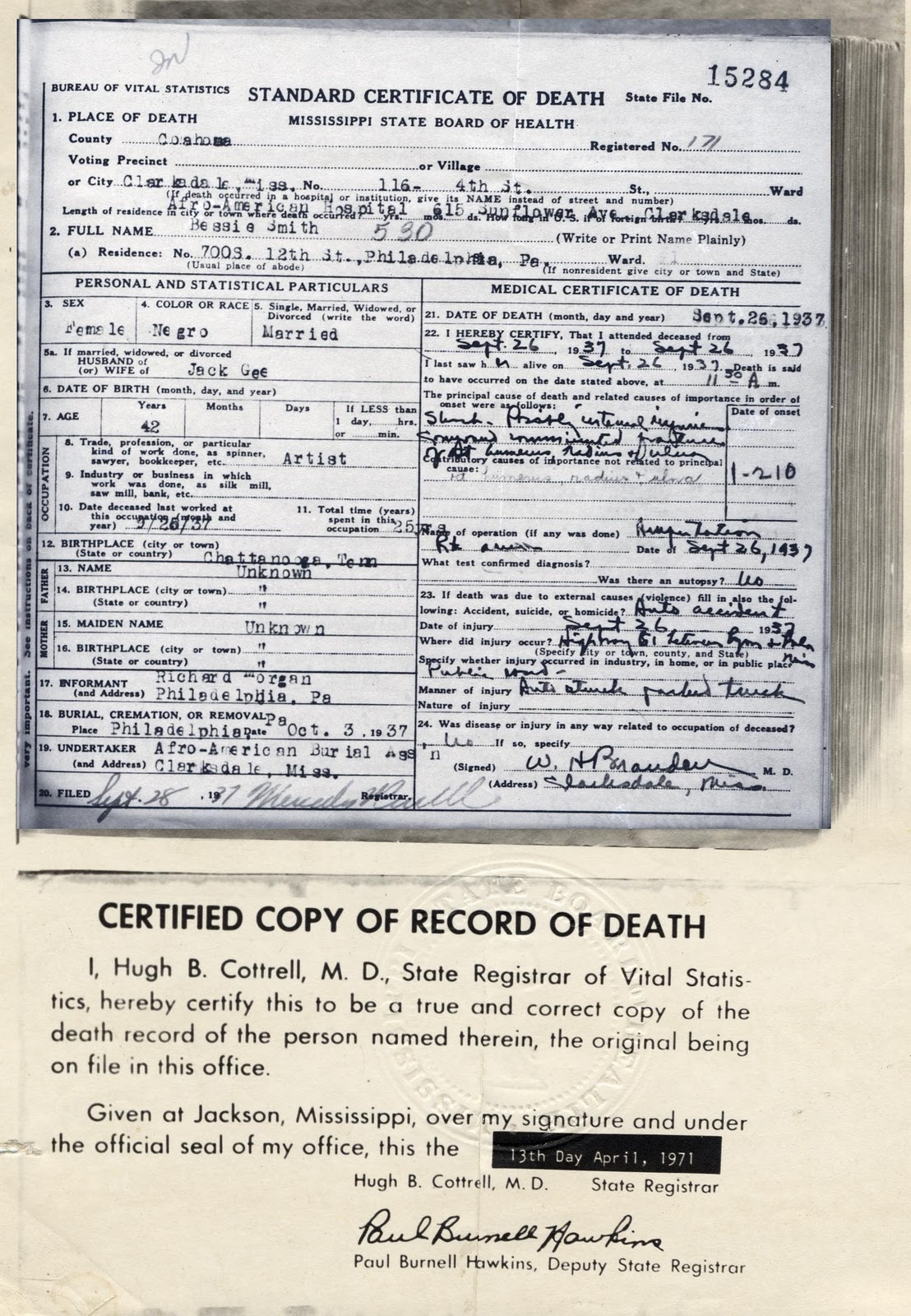
Smith died in 1937 after injuries sustained in an automobile accident. Over time, stories and myths have grown up around the circumstances of her death; some popular versions include disputed or unverified details. Scholarly accounts emphasize documented facts while noting that mythmaking has sometimes shaped public memory. Researchers and archives have preserved many primary sources relating to her life and career; see archival resources for original materials and further study.
Today Bessie Smith remains a central figure in studies of early 20th-century American music. Her recordings are widely available in reissues and library collections and continue to be studied by musicians, historians and listeners exploring the roots of blues and related genres.
Questions and answers
Q: Who was Bessie Smith?
A: Bessie Smith was an American blues singer.
Q: When was Bessie Smith born?
A: Bessie Smith was born on July 9, 1892 or April 15, 1894.
Q: What was Bessie Smith's nickname?
A: Bessie Smith was sometimes called "The Empress of the Blues."
Q: In what decades was Bessie Smith popular?
A: Bessie Smith was very popular in the 1920s and 1930s.
Q: Was Bessie Smith highly regarded by her contemporaries?
A: A lot of people think that Bessie Smith was one of the best singers of her time.
Q: Who influenced later jazz singers alongside Bessie Smith?
A: Louis Armstrong, along with Bessie Smith, was an important influence on later jazz singers.
Q: When did Bessie Smith die?
A: Bessie Smith died on September 26, 1937.
Related articles
Author
AlegsaOnline.com Bessie Smith — life, music, and legacy of the Empress of the Blues Leandro Alegsa
URL: https://en.alegsaonline.com/art/115082
Sources
- sparknotes.com : Bessie Smith at sparknotes.com