
Aurelian: Roman emperor who reunited the Empire (r. 270–275)
Aurelian (c.214–275) was a soldier-emperor who restored imperial unity, defeated breakaway states and barbarian invasions, reformed religion and currency, and began construction of Rome's Aurelian Walls.
Overview
Lucius Domitius Aurelianus, commonly known as Aurelian, was a Roman emperor from 270 to 275 CE. Born in the Balkan provinces of the Roman world around 214, he rose through the army and was acclaimed emperor by the troops after the death of Claudius Gothicus. His brief reign is most remembered for restoring the territorial integrity of the Roman state during the Crisis of the Third Century and for earning the honorific title "Restorer of the World" (Latin: Restitutor Orbis). Aurelian combined resolute military command with practical administrative measures to stabilize an empire that had fragmented politically and economically.
Image gallery
10 Images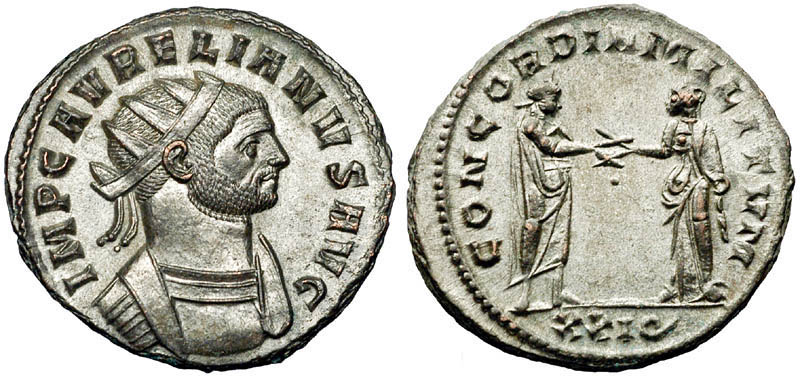


Military campaigns and reunification
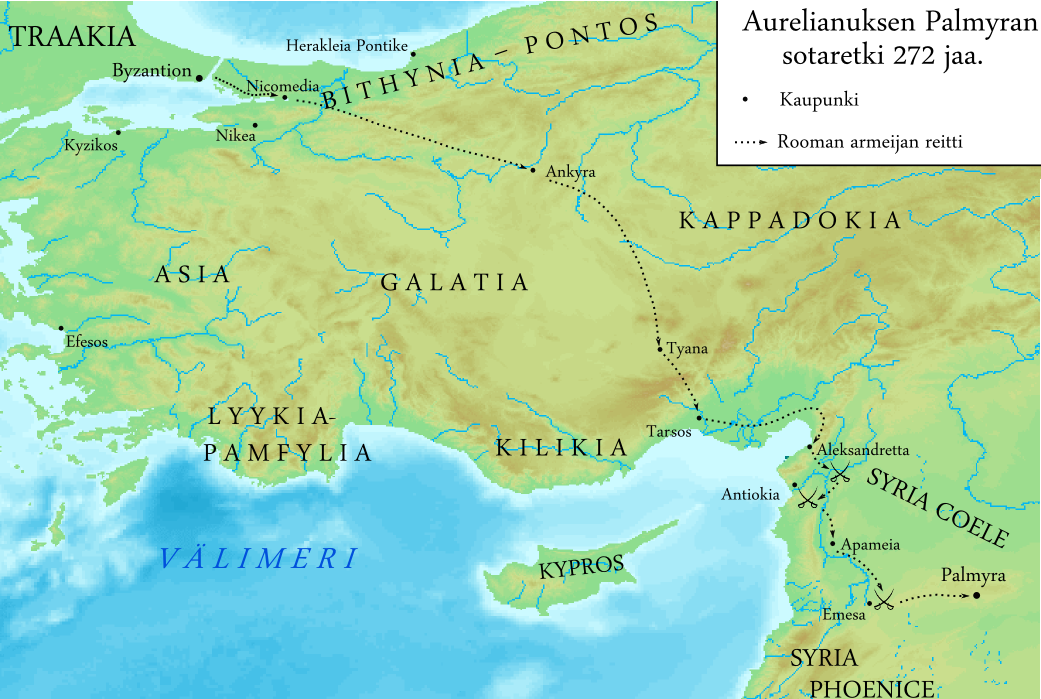
Aurelian’s reputation rests chiefly on his campaigns against both internal breakaway regimes and external barbarian threats. After securing his position against rival claimants, he systematically moved to reassert central authority over regions that had separated from Rome. His most consequential victories were over the Gallic Empire in the west and the Palmyrene regime in the east, actions that reunited the imperial territories into a single polity and helped bring an end to the most turbulent phase of the third-century crisis.
- Reassertion of the western provinces: he defeated the Gallic breakaway and absorbed Gallic forces back into imperial command.
- Campaigns in the east: he led the recovery of eastern provinces from the Palmyrene state, crushing its leader and restoring imperial administration.
- Barbarian wars: he fought multiple peoples who threatened the frontiers, including Goths, Vandals, Juthungi, Sarmatians and the Carpi, restoring order along many borders.
These operations required rapid campaigning and the disciplined use of mobile field armies drawn from the legions and auxiliary forces. The emperor’s military skill and willingness to act decisively were decisive in reversing the fragmentation that had plagued Rome for decades. For contemporary and later observers, his victories were foundational to the empire’s temporary recovery.
Reforms, religion and building projects
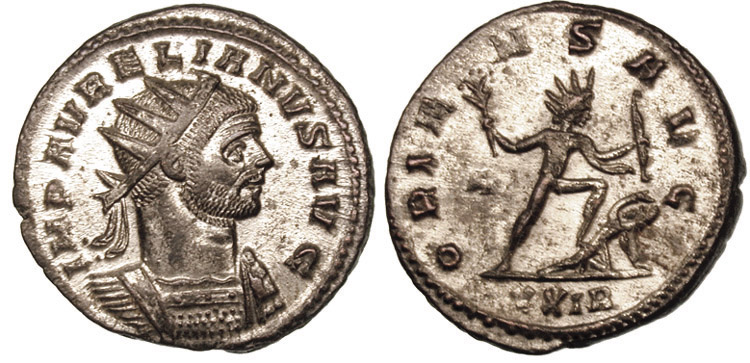
Beyond the battlefield, Aurelian introduced measures aimed at strengthening imperial institutions and the economy. He instituted monetary and administrative reforms intended to stabilize the currency and curb inflation, though the full effects unfolded after his death. One of his most visible initiatives was his religious program: Aurelian promoted the cult of Sol Invictus (the Unconquered Sun) and dedicated a new temple in Rome to that deity, elevating the sun-god’s prominence within imperial worship. He also responded to the vulnerability of the capital itself by initiating a major defensive program — the construction of the Aurelian Walls around the city — reflecting the changed strategic environment of the later third century.
- Religious policy: official promotion of Sol Invictus and greater use of solar imagery in imperial propaganda.
- Economic steps: attempts to reform coinage and restore fiscal health after years of debasement.
- Fortifications and public works: building projects in Rome and frontier regions, most famously the city walls that bear his name.
Death, succession and historical significance
Aurelian’s rule ended abruptly in 275 when a group of officers murdered him during a campaign. The circumstances involve confusion over a forged dismissal order or fears of imperial reprisals; contemporary sources report that his assassination was the result of plotted betrayal rather than a popular uprising. His wife, Ulpia Severina, is recorded as having held the rank of augusta and may have exercised authority for a short period after his death. Although his reign was brief, the reunification he achieved, combined with his institutional and religious initiatives, left a lasting mark: he is widely credited by historians as one of the emperors who arrested the empire’s decline and laid groundwork for the subsequent stabilization under later rulers.
For further reading on his origins in the Balkans and early career consult general surveys of the imperial army and the Crisis of the Third Century; see related material on the Roman Empire and military politics of the period. Key themes in Aurelian’s career — military restoration, fiscal and religious reform, and the fortification of Rome — remain central to understanding how the empire adapted after near-collapse in the third century.
References and further topics: Balkan origins, the Roman Empire, military career, the Crisis of the Third Century, Gothic threats, Vandal incursions, Sarmatian interactions, Sol Invictus, the temple, Rome, the Aurelian Walls.
Related articles
Author
AlegsaOnline.com Aurelian: Roman emperor who reunited the Empire (r. 270–275) Leandro Alegsa
URL: https://en.alegsaonline.com/art/114735