
Sol Invictus: The Unconquered Sun in Late Roman Religion
Overview of Sol Invictus, a late Roman sun cult—origins, principal associations (El Gabal, Mithras, Sol), the December 25 festival, imperial sponsorship, practices, and its debated link to Christmas.
Sol Invictus, Latin for "the Unconquered Sun," was a religious title and cultic theme that gained prominence in the later Roman Empire. Rather than naming a single, fixed deity, the phrase Deus Sol Invictus could be applied to different solar gods and syncretic worship forms. Its appeal combined visible astronomical symbolism with imperial rhetoric about victory, renewal and cosmic order. The cult is best known for the city- and empire-wide celebrations and for the way emperors sometimes used the sun-god imagery to reinforce their authority.
Image gallery
10 Images






Origins and development
The concept grew out of earlier Roman and provincial sun worship. A native Roman form, often called Sol Indiges, represented an agrarian, protective sun and was one antecedent of later developments. From the eastern provinces came other solar figures whose cults were adapted within Roman religion, merging local practices with central Roman ceremonial forms. Over time the generalized title "Unconquered Sun" allowed diverse traditions to be associated under a single public identity and calendar observance.
Principal associations
- El Gabal (also Elagabalus): a Syrian sun god whose eastern temple cult was brought to prominence in Rome during the reign of the emperor often known by the same name.
- Mithras: a sun-associated deity popular with soldiers; Mithraic rites coexisted with the broader solar title though they retained their distinct, secretive practices.
- Sol Indiges: the earlier, more local Roman concept of the sun as an invoked protective force.
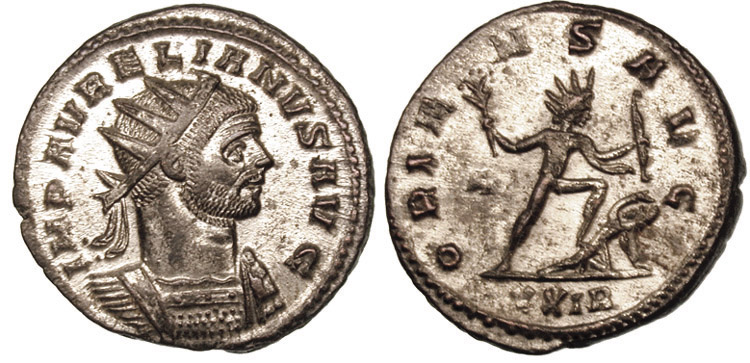
- Official Sol (Aurelian's reform): the emperor Aurelian elevated Sol as a unifying imperial cult and built a major temple to the Unconquered Sun in Rome.
These associations reveal how Roman religion often absorbed and reinterpreted foreign gods, producing hybrid forms that served civic and military needs as well as personal devotion.
Practices and the December festival
One notable institution connected with Sol Invictus is the festival recorded as Dies Natalis Solis Invicti, "the birthday of the Unconquered Sun," celebrated on December 25. The date appears in later imperial calendars and was promoted during the 3rd century. Festivities combined public ceremonies, offerings at temples, and processions; emperors used the occasion to display piety and to associate themselves with the sun's life-giving, victorious character.
Political role and cultural impact
Imperial endorsement made Sol Invictus an instrument of unity in a multi-ethnic empire. Rulers such as Aurelian sought a cult that transcended local loyalties and reinforced the emperor's image as a source of order. The title's language—"invictus"—echoed military triumph and the ideal of unsurpassed strength, which was useful in propaganda and ritual. At the same time, Sol Invictus coexisted with other religions, including Christianity, during a period of religious competition and change.
Legacy and scholarly discussion
The relationship between Sol Invictus and the later adoption of December 25 for the Christian celebration of the Nativity remains debated among historians. Some scholars suggest the proximity of dates reflects an intentional adaptation of a familiar festival to aid conversion; others argue the choice had independent calendrical or theological reasons. Modern study of Sol Invictus draws on inscriptions, coin imagery, contemporary texts and archaeological remains to trace how solar motifs functioned in late antiquity and how they influenced religious identity in the Roman world. For further reading and primary references see the linked resources and specialized studies in late Roman religions: overview sources and comprehensive analyses in scholarly literature on imperial cults and Mithraic studies.
Questions and answers
Q: What is Sol Invictus?
A: Sol Invictus is a religious title that was applied to at least three distinct deities during the later Roman Empire.
Q: Which three deities were given the title of Sol Invictus?
A: The three deities were El Gabal, Mithras, and Sol.
Q: What was the earlier cult of Sol Indiges?
A: The earlier cult of Sol Indiges was agrarian.
Q: How was the title Deus Sol Invictus formed?
A: The title Deus Sol Invictus was formed similarly to the imperial titulature pius felix invictus, meaning "dutiful, fortunate, unconquered.”
Q: What festival did the Romans hold on December 25?
A: The festival that the Romans held on December 25 was called Dies Natalis Solis Invicti, which means "the birthday of the unconquered sun."
Q: Which solar deities were worshiped together because of the use of the title Sol Invictus?
A: Several solar deities, including Elah-Gabal, Sol, and Mithras, were worshiped together because of the use of the title Sol Invictus.
Q: Who introduced the festival of Sol Invictus, and who promoted it as an empire-wide holiday?
A: Emperor Elagabalus introduced the festival, and Aurelian promoted it as an empire-wide holiday that was a possible inspiration of Christmas.
Related articles
Author
AlegsaOnline.com Sol Invictus: The Unconquered Sun in Late Roman Religion Leandro Alegsa
URL: https://en.alegsaonline.com/art/91620