
Ashok Kumar (Kumudlal Ganguly) — Indian film actor and cultural figure
Ashok Kumar (Kumudlal Ganguly, 1911–2001) was a pioneering Indian film actor whose long career spanned leading roles and memorable character parts; recipient of the Dadasaheb Phalke Award and Padma Bhushan.
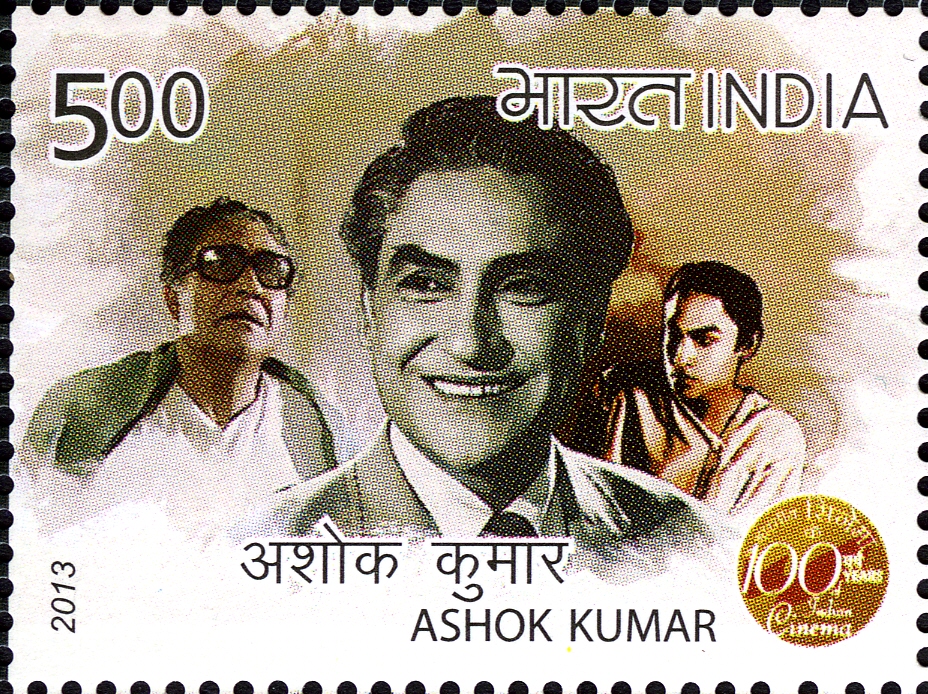
Ashok Kumar (born Kumudlal Ganguly; 13 October 1911 – 10 December 2001) was a prominent Indian film actor whose work helped shape early Hindi cinema. Known affectionately as Dadamoni, he combined a naturalistic acting approach with versatility that allowed him to move from romantic leads to complex character roles across decades. His original name in Bengali is noted অশোক কুমার গাঙ্গুলী.
Image gallery
7 Images


Early life and background
Ganguly was born in Bhagalpur in the Bengal Presidency and later moved to Mumbai as the film industry developed in the city. His birthplace is often cited as Bhagalpur in the historic Bengal Presidency. He entered films at a time when Indian-language cinema was transitioning from stage-influenced styles to a more natural screen presence.
Career and style
Ashok Kumar became associated with major studios and collaborated with filmmakers who were central to Hindi cinema's growth. He rose to popular prominence in the 1930s and 1940s and is remembered for performances that brought restraint and realism into mainstream films. While he began as a leading man, he reinvented himself many times and found renewed acclaim in later decades as a character actor.
- Range: leading roles, supporting and character parts.
- Technique: understated, conversational delivery; an alternative to theatrical melodrama.
- Influence: paved the way for naturalistic acting in Indian cinema and inspired later generations.
Achievements and recognition
His contribution to the film industry was acknowledged with major honors. He received the highest Indian cinematic honor, the Dadasaheb Phalke Award, and later was awarded the civilian honor Padma Bhushan. These recognitions reflect both his longevity and impact on Indian cinema as a craft and cultural institution.
Personal notes and legacy
Ashok Kumar was part of a family associated with the arts; his younger brother became a renowned singer and performer. He spent his later years in Mumbai and passed away at his home in Chembur, Mumbai, from heart failure at the age of 90. His life and career are often cited in studies of early and mid-20th-century Indian film history, illustrating both the evolution of screen acting and the changing tastes of audiences.
For readers seeking further information about his films, collaborations and cultural impact, introductory resources on classic Indian actors and cinema provide context and filmographies; general guides to the history of the film actor in India and archives of period studios offer more detailed exploration.
Related articles
Author
AlegsaOnline.com Ashok Kumar (Kumudlal Ganguly) — Indian film actor and cultural figure Leandro Alegsa
URL: https://en.alegsaonline.com/art/114670