
Gabriel García Moreno
Ecuadorian statesman (1821–1875) who served multiple terms as president, promoted conservative Catholic policies and education, and was assassinated in office, remaining a polarizing figure in Ecuadorian history.
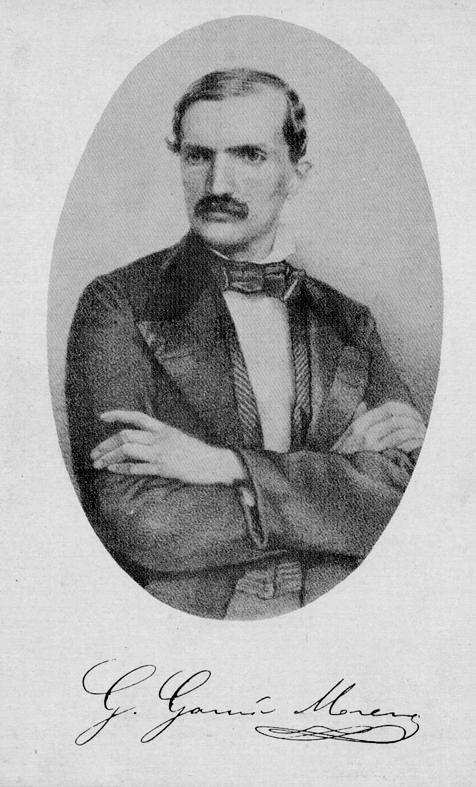
Gabriel Gregorio Fernando José María García y Moreno y Morán de Buitrón (December 24, 1821 – August 6, 1875) was an Ecuadorian politician who dominated national life in the mid‑19th century. He served as President of Ecuador in two long stretches and was elected again shortly before his death (presidential terms). A devout Catholic and a committed conservative, García Moreno sought to reshape the state by strengthening central authority, improving public institutions and placing the Church at the heart of social policy.
Image gallery
3 Images

Early life and rise
Born in Guayaquil, García Moreno trained as a lawyer and entered public service during a turbulent period of regional caudillismo and frequent regime change. He built a reputation for administrative competence, fiscal discipline and moral rigor. His political ascent combined popular appeal in certain sectors with alliances among conservative elites and clerical networks. He is often contrasted with contemporaneous liberal leaders, including the later opponent Eloy Alfaro, who represented a very different vision for Ecuador (liberal reformers).
Policies and administration
García Moreno emphasized order, the rule of law as he conceived it, and public works. He promoted the expansion of secondary and higher education and invited foreign scholars and religious congregations to help found schools and seminaries, turning parts of Ecuador into a regional reference for learning and scientific study (education and science). Economically he backed agricultural development and measures intended to increase state revenues while publicly professing personal austerity. He also pursued a close partnership with the Catholic Church, signing concordats and granting clergy an influential role in social services and education.
Controversies and characteristics
To supporters, García Moreno was a nation‑builder who restored stability and uplifted institutions. To critics, he was authoritarian: his centralization of power, frequent use of emergency measures and alignment with ecclesiastical interests curtailed political pluralism and provoked lasting resentment among liberal opponents. Accusations of intolerance toward dissent and heavy‑handed policing contributed to a polarized political climate that outlived his life.
Assassination and aftermath
On August 6, 1875, shortly after being elected to another term, García Moreno was attacked as he left the cathedral in Quito. The assassination—carried out by a small group of conspirators—ended his life and intensified the struggle between conservative and liberal forces in Ecuador. He received last rites shortly before dying and was later lauded in some Catholic circles; he had written to Pope Pius IX in the days before his intended inauguration. Accounts of the attack and his final words became part of national memory and religious testimony about his death (assassinated).
- He is remembered for combining religious conviction with statecraft, a model that influenced conservative politics in the region.
- His emphasis on education created institutions that lasted beyond his administration and attracted both praise and scholarly debate (education).
- The intensity of opposition from liberal groups and rivals such as Eloy Alfaro illustrates the deep ideological divides of 19th‑century Ecuador.
- Biographical and historical studies often cite his personal austerity—he reportedly gave away portions of his salary—as part of his public persona (biographical notes).
García Moreno remains a contested figure: hailed by many for institutional reforms and piety, condemned by others for authoritarian methods. His life, policies and violent death are central topics in the study of Ecuador's transition from regional fragmentation to a more centralized republican state, and they continue to inform debates about church‑state relations, governance and national identity in the country.
For further reading on his political career, policies and the historical context, see contemporary and retrospective accounts that examine both his achievements and the controversies surrounding his rule (political overview, presidential records, local histories).
Conservative movement | Catholic Church relations | Assassination sources | Birthplace | Papal correspondence
Related articles
Author
AlegsaOnline.com Gabriel García Moreno Leandro Alegsa
URL: https://en.alegsaonline.com/art/119349
Sources
- newadvent.org : "Gabriel García Moreno"
- books.google.com : The Nineteenth Century Outside Europe: The Americas, the Pacific, Asia, and Africa