
Alexander Grothendieck
Alexander Grothendieck (1928–2014) was a transformative mathematician whose abstract reformulation of algebraic geometry reshaped modern mathematics and influenced many fields.
Alexander Grothendieck (born 28 March 1928 in Berlin — died 13 November 2014 in Saint-Girons, Ariège) was one of the most influential mathematicians of the twentieth century. He led a sweeping restructuring of algebraic geometry and introduced general, conceptual tools that remain central across pure mathematics. His work emphasized new levels of abstraction that unified disparate threads and created powerful methods now taught worldwide.
Image gallery
5 Images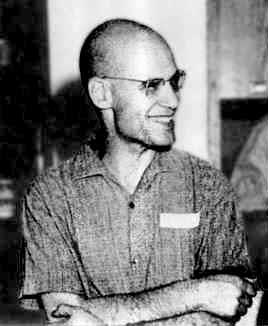


Major contributions and ideas
Grothendieck replaced older, coordinate-based approaches to algebraic geometry with a language built on sheaves, categories and representable functors. He introduced schemes as a far-reaching generalization of algebraic varieties, developed Grothendieck topologies (which underpin étale cohomology), and helped formulate the notion of motives. These innovations allowed algebraic geometers to apply homological and categorical methods in systematic ways, answering problems that had been out of reach.
- Schemes: a flexible foundation for geometry over arbitrary rings.
- Sheaf and cohomology theory: new tools to compute invariants of spaces.
- Topos theory: a generalized notion of space combining logic and geometry.
- Seminars and books: his Éléments de géométrie algébrique (EGA) and Séminaire de Géométrie Algébrique (SGA) are comprehensive references.
His program produced concrete outcomes: concepts and techniques from his work played a central role in later major theorems, and his students and collaborators carried the ideas into number theory, topology, and arithmetic geometry. The scale and style of his seminars created what is often called the Grothendieck school.
Career, honors and later life
Grothendieck held appointments at leading research centers and conducted long, influential seminars in France and elsewhere. In recognition of his breakthroughs he received the Fields Medal in 1966. In 1970 he left the Institut des hautes études scientifiques (IHÉS), where much of his foundational work had been done, and turned increasingly to political and philosophical concerns.
From the 1970s onward he adopted pronounced positions on ethics and science, embracing a form of radical pacifism and critiquing institutions he felt compromised scientific integrity. For similar reasons he declined the Crafoord Prize in 1988. Despite withdrawing from much of public academic life, his mathematical legacy continued to grow.
Legacy and significance
Grothendieck transformed the language and ambitions of modern algebraic geometry, leaving an enduring body of theory that mathematicians still develop and apply. His emphasis on structural clarity, generality and the unity of mathematics reshaped curricula and research directions. Today his works remain fundamental reading for anyone seeking a deep understanding of contemporary geometry and its relations to number theory and topology.
Related articles
Author
AlegsaOnline.com Alexander Grothendieck Leandro Alegsa
URL: https://en.alegsaonline.com/art/113654
Sources
- books.google.com : The Grothendieck Festschrift, Volume I: A Collection of Articles Written in Honor of the 60th Birthday of Alexander Grothendieck
- www-history.mcs.st-and.ac.uk : "Alexander Grothendieck"
- liberation.fr : "Alexandre Grothendieck, ou la mort d'un génie qui voulait se faire oublier"
- telegraph.co.uk : Alexander Grothendieck - obituary · web.archive.org
- telegraph.co.uk : "Mathematics, where nothing is ever as simple as it seems"
- wikidata.orgQ77141.html : wikidata.orgq77141.html
- authority.bibsys.no : 90303076
- catalogo.bne.es : XX1266968
- catalogue.bnf.fr : cb123417348
- data.bnf.fr : (data)
- cantic.bnc.cat : a11568173
- ci.nii.ac.jp : DA01678656
- d-nb.info : 118952773
- isni.org : 0000 0001 2120 9530