
Aldo Rossi
Italian architect and theorist whose writings and buildings shaped neo-rationalist ideas of typology, memory and the city; winner of the 1990 Pritzker Prize.
Overview
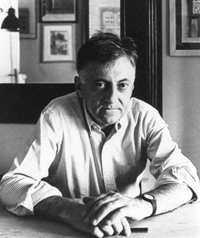
Aldo Rossi (May 3, 1931 – September 4, 1997) was an Italian architect, historian and author. He is best known for blending theory and built work, arguing that the city is a repository of collective memory and that architectural types persist across time. Rossi received major international recognition when he won the Pritzker Prize in 1990. He died in a road accident in Milan in 1997.
Image gallery
10 Images



Architectural ideas and style
Rossi emerged as a leading voice in late 20th-century architectural thought by stressing typology, analogy and the continuity of urban form. He rejected purely functionalist solutions in favour of elemental, geometric forms—towers, cemeteries, theaters and factories—that could act as city "artifacts." His writings emphasize memory, collective identity and the persistence of built types as shaping forces for design.
Notable works and projects
Rossi’s practical work ranges from civic buildings to temporary installations. Some projects widely associated with his name include cemetery design that treats funerary architecture as a public monument, a floating theater for cultural events, and museum commissions in Europe. These projects illustrate his interest in simple silhouettes, measured repetition and the integration of historical references into contemporary form.
Legacy and influence
Beyond individual buildings, Rossi is influential as a theorist and teacher. His book The Architecture of the City and other writings have been widely taught and debated, helping to shape the Italian neo-rationalist movement and influencing architects interested in urban memory and typological continuity. His approach continues to inform discussions about preservation, urban design and the cultural meaning of architecture.
Characteristics and notable facts
- Emphasis on typology: using enduring building types as design generators.
- Focus on memory and the city as an accumulation of artifacts.
- Preference for clear geometric forms and restrained material expression.
- Winner of the 1990 Pritzker Prize; active as a writer, teacher and designer.
Rossi’s career bridged practice and theory: his buildings make his ideas tangible, and his texts continue to be a reference for architects and urbanists exploring how the past shapes the future of cities.
Related articles
Author
AlegsaOnline.com Aldo Rossi Leandro Alegsa
URL: https://en.alegsaonline.com/art/113594