
Adil Abdul-Mahdi — Iraqi politician and economist
Adil Abdul-Mahdi (born 1942) is an Iraqi politician and economist who served as Prime Minister from 2018–2020 and held senior posts including vice president, finance minister and oil minister.
Adil Abdul-Mahdi (Arabic: عادل عبد المهدي المنتفكي) is an Iraqi politician and economist born on 1 January 1942. He served as the Prime Minister of Iraq from October 2018 until May 2020. His tenure is most remembered for attempts to address economic problems and for resigning amid widespread protest movements that began in late 2019.
Image gallery
3 Images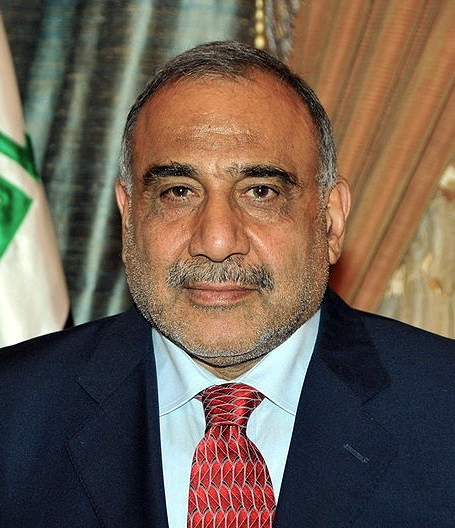


Career overview and offices
Across several decades, Abdul-Mahdi held a number of senior positions in post‑2003 Iraq. He was one of the country's vice presidents from 2005 to 2011, served as a finance minister in the interim national administration after the 2003 invasion, and later became oil minister from 2014 to 2016. Observers frequently describe him as a technocrat with an economic background and long experience in governance.
Background and political path
Before returning to Iraq after the fall of Saddam Hussein, Abdul-Mahdi spent extended periods abroad and participated in opposition politics. His career blends roles as an economist and as a senior political figure in Iraq's post‑2003 state. While he has been associated with broad Shiʿa political currents, he was often presented as a compromise candidate acceptable to multiple blocs when he became prime minister.
Policies, challenges and significance
As prime minister he faced several entrenched problems: chronic unemployment, public anger over corruption and poor public services, falling purchasing power, and the need to manage Iraq's crucial oil sector. His government proposed reforms aimed at reducing dependency on oil revenues and improving public services, but these measures met resistance and were overshadowed by street protests in 2019. Analysts noted the difficulty of implementing deep structural reforms in Iraq's fragmented political landscape.
Resignation and transition
Following weeks of demonstrations and violent clashes, Abdul-Mahdi announced on 29 November 2019 that he would step down; the Iraqi parliament approved his resignation on 1 December 2019. He remained in a caretaker capacity until a successor was appointed in May 2020. The protest movement that precipitated his resignation has continued to shape Iraqi politics and policy debates about reform and accountability.
Notable facts
- He is widely described as an economist and public official with decades of experience in government and opposition.
- His time as oil minister placed him at the center of Iraq's most important industry and budgetary source.
- His resignation amid the 2019–2020 protests made him a central figure in a major episode of contemporary Iraqi political history.
For further reading about his public offices and biography see profiles linked here: Arabic name and form, political profile, economic background, ministerial roles, and prime ministership.
Related articles
Author
AlegsaOnline.com Adil Abdul-Mahdi — Iraqi politician and economist Leandro Alegsa
URL: https://en.alegsaonline.com/art/113323
Sources
- sfchronicle.com : "Iraq tasks Shiite independent with forming new government"
- aljazeera.net : "عادل عبد المهدي"
- washingtonpost.com : "Prospective Iraqi Premier a Man of Many Labels"
- aljazeera.com : aljazeera.com/news/2019/12/adel-abdul-mahdis-short-tenure-iraqs-prime-minister-1912011802…
- presstv.com : "Iraqi prime minister accepts another minister's resignation"
- theguardian.com : Iraqi PM says he will resign after weeks of violent protests
- bbc.com : Iraq unrest: PM Abdul Mahdi to resign after bloodiest day in protests
- aljazeera.com : "Uncertainty remains as Iraq parliament accepts PM's resignation"
- npr.org : "Iraqi Parliament Accepts PM Adel Abdul-Mahdi Resignation, But Protesters Demand More"