
Adlai Stevenson II
American politician and diplomat; two-time Democratic presidential nominee, Governor of Illinois (1949–1953), and U.S. Ambassador to the United Nations (1961–1965).
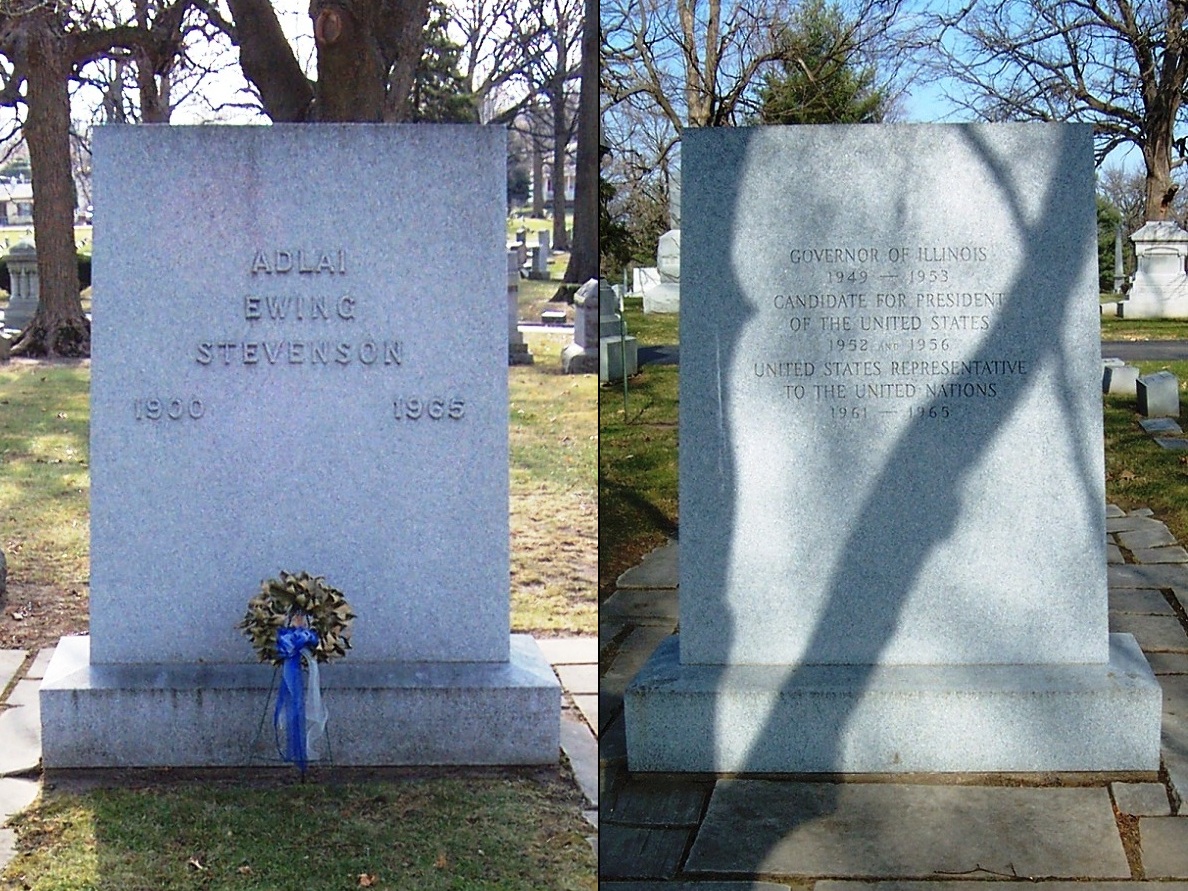
Adlai E. Stevenson II (February 5, 1900 – July 14, 1965) was an American statesman, lawyer, and diplomat known for his articulate public speeches, intellectual approach to politics, and leadership within the Democratic Party in the 1950s and early 1960s. He served as Governor of Illinois and was the Democratic nominee for president in 1952 and 1956, losing both times to Dwight D. Eisenhower.
Image gallery
10 Images


Early life and education
Born into a politically prominent family, Stevenson was the grandson of Vice President Adlai E. Stevenson. He was educated at private schools and at Princeton University, and trained as a lawyer before entering public life. His family background and education shaped a cultivated public persona that contrasted with the rougher style of many mid‑20th century American politicians.
Political career and gubernatorial term
Stevenson was elected the 31st Governor of Illinois, serving from 1949 to 1953. As governor he pushed for administrative reform, modernization of state government, and some progressive policies on education and civil administration. His temperament and emphasis on thoughtful policy made him popular with many intellectuals and urban voters, though critics sometimes labeled him aloof.
National campaigns and reputation
Twice the Democratic Party nominated him for president, in 1952 and in 1956, campaigns in which he faced the charismatic World War II hero Dwight D. Eisenhower. Stevenson's campaigns promoted internationalism, support for alliances, and a cautious approach to Cold War tensions. He became widely associated with eloquent televised speeches and debate-style argument, even as opponents attacked him as an intellectual elitist and used the derisive nickname "egghead."
United Nations and later years
In 1961 President John F. Kennedy appointed Stevenson as United States Ambassador to the United Nations, a post he held until his death in 1965. He played a prominent role during several Cold War crises; most notably, in 1962 he confronted the Soviet delegation at the UN by presenting photographic evidence of Soviet missile installations in Cuba. He continued to speak for diplomatic solutions and international law until he died while serving in office.
Legacy and notable facts
- Remembered for wit, moral rhetoric, and commitment to public service rather than political machine tactics.
- Helped reframe postwar liberalism toward civil rights, international cooperation, and technocratic governance.
- Served as a model for later reform-minded Democrats and is often cited for raising the tone of public debate in mid‑century America.
Questions and answers
Q: Who was Adlai Stevenson II?
A: Adlai Stevenson II was an American politician who ran for president against Dwight D. Eisenhower in 1952 and 1956, was the 31st Governor of Illinois from 1949 to 1953, and became United States Ambassador to the United Nations from 1961 until his death in 1965.
Q: When was Adlai Stevenson II born and when did he die?
A: Adlai Stevenson II was born on February 5, 1900, and died on July 14, 1965.
Q: Did Adlai Stevenson II win the presidential elections?
A: No, Adlai Stevenson II did not win the presidential elections. He ran against Dwight D. Eisenhower in the 1952 and 1956 elections, but he lost both times.
Q: Who was Adlai Stevenson II's grandfather?
A: Adlai Stevenson II's grandfather was Vice President Adlai E. Stevenson.
Q: What was Adlai Stevenson II's position before becoming United States Ambassador to the United Nations?
A: Before becoming United States Ambassador to the United Nations, Adlai Stevenson II was the 31st Governor of Illinois from 1949 to 1953.
Q: When did Adlai Stevenson II become United States Ambassador to the United Nations?
A: Adlai Stevenson II became United States Ambassador to the United Nations in 1961.
Q: When did Adlai Stevenson II die?
A: Adlai Stevenson II died on July 14, 1965.
Related articles
Author
AlegsaOnline.com Adlai Stevenson II Leandro Alegsa
URL: https://en.alegsaonline.com/art/113326
Sources
- preservation.lacity.org : "Historic-Cultural Monument (HCM) List, City Declared Monuments"
- cnn.com : "'MASH' star McLean Stevenson dies"
- amacad.org : "Book of Members, 1780–2010: Chapter S"