
Aaron Burr: Revolutionary officer, vice president, and controversial figure
Aaron Burr (1756–1836), American lawyer, Revolutionary War officer and third U.S. vice president. Remembered for the fatal duel with Alexander Hamilton, a later treason trial, and a disputed political legacy.
Aaron Burr Jr. (February 6, 1756 – September 14, 1836) was an American lawyer, soldier and politician who served as the third vice president of the United States from 1801 to 1805. Born in Newark, in the Province of New Jersey, Burr trained in law and became prominent in public life. He combined a successful legal practice with military service during the American Revolution and a turbulent political career in the early republic. Readers can follow his professional roles as a lawyer, as an active political figure, and as a veteran of the Revolutionary War.
Image gallery
10 Images
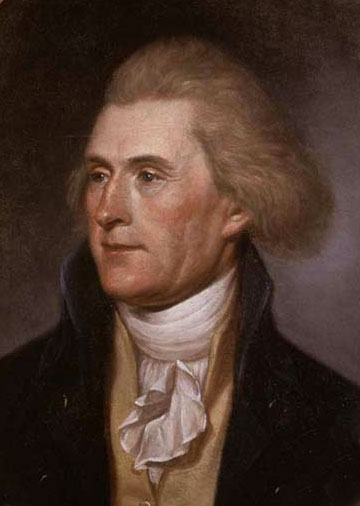


Early life and education
Burr grew up in a family engaged with the religious and intellectual circles of colonial America. He attended the College of New Jersey (now Princeton University) and read law under established practitioners, developing the legal knowledge that would underpin his career. His connections in New Jersey and New York helped him establish a practice in the rapidly changing postwar society. Biographers note how family loss, personal resilience, and the politics of the 1760s and 1770s shaped his formative years.
Military service
During the American Revolution Burr served with the Continental Army and attained field-officer rank, participating in several campaigns and earning a reputation among some contemporaries for courage and endurance. Military service introduced him to networks of men who later became influential in government. After the war he returned to civilian life and applied his military experience to public office and political organizing, while continuing his legal work.
Political rise
Burr became a significant actor in the political life of New York and the new nation. He allied with elements of the Democratic-Republican movement and held elective office in state government, serving in the New York State Assembly and later gaining election to the United States Senate. His political activity included strategic alliances and rivalries; he rose to the national stage and was chosen as Thomas Jefferson’s running mate, serving as Vice President from 1801 to 1805. Burr’s exact positions and shifting alliances made him a polarizing figure within the Democratic-Republican ranks and beyond. He also held important state offices and participated in the legislative life of New York, including work in the New York State Assembly.
The duel with Alexander Hamilton
On July 11, 1804, Burr fatally wounded former Secretary of the Treasury Alexander Hamilton in a duel in Weehawken, New Jersey. The duel followed a protracted series of political disputes and personal slights between the two men. The killing destroyed Burr’s national political prospects: he was widely condemned, faced legal difficulties in several jurisdictions, and his public reputation was permanently damaged. The episode remains a central episode in studies of honor culture, early American politics, and the limits of partisan conflict; contemporary and later writers often discuss the duel itself and the customs surrounding it, including the practice of the duel.
Western expedition and treason trial
After leaving the vice presidency Burr became involved in an expedition on the western frontier whose purpose was disputed at the time and remains debated by historians. Critics alleged he sought to establish an independent territory in parts of the trans‑Mississippi West or to make gains in lands then controlled by Spain; supporters maintained his plans were more ambiguous or entrepreneurial. Accused of plotting a secessionist scheme, Burr was arrested and tried for treason in 1807. The prosecution centered on allegations of a conspiracy and on supposed intentions involving Spanish or Mexican lands. Some contemporaries linked his activity with events in Spanish-held territory in North America, including the contested borderlands of what is now the American Southwest and Spanish territories. President Thomas Jefferson and others viewed the affair with alarm. At trial, Chief Justice John Marshall set a narrow constitutional standard for treason, and Burr was acquitted for lack of proof of the overt act required by law.
Later life and legacy
Following his trial Burr lived for decades in relative obscurity, returning to law and to private life, and he traveled at times abroad. He died in 1836. His reputation has been reassessed repeatedly: some historians emphasize his talents as an attorney and his effectiveness in certain offices, while others emphasize ambition, unpredictability, and ethical questions raised by episodes such as the duel and the western expedition. Scholars place his career within the broader story of the early United States, where fragile institutions, intense partisan conflict, and expansionist pressures produced both opportunity and scandal.
Points of note
- Burr served in the Revolutionary War and later in high elected office, culminating in the vice presidency (1801–1805).
- He engaged in vigorous party politics and was associated with the Democratic‑Republican movement, though he had many political rivals.
- The 1804 duel with Hamilton ended a prominent political career and provoked legal and social consequences across the nation.
- His 1807 treason trial is a landmark case for the constitutional definition of treason and for early American criminal jurisprudence.
For readers wishing to explore primary sources and in‑depth treatments, consult archival collections of Burr’s correspondence, contemporary newspapers, and specialist biographies that treat his legal arguments, trial records, and political correspondence. Scholarly work continues to probe his motives and the long-term consequences of his actions for the developing United States political system.
Further reading and resources are available on topics such as Burr’s legal career (law), his political activity (politics), his military service (military record), his hometown ties (Newark), his rank and wartime role (rank), party affiliations (party history), state service (state office), the Hamilton duel (Hamilton), dueling customs (duel practice), the western episode (conspiracy), Spanish borderlands context (Spanish territories), and Jefferson’s reactions (Jefferson).
Related articles
Author
AlegsaOnline.com Aaron Burr: Revolutionary officer, vice president, and controversial figure Leandro Alegsa
URL: https://en.alegsaonline.com/art/113158