
711 (AD) — events, context and legacy
The year 711 is best known for the Muslim landings in the Iberian Peninsula and the beginning of Umayyad rule in Hispania. It marks a major turning point in early medieval Europe and North Africa.
Overview
711 (AD 711) is a year often highlighted by historians because of events that reshaped the western Mediterranean. In European chronological accounts it marks the opening of a period of rapid political change, especially in the Iberian Peninsula and the Maghreb. For general chronology and period studies see a contemporary chronological overview.
Image gallery
2 Images
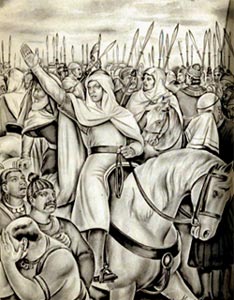
Major events
- The beginning of the Muslim military entry into the Iberian Peninsula from North Africa, which led to the collapse of the ruling Visigothic structures in many regions.
- Local battles and shifts of allegiance among Hispano-Visigothic nobles that accelerated political fragmentation.
- In Asia and other regions no single event from this year dominates the record; many states continued established administrative and cultural developments.
The most consequential occurrence associated with 711 is the crossing of troops from North Africa under commanders sent by the Umayyad authorities in Ifriqiya and the Berber contingents who joined them. Contemporary and near-contemporary sources describe a decisive engagement against the Visigothic forces in southern Iberia; later medieval chronicles name leaders and local kings, though precise details and chronology can vary between accounts.
Within a short span the military successes opened the way for Umayyad governors and commanders to extend control over large parts of the peninsula. These changes were followed, in the next few years, by administrative consolidation and the gradual emergence of what later medieval and modern historians call Al-Andalus.
Notable people
- Tariq ibn Ziyad — commander associated in many sources with the initial crossings into Iberia.
- Roderic (Roderik) — the Visigothic king whose reign and reported death are traditionally placed around this episode.
- Musa ibn Nusayr — Umayyad governor of North Africa whose forces and authority figured in the campaigns that followed.
Legacy: The events beginning in 711 had long-term cultural, religious and political consequences. In Iberia they initiated centuries of Islamic rule in various forms, interactions with Christian kingdoms to the north, and a complex process of coexistence, conflict and cultural exchange. In broader terms, the year is often treated as a turning point that connects North African and Mediterranean histories with evolving medieval European dynamics.
Related articles
Author
AlegsaOnline.com 711 (AD) — events, context and legacy Leandro Alegsa
URL: https://en.alegsaonline.com/art/113044