
Year 715 (DCCXV)
Year 715 (DCCXV) was a common year beginning on Tuesday of the Julian calendar. It featured notable successions in the Umayyad Caliphate and the papacy, and continued political instability across Byzantium and the Frankish realms.
Overview
The year 715 (DCCXV) was a common year of the Julian calendar that began on a Tuesday. It falls in the early medieval period, a time of shifting polities, ecclesiastical influence and active long‑distance trade across Eurasia and the Mediterranean. Several important successions and local upheavals marked the year, reflecting the fluid political landscape of the 8th century.
Image gallery
2 Images
Major political events
- Umayyad Caliphate: The ruling caliphate in the Middle East experienced a change of leadership in 715, when the reign of one caliph ended and Sulayman ibn Abd al‑Malik became caliph. This transition influenced policies and military campaigns in the Islamic world.
- Byzantine Empire: The eastern Roman (Byzantine) state continued to undergo rapid imperial turnovers. The reign of Anastasius II came to an end and an alternative claimant was installed, part of a pattern of short, contested reigns in this period.
- Frankish realms: In the Frankish territories of western Europe, the aftermath of earlier aristocratic contests produced continuing rivalries for the mayoral and ducal powers that effectively directed regional rule.
Religion and the papacy
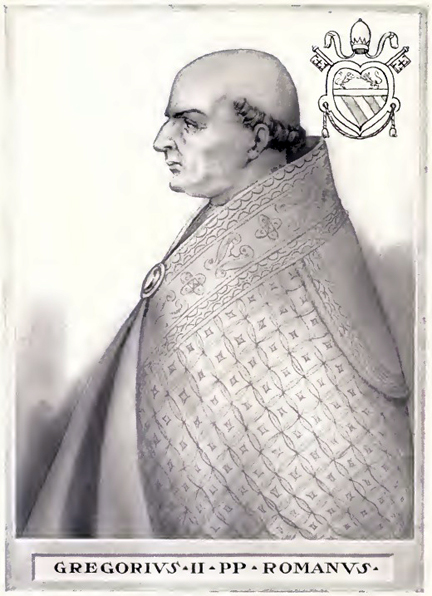
In Rome the papacy changed in 715. Pope Constantine, who had led the church at the start of the 8th century, was succeeded by Gregory II. Papal succession in this era shaped relations with the Byzantine emperors and with emerging western rulers, and it affected missionary activity and church administration across Europe.
Other regions and cultural context
East Asia, under the Tang dynasty in China, remained a major center of administrative development and cultural production. In Japan the Nara period continued after the court had established its capital at Nara earlier in the decade, a phase notable for institutional consolidation and the compilation of court histories. Across South and Southeast Asia regional kingdoms maintained local trade networks linking to the Indian Ocean world.
Significance and distinctions
Year 715 exemplifies the early medieval pattern of regional succession and local conflict rather than large, instant empires of continental scale. Political turnovers in key states—the Umayyad Caliphate, the Byzantine Empire and the papacy—had consequences for diplomacy, military campaigns and religious influence. Economically and culturally, long‑distance connections such as the Silk Road and maritime trade continued to transmit goods, ideas and religious traditions among Europe, the Middle East and Asia.
Calendar and chronology
Recorded in Roman numerals as DCCXV, the year is dated according to the Julian calendar in most contemporary chronicles. Modern historical study locates 715 amid a sequence of rapid leadership changes in several regions, which historians use to trace the evolving political map of the early 8th century.
Related articles
Author
AlegsaOnline.com Year 715 (DCCXV) Leandro Alegsa
URL: https://en.alegsaonline.com/art/113045