
2000 United States Census (Census 2000)
Twenty-second decennial census of the United States (April 1, 2000). Recorded population, questionnaires, methods, uses for apportionment and funding, and notable challenges and legacy.
Overview
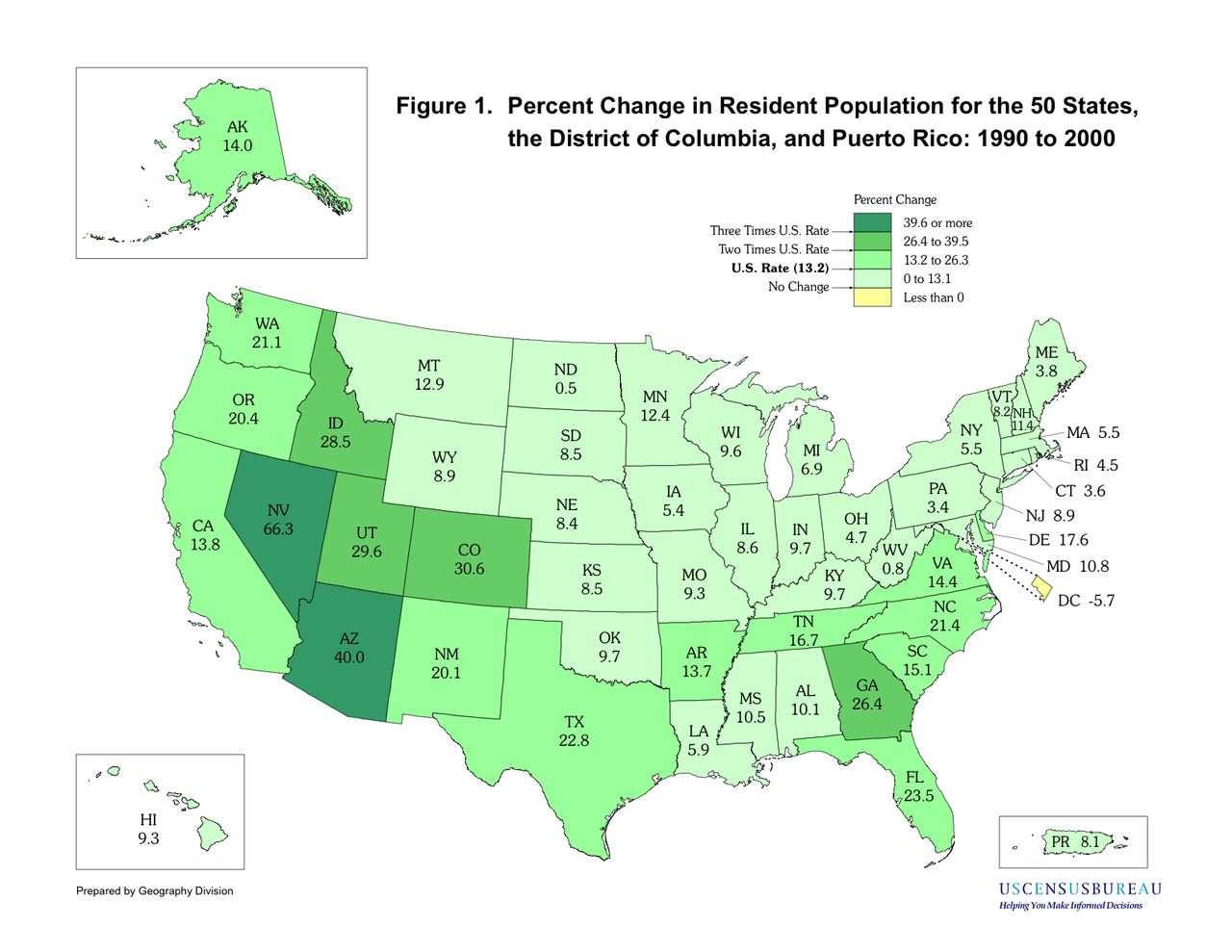
The 2000 United States Census, commonly called Census 2000, was the twenty-second decennial count conducted by the Census Bureau for the United States. The official resident population on April 1, 2000 was 281,421,906, an increase of 13.2% from the 1990 total of 248,709,873. The count established apportionment of seats in the House of Representatives and underpinned federal and local planning; it has been described as the largest peacetime administrative undertaking in U.S. history (historical note).
Image gallery
6 Images



Questionnaires and methods
Most households received a short form that asked a few basic questions about age, sex, race, and household relationships. Approximately 16 percent of housing units were sent a long form containing more than 100 questions covering housing characteristics, employment, education, and ancestry. Data collection blended mail-out/mail-back procedures, targeted field enumeration, and follow-up visits for nonresponse as part of the broader census operation.
Uses and importance
Information from Census 2000 served many public and private functions, such as:
- determining the apportionment of congressional seats and assisting redistricting efforts (apportionment),
- guiding distribution of federal and state program funds to communities,
- providing demographic benchmarks used by researchers, businesses, planners, and advocacy groups.
Issues and legacy
As with other censuses, challenges included reaching hard-to-count populations, minimizing nonresponse, and interpreting race and ethnicity categories. The long-form sample produced a rich microdata resource for social and economic research and influenced methodological improvements used in subsequent censuses.
Further information
Official summaries, technical documentation, and data products are available from the Census Bureau. For authoritative population figures and historical context see resources on population counts.
Related articles
Author
AlegsaOnline.com 2000 United States Census (Census 2000) Leandro Alegsa
URL: https://en.alegsaonline.com/art/112318