
United States Census Bureau
Federal statistical agency in the Department of Commerce that conducts the decennial census and produces demographic, economic and geographic data used for apportionment, planning, research and public policy.
The United States Census Bureau is the federal agency responsible for collecting and publishing statistical information about the nation's people, economy and geography. It operates within the framework of the United States federal government and is an agency of the Department of Commerce. The Bureau conducts the constitutionally required decennial census, which determines congressional apportionment and many federal funding formulas, and it maintains a broad program of surveys, estimates and registers that provide continuous information between censuses. Its outputs are distributed via public data services and portals, sometimes described generally as the agency's data services, and through downloadable files, mapping products and APIs.
Image gallery
5 Images


Primary activities
The Bureau's major programs include the Decennial Census, the American Community Survey (ACS), population estimates and projections, economic censuses, and a range of monthly and quarterly business and labor statistics. These data products support legislative redistricting, the allocation of federal aid, academic research, business planning and emergency response. The Census Bureau also develops and maintains geographic resources such as address lists and mapping files used for spatial analysis.
Legal basis and history
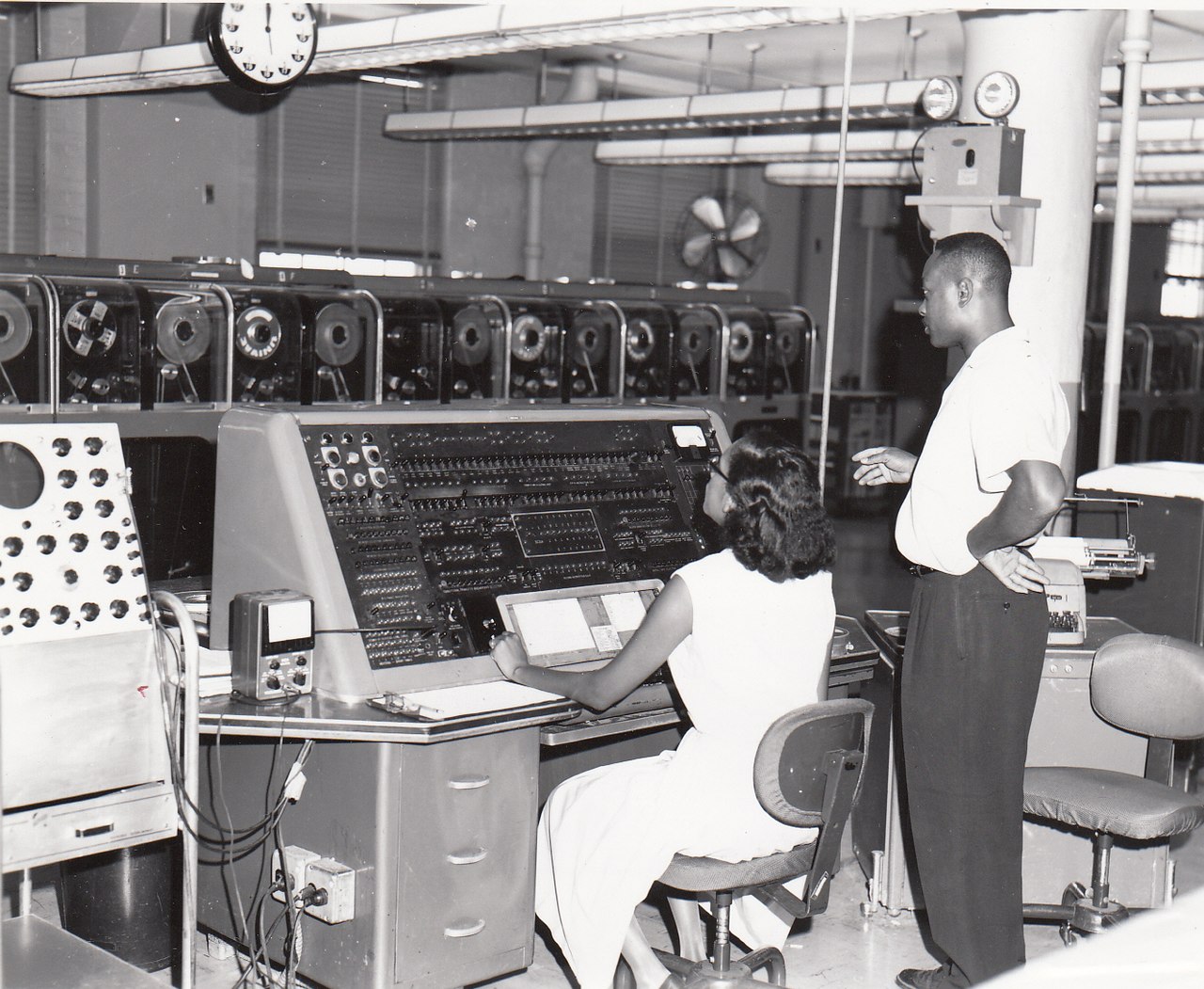
The obligation to enumerate the population derives from the U.S. Constitution; over the nineteenth and twentieth centuries the activity evolved into a professional statistical agency. Placed within the Department of Commerce to coordinate federal data activity, the Bureau has steadily modernized its methods, shifting from paper and field enumeration toward mixed-mode response options, administrative records integration and automated data processing.
Methods, privacy and organization
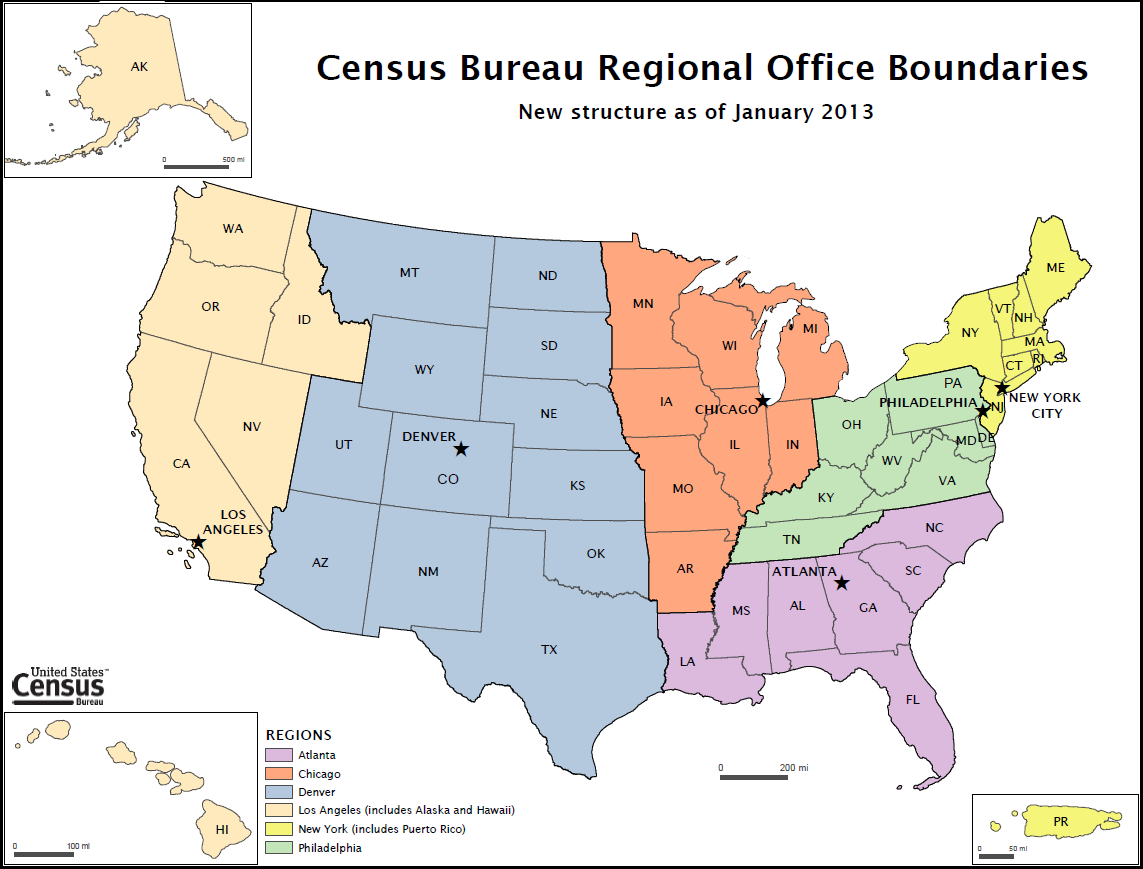
Field operations, survey design and data processing combine traditional enumeration, mail and online self-response, in-person interviews and use of administrative records. The Bureau maintains regional offices and a headquarters staff and also hires large temporary workforces for major operations. Confidentiality is a core legal requirement; individual responses are protected by statute and by internal safeguards designed to prevent disclosure of personally identifiable information.
Uses, access and challenges
Planners, researchers and policymakers rely on Census Bureau statistics for decision making in areas such as public health, education, transportation and commerce. Data access is provided through summary tables, microdata samples for researchers, mapping services and developer APIs. Contemporary challenges include reaching hard-to-count populations, balancing privacy protections with data utility, and integrating new data sources while maintaining quality and public trust. For many users, the Bureau's published material is the authoritative source for demographic and economic measures used in analysis and program administration.
Further information
Readers seeking official releases, methodological documentation or downloadable datasets can consult the Bureau's public interfaces and documentation pages; these resources include guidance for researchers, geographic tools and historical archives. The Census Bureau's work remains central to how the United States measures population change, economic activity and the geographic distribution of people and resources.


See also
- Federal Statistical Office
- Political system of the United States
- United States Federal Government
Evidence
- History, census.gov
- ↑ History of the Authority (English)
- ↑ Title 13 Chapter I Subchapter II Sec. 21 United States Code (English)
Statistical regions of the United States of America according to the United States Census Bureau
Regions: West | Midwest | South | Northeast
Divisions: West Coast | Mountain | West North Central | East North Central states | West South Central | East South Central | South Atlantic | Mid-Atlantic | New England
38.84656-76.927055Coordinates: 38° 50′ 47.6″ N, 76° 55′ 37.4″ W
Questions and answers
Q: What is the United States Census Bureau?
A: The United States Census Bureau is a part of the government that conducts the United States Census.
Q: What is the official name of the United States Census Bureau?
A: The official name of the United States Census Bureau is Bureau of the Census.
Q: What department is the Census Bureau a part of?
A: The Census Bureau is a part of the United States Department of Commerce.
Q: What is the responsibility of the Census Bureau?
A: The responsibility of the Census Bureau is to conduct the United States Census.
Q: Is the Census Bureau a private organization?
A: No, the Census Bureau is a part of the United States government.
Q: Does the Census Bureau conduct any other surveys besides the United States Census?
A: Yes, the Census Bureau conducts various other surveys and programs related to demographics, economics, and geography.
Q: What is the importance of the Census Bureau?
A: The Census Bureau plays a vital role in ensuring an accurate count of the population and demographics, which helps in the allocation of resources and funding, policy-making, and research.
Related articles
Author
AlegsaOnline.com United States Census Bureau Leandro Alegsa
URL: https://en.alegsaonline.com/art/103011
Sources
- census.gov : U.S. Census Bureau
- law.cornell.edu : law.cornell.edu