
1994 Northridge earthquake: overview, effects, and legacy
A comprehensive overview of the January 17, 1994 Northridge earthquake: origins, shaking characteristics, damage, emergency response, and its lasting influence on building codes and seismic science.
Overview
The Northridge earthquake struck the Los Angeles metropolitan area on the morning of Monday, January 17, 1994, at approximately 4:30 a.m. Pacific Standard Time. With a moment magnitude near 6.7, it was comparatively moderate in size but produced some of the strongest ground motions recorded in an urban area in North America. The event was widely felt across Southern California and focused attention on previously unrecognized seismic hazards beneath the San Fernando Valley.
Image gallery
10 Images






Seismic characteristics
The earthquake occurred on a blind thrust fault buried beneath sedimentary layers, a type of rupture that produces intense shaking close to the surface and can catch communities off guard because the fault trace is not visible at ground level. Instruments recorded unusually large peak ground accelerations in parts of the valley; these high accelerations, together with local soil amplification, were a major factor in the extent of structural damage.
Effects and damage
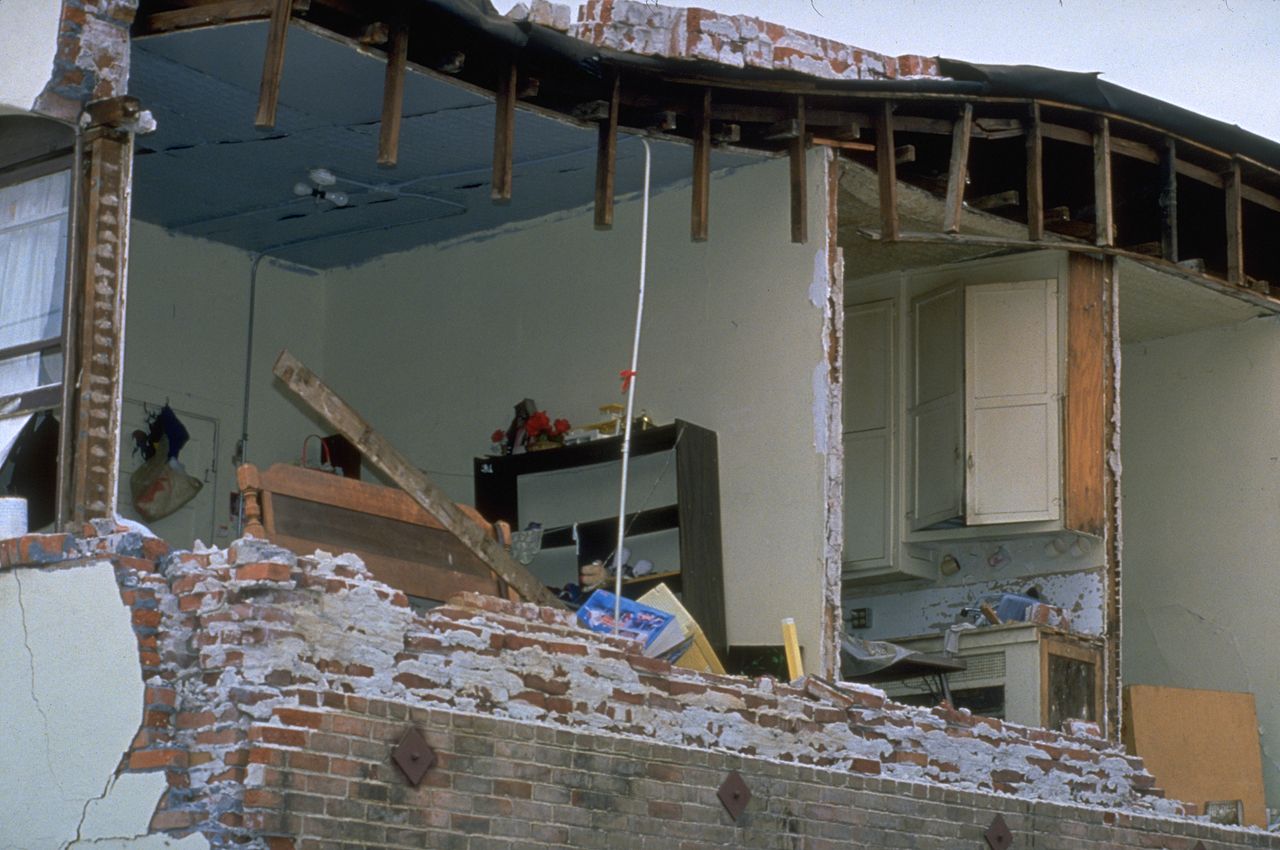
The human and economic toll was significant: the quake resulted in nearly sixty fatalities and thousands of injuries, and it caused widespread damage to houses, apartment buildings, commercial properties, and critical infrastructure. Elevated freeway ramps and overpasses failed in several locations, producing major traffic disruptions. Hospitals, utilities, rail lines and other services suffered interruptions. Estimates of property loss and economic impact ranged in the tens of billions of dollars, placing the disaster among the most costly in U.S. history.
Emergency response and recovery
Local, state and federal agencies mounted search, rescue and recovery operations in the hours and days after the shock. Emergency shelters and medical services were mobilized, and utilities worked to restore service. The earthquake also halted many activities in the region: film and television productions were suspended temporarily and major entertainment studios closed for damage assessment, reflecting the quake’s disruption to the local economy as well as public life.
Legacy and long-term impact
In the years following the event, the Northridge earthquake influenced building codes, retrofitting priorities, and emergency planning in California and beyond. Investigations highlighted vulnerabilities in soft-story apartments, non-ductile concrete buildings, and some hospital facilities, prompting changes in design standards and accelerated retrofit programs for critical structures. The ground-motion records from the event also became a valuable dataset for seismologists and engineers studying near-source shaking, soil effects, and structural performance.
Notable facts and further reading
- Type of fault: blind thrust beneath the San Fernando Valley.
- Time: early morning, producing many injuries from collapsing interiors and unsecured objects.
- Infrastructure: extensive damage to freeway overpasses and building façades prompted rapid inspections and repairs.
- Scientific value: numerous strong-motion records improved understanding of urban ground shaking.
For official summaries, technical reports and archival coverage, see selected resources below:
- official seismic summaries and bulletins
- regional preparedness and response information
- instrumental records and ground motion data
- economic loss estimates and analyses
- industry impacts and production shutdowns
- television and media coverage archives
- transportation infrastructure damage reports
- road and local network assessments
- effects on entertainment and cultural districts
- studio closures and facility damage accounts
- additional historical and technical references
Related articles
Author
AlegsaOnline.com 1994 Northridge earthquake: overview, effects, and legacy Leandro Alegsa
URL: https://en.alegsaonline.com/art/112255
Sources
- earthquake.usgs.gov : "Historic Earthquakes"
- pubs.usgs.gov : "Introduction"