
1820 — a year of political upheaval, scientific breakthroughs and exploration
A survey of events in 1820: liberal revolts in Spain and Portugal, the Missouri Compromise and Monroe's re-election, early Antarctic sightings, Ørsted's electromagnetism, and notable births.
Overview
The year 1820 sits at the intersection of political ferment, expanding global exploration and rapid scientific advance. Across Europe and the Americas, movements for constitutional government and national independence produced uprisings and legislative compromises. At the same time natural philosophers and navigators pushed boundaries that would reshape later decades.
Image gallery
10 Images


Politics and public life
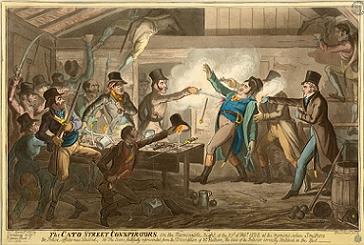
1820 saw prominent liberal eruptions: a military-backed uprising in Porto initiated a liberal revolution in Portugal that pushed toward a constitutional monarchy, while a pronunciamiento in Spain led to the Trienio Liberal, a three-year restoration of the Spanish constitution. In Britain a foiled plot to assassinate ministers dramatized postwar political tensions. In the United States, the Missouri Compromise resolved a sectional dispute by admitting Missouri as a slave state and Maine as a free state, preserving a fragile balance; President James Monroe was effectively unopposed in the 1820 election.
Exploration and science
Explorers from several nations reported the first recorded sightings of the Antarctic mainland or nearby islands in 1820, inaugurating sustained attention to the southern polar regions. In science, Hans Christian Ørsted's demonstration that electric current produces magnetic effects supplied a crucial empirical link between electricity and magnetism, catalyzing later theoretical and technological advances.
Culture, economy and technology
Romanticism remained the dominant artistic and literary current, emphasizing feeling and the natural world. Industrialization continued to transform transport and production: steam navigation and experimental railways were spreading practical demonstrations even as large-scale networks were still emerging. These economic and cultural shifts set patterns that accelerated through the 1820s and 1830s.
Notable births and deaths
- Births: Florence Nightingale and Susan B. Anthony, both born in 1820, who would become leading figures in nursing reform and women's rights respectively.
- Deaths: King George III of the United Kingdom died in 1820, ending a long reign that included the loss of the American colonies and the Regency era.
Significance: 1820 can be seen as a hinge year in the long nineteenth century—marked by constitutional struggles in Europe, compromises over slavery in the United States, breakthroughs that linked electricity and magnetism, and the opening of the Antarctic to record and later scientific inquiry. These developments reflected and helped shape the political, intellectual and technological trajectories of the century that followed.
Related articles
Author
AlegsaOnline.com 1820 — a year of political upheaval, scientific breakthroughs and exploration Leandro Alegsa
URL: https://en.alegsaonline.com/art/111772