
1810
Overview of the year 1810: Napoleonic power politics in Europe, the outbreak of independence movements across Spanish America, notable political episodes, and cultural births.
1810 was a pivotal year in the long era of the Napoleonic Wars and the early 19th-century Atlantic revolutions. Military campaigns and diplomatic maneuvers in Europe continued to reshape states, while political disorder in Spain after the French invasion encouraged colonies in the Americas to establish local juntas and begin prolonged struggles for independence.
Image gallery
9 Images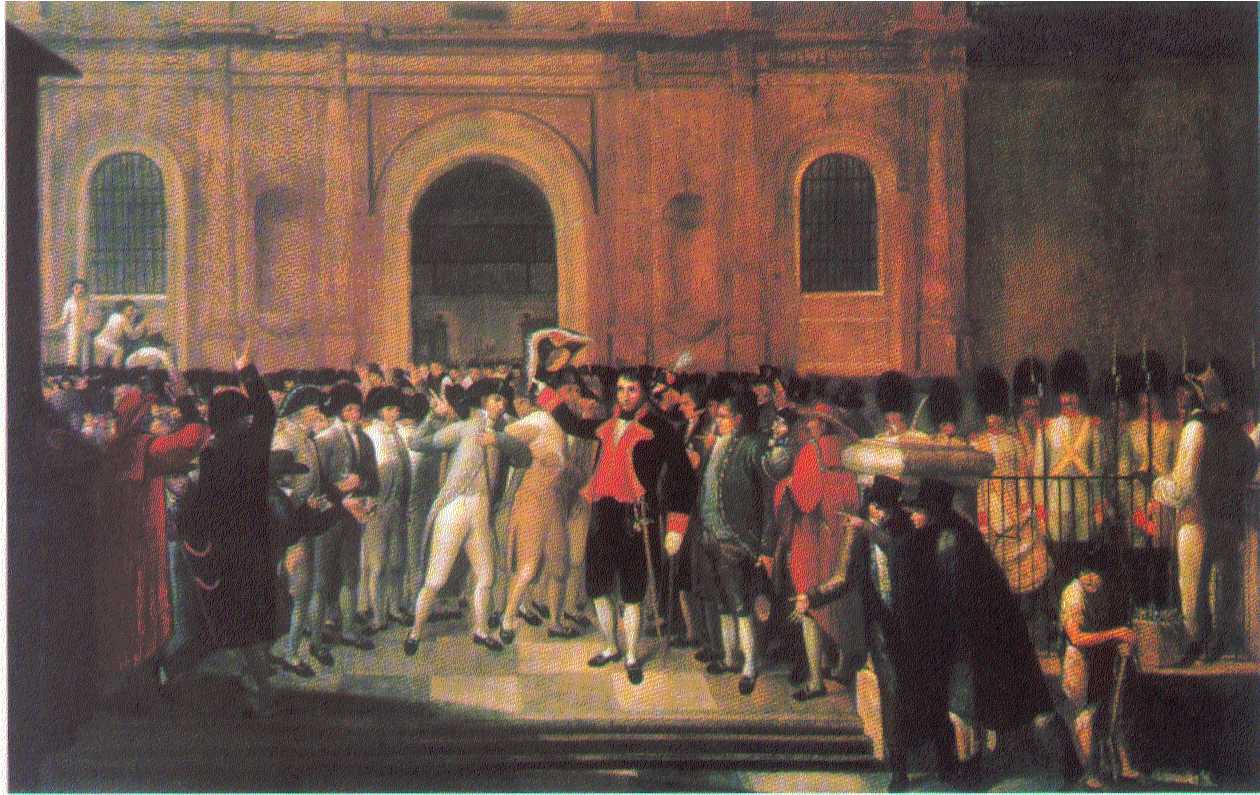




Political and military developments in Europe
The Continental System and ongoing conflict with Britain defined much of European diplomacy and warfare. Napoleon continued to consolidate influence by dynastic and political means: in 1810 he married Marie Louise of Austria, seeking a dynastic heir and a closer relationship with the Habsburgs. The Peninsular War in Spain and Portugal remained a major theatre of resistance, where British, Portuguese and Spanish forces waged sustained campaigns against French occupation.
Beginnings of Latin American independence movements
Instability in the Spanish monarchy after 1808 prompted political reorganization across Spanish America. In Buenos Aires the May Week of 1810 (May 18–25) produced a local junta that removed viceregal authority and initiated the Argentine war of independence. In Caracas civic leaders deposed the Spanish captain general in April and set up a governing junta. In New Spain (Mexico) the cry for rebellion associated with Miguel Hidalgo y Costilla on September 16, 1810, launched an insurgent movement that evolved into a wider independence war.
Other notable events and regional experiments
Several short-lived states and political choices reflected wider turmoil. Settlers in West Florida declared a short-lived Republic of West Florida in September 1810. In Sweden the Riksdag elected Marshal Jean-Baptiste Bernadotte as heir to the throne in August 1810, a decision with long-term dynastic consequences for Sweden.
Cultural notes and notable births
The year saw the births of several figures who would shape 19th-century culture and politics: Frédéric Chopin (born March 1) and Robert Schumann (born June 8) in music, and statesmen such as Camillo Benso, Count of Cavour (born August 10), later significant in Italian unification. The intellectual and artistic life of the period reflected the upheavals of politics and society.
Significance
- 1810 marks the opening phase of many Spanish American independence processes, with juntas and uprisings that led to extended wars of independence.
- The year illustrates how Napoleonic Europe exported instability and also prompted conservative dynastic responses.
- Local revolts, provisional governments and dynastic choices taken in 1810 had consequences that shaped the nineteenth-century political map on both sides of the Atlantic.
Related articles
Author
AlegsaOnline.com 1810 Leandro Alegsa
URL: https://en.alegsaonline.com/art/111759