
1518
Year 1518 in the early modern period, noted for the Dancing Plague in Strasbourg, Cardinal Wolsey's Treaty of London, and continuing events of the Renaissance and Reformation; also an even composite number.
1518 denotes a calendar year in the early modern period and the integer after 1517. As a year it sits within the European Renaissance, the Age of Discovery and the opening decades of the Protestant Reformation. Several episodes from 1518 have attracted lasting attention in political, religious and social history; considered as a number, 1518 has straightforward arithmetical properties.
Image gallery
5 Images
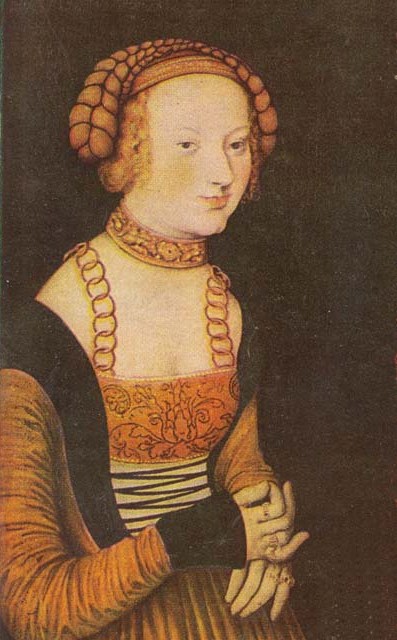


Notable events
- The Dancing Plague of Strasbourg: During the summer a large number of residents of Strasbourg (then part of the Holy Roman Empire) engaged in an outbreak of prolonged, involuntary dancing. Contemporary chronicles reported dozens dancing in the streets for days or weeks. Modern historians and medical researchers have interpreted the episode as a probable case of mass psychogenic illness, influenced by social stress, religious belief and local conditions; other hypotheses (including contagious neurological disease or ergot poisoning) have been proposed but remain debated.
- Treaty of London (1518): Cardinal Thomas Wolsey of England brokered a multilateral agreement, signed in October, that aimed to establish a general peace among major Western European powers. The pact, encouraged by Pope Leo X, was an early example of a broad diplomatic initiative though its practical effectiveness proved limited in the face of competing dynastic interests.
- Reformation and religious disputes: Martin Luther’s challenge to church practice continued to reverberate. In 1518 he remained engaged with theological opponents and papal representatives; confrontations with ecclesiastical authorities heightened the controversies that would reshape religious and political life across German lands and beyond.
These events unfolded against a wider backdrop: Iberian and Portuguese exploratory and colonial efforts were expanding overseas, Italian and northern European artists and scholars advanced Renaissance culture, and dynastic and Ottoman–Habsburg tensions shaped continental diplomacy.
1518 as a number
The integer 1518 is even and composite. Its prime factorization is 2 × 3 × 11 × 23, which implies the usual divisor structure for a product of distinct primes. In Roman numerals it is written MDXVIII. The sum of its proper divisors exceeds the number, so 1518 is classified as an abundant number. Mathematically it is an ordinary natural number positioned between 1517 and 1519.
Legacy and study
Historians cite 1518 when discussing early modern diplomacy, the social history of illness and the spread of reforming ideas. The Dancing Plague remains a widely discussed example of collective behaviour and the cultural context of disease, while the Treaty of London is often referenced in surveys of premodern attempts at multilateral diplomacy. As a numeral, 1518 is principally of interest in chronology and elementary number theory.
Related articles
Author
AlegsaOnline.com 1518 Leandro Alegsa
URL: https://en.alegsaonline.com/art/111442