
Álvaro Uribe: Colombian leader, security policy, and political influence
Overview of Álvaro Uribe Vélez, Colombian president (2002–2010), his security policies, controversies, honors and later political role, including his stance on peace talks with the FARC.
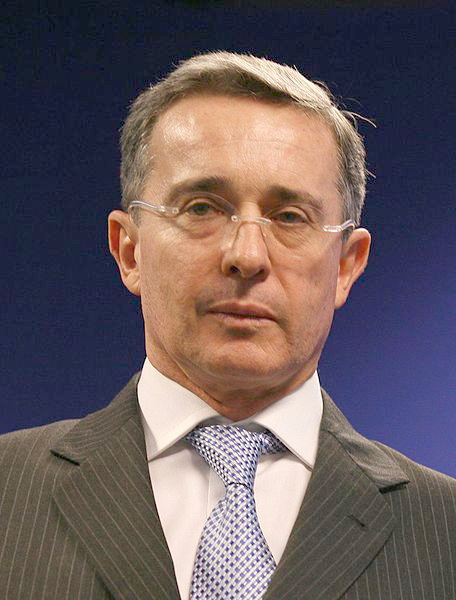
Álvaro Uribe Vélez (born 4 July 1952) is a Colombian conservative politician who served two terms as the 31st President of Colombia from 7 August 2002 to 7 August 2010. His presidency emphasized a security-first approach to internal conflict, and his tenure remains influential and controversial in modern Colombian politics.
Image gallery
10 Images



Early life and local career
Uribe was born in Medellín and raised in the Antioquia region, an area that shaped his political outlook and public image. Early in his career he held local and regional positions and was appointed Mayor of Medellín in October 1982 by President Belisario Betancur. Those formative roles framed his emphasis on rural affairs, land security and law-and-order themes that later defined his national platform.
Presidency and national security policy
During his two terms as president, Uribe launched a program often referred to as "Democratic Security," which combined intensified military operations, expanded intelligence capabilities and incentives for demobilization. The administration sought to reassert state control over territories contested by guerrilla groups and to reduce high-profile crimes that had affected everyday life. Supporters credit these policies with bringing greater stability to many regions and improving investor confidence; critics point to alleged abuses and to debates over the balance between security measures and human rights protections.
Controversies and legal scrutiny
Uribe's record has been the subject of sustained public debate. Investigations and reporting examined alleged connections between some political actors and paramilitary groups, questions about the conduct of security forces, and legal inquiries into actions taken during and after his administration. These matters have influenced how historians, jurists and citizens assess his legacy and remain part of ongoing political discussion.
International recognition and post-presidential role
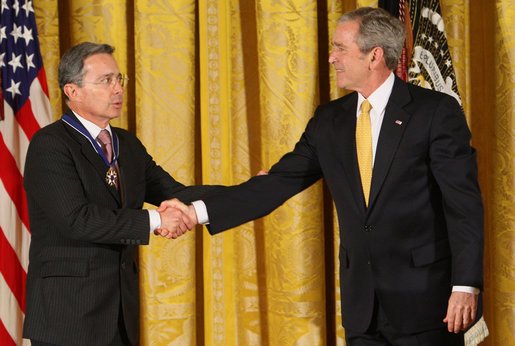
In January 2009 Uribe received the Presidential Medal of Freedom from George W. Bush, an honor often cited in accounts of his international profile. After leaving the presidency he stayed active in national politics, helping to form a political movement and continuing to exert influence on policy debates. He was later named to a UN-related panel addressing an international maritime incident, serving as vice-chair in that capacity.
Position on peace talks and legacy
Uribe became an outspoken critic of his successor, Juan Manuel Santos, particularly regarding Santos's decision to pursue peace negotiations with the FARC guerrillas. His stance exemplified broader disagreements in Colombian society about negotiation versus military pressure as means to end long-running internal conflict. Uribe's political movement and rhetoric continue to shape debates on security, reconciliation and accountability.
Assessment
- Security and governance: credited by allies with restoring a greater state presence and reducing some forms of violence in parts of the country.
- Polarization: his methods and the controversies linked to his administration deepened political divisions and prompted legal and civic responses.
- Enduring influence: he remains a central figure in contemporary Colombian politics, with ongoing effects on policy, party alignments and public debate.
Álvaro Uribe's career illustrates the tensions faced by democratic governments addressing entrenched armed conflict: the challenge of combining effective security measures with respect for legal norms and human rights, and the long-term political consequences of choices made during moments of crisis.
Related articles
Author
AlegsaOnline.com Álvaro Uribe: Colombian leader, security policy, and political influence Leandro Alegsa
URL: https://en.alegsaonline.com/art/110839
Sources
- english.aljazeera.net : "Israel 'to assist' flotilla inquiry"
- elpais.com : "Uribe rechaza el nuevo acuerdo de paz entre el Gobierno y las FARC y pide un nuevo plebiscito"