
Medellín — city in the Aburrá Valley, capital of Antioquia
Medellín is a major Colombian city in the Aburrá Valley and the capital of Antioquia. Founded in 1616, it is a cultural, industrial, and transport hub known for its mild climate, urban innovation and Paisa identity.
Overview
Medellín (see Spanish pronunciation) is the principal city in the Aburrá Valley and the capital of the Antioquia Department (Antioquia) in Colombia. Founded in 1616 by Francisco Herrera Campuzano, Medellín has long served as a commercial and manufacturing center. The municipality had roughly 2.45 million inhabitants in 2014, making it the second most populous city in Colombia after Bogotá. The larger Valle de Aburrá metropolitan area exceeds three million residents, forming the country’s second-largest urban agglomeration.
Image gallery
10 Images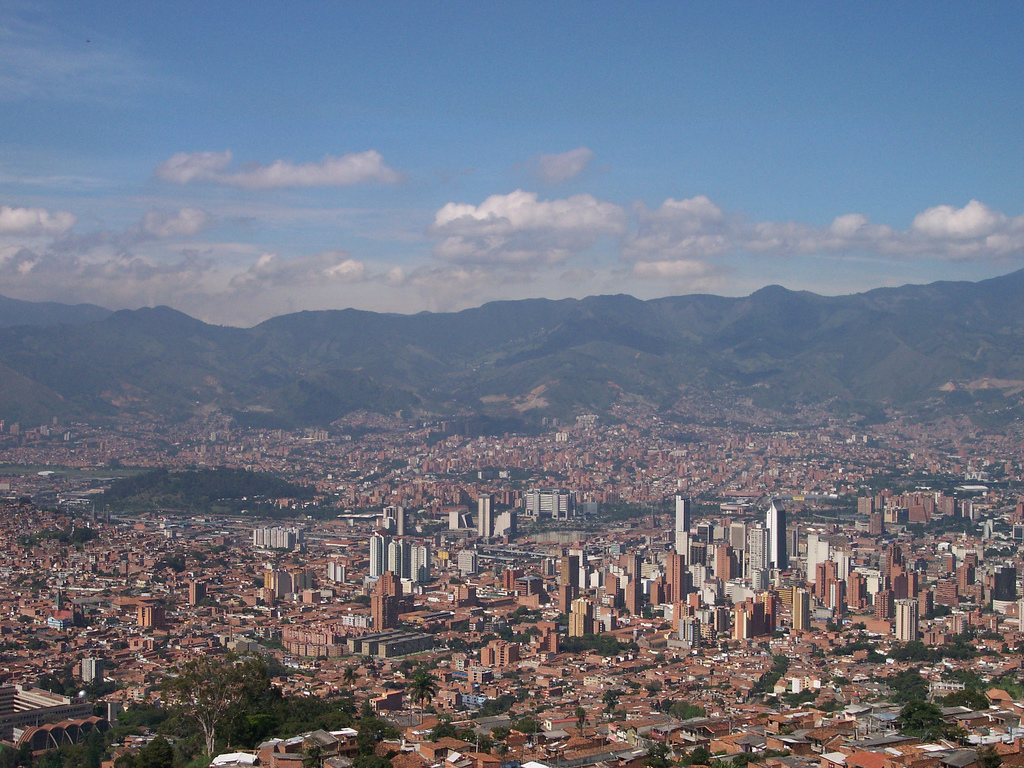


Location, climate and character
Set within a narrow montane valley at about 1,500 meters elevation, Medellín enjoys a humid temperate climate often described as springlike year-round. This mild weather influenced its popular nickname and favors outdoor markets, parks and boulevard life. The city’s topography — steep hills rising from the valley floor — has shaped how neighborhoods developed and how transport infrastructure has been designed.
History and development
Medellín’s growth accelerated in the 19th and 20th centuries with the expansion of coffee cultivation, textiles and industry across Antioquia. Over time the city evolved from a provincial market town into a diversified industrial and service economy. Its modern urban expansion followed patterns typical of Latin American cities, with central commercial districts, surrounding residential areas and newer developments climbing the valley slopes.
Economy, transport and infrastructure
The city is a regional economic engine, with strengths in manufacturing, finance, commerce and services. Public transport is a notable feature: Medellín operates a metro system complemented by cable cars (gondolas) and tram lines designed to connect hillside communities to the valley floor. These systems are often cited in discussions of inclusive infrastructure because they link peripheral neighborhoods to jobs and education.
Culture, identity and events
Medellín is culturally vibrant, hosting festivals, museums, music scenes and culinary traditions. Residents of the region are commonly known as Paisas, a cultural label that includes people from Antioquia as well as the neighboring departments of Risaralda, Caldas and Quindío. Annual events such as flower festivals, parades and cultural fairs draw visitors and celebrate local identity, crafts and gastronomy.
Urban transformation and contemporary challenges
In recent decades Medellín has been widely discussed for a combination of social programs, targeted public investments and urban planning that sought to improve mobility, public space and education. At the same time the city faces persistent challenges: unemployment, inequality and public security remain important policy concerns. Medellín’s experience is therefore often presented as an example of both the possibilities and limits of urban reform in a large Latin American metropolis.
Notable features
- Historical founding date: 1616.
- Capital of the Antioquia Department and core of the Valle de Aburrá metropolitan area.
- Popular regional identity: Paisa culture and traditions.
- Integrated transport systems combining metro, cable cars and trams.
Related articles
Author
AlegsaOnline.com Medellín — city in the Aburrá Valley, capital of Antioquia Leandro Alegsa
URL: https://en.alegsaonline.com/art/63379
Sources
- veeduriamedellin.org.co : "Veeduría Ciudadana al Plan de Desarrollo de Medellín IDH 2004-2007"
- world-gazetteer.com : world-gazetteer.com
- mongabay.com : "Largest cities in Colombia (2002)"
- commons.wikimedia.org : Medellín