
Zorn (river, Grand Est, France)
The Zorn is a right-bank tributary of the Moder in north-eastern France, rising in the Vosges foothills and flowing through rural Bas-Rhin into the Rhine basin; known for local mills, ecology and recreation.
Overview
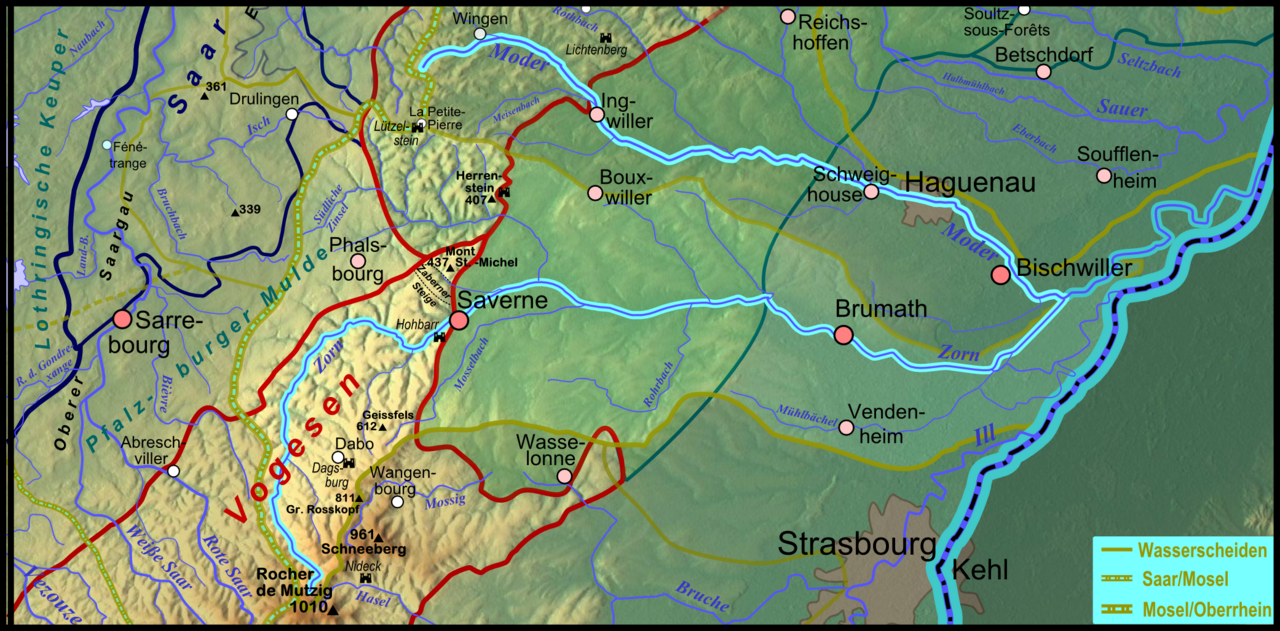
The Zorn is a small to medium-sized river in north-eastern France, within the Grand Est region. It is a right tributary of the Moder, which itself drains to the Rhine. The river rises in the lower Vosges and follows a generally northerly course through the department of Bas-Rhin before joining the Moder. The river's reported coordinates near a central point on its course are 48°45′07″N 7°54′57″E.
Image gallery
5 Images


Course and characteristics
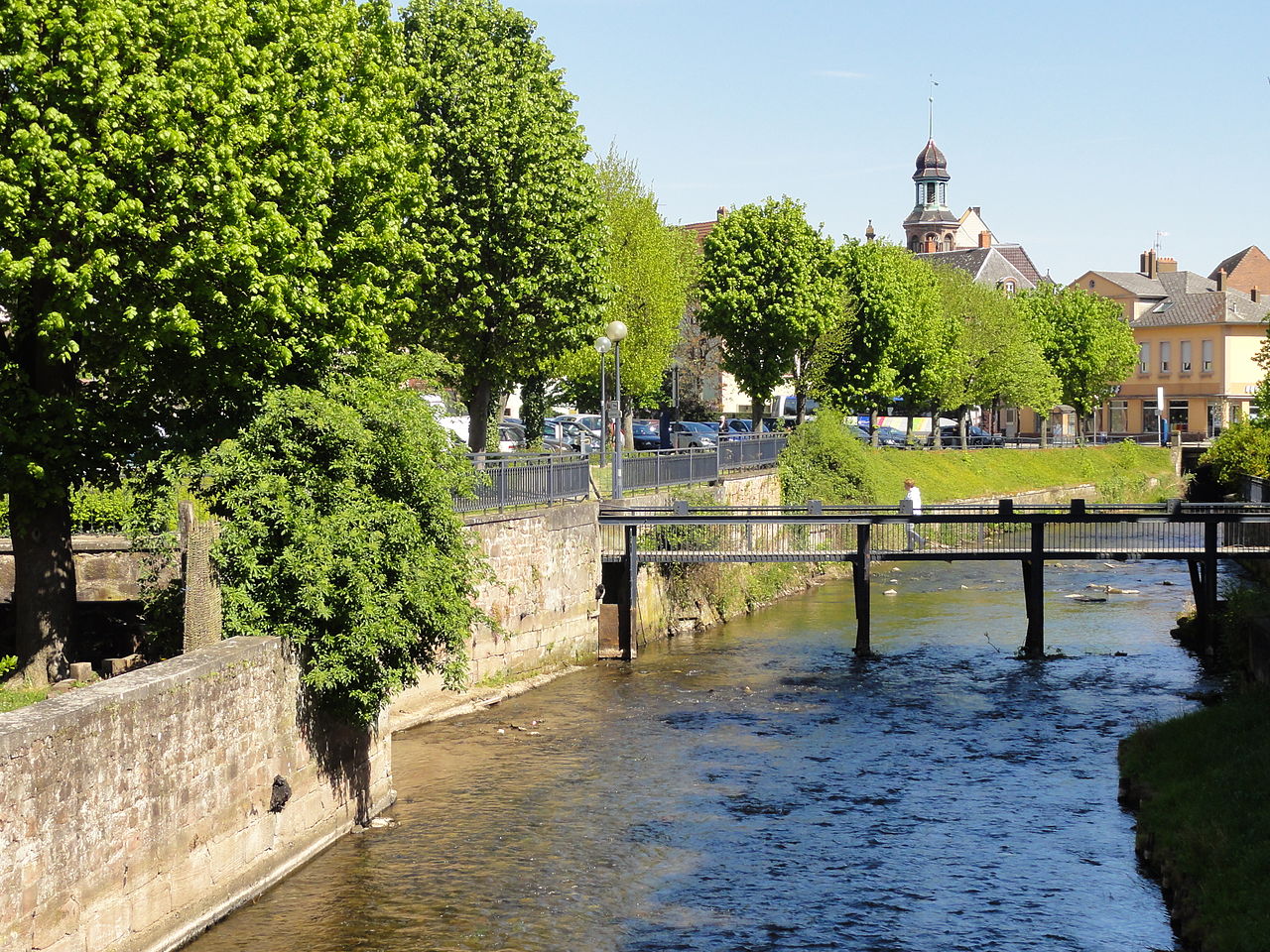
The Zorn flows from upland streams and springs in the Vosges foothills into more open agricultural valleys. It is conventionally described as running just under 100 km in length and carries a modest flow typical of tributaries in the Rhine basin. Its channel alternates between narrow wooded sections and broader reaches where it traverses villages and small towns. The Zorn contributes to local groundwater recharge and joins the Moder as part of a network that ultimately feeds the Rhine.
History and human use
Historically the Zorn supported watermills, modest textile and tannery operations, and small-scale farming economies along its banks. Its waters powered mills and provided a water source for livestock and irrigation. Navigation has been limited to small craft; the river has not served as a major transport route. During the 20th and 21st centuries, infrastructure for flood protection and channel maintenance was introduced in places to protect settlements.
Ecology and recreation
Riparian corridors along the Zorn host a mix of aquatic and terrestrial habitats: emergent vegetation, wooded riverbanks and slow-flowing pools that support fish, amphibians and invertebrates. Local authorities and volunteers have undertaken projects to monitor water quality and restore sections of the river where banks were channelized. Today the Zorn is used for angling, walking, cycling and nature observation, and it forms part of local greenway networks.
Notable facts and distinctions
The Zorn is one of several small rivers in Alsace that together shaped the region's settlement pattern and rural economy. It should not be confused with other uses of the name "Zorn" (for example as a surname). For further geographic or administrative details consult regional resources and maps linked to the river's coordinates, general river information at river overviews, tributary classifications at tributary descriptions, or information about the downstream Moder.
- Main uses: local water supply, agriculture, mills (historical), recreation.
- Environmental focus: habitat restoration, water-quality monitoring.
Questions and answers
Q: What are the coordinates of the Zorn river?
A: The coordinates of the Zorn river are 48°45′07″N 7°54′57″E / 48.75194°N 7.91583°E / 48.75194; 7.91583.
Q: Where is the Zorn river located?
A: The Zorn river is located in north-eastern France.
Q: Is the Zorn river a right or left tributary of the Moder river?
A: The Zorn river is a right tributary of the Moder river.
Q: What is the importance of the Moder river?
A: The text doesn't inform us about the importance of the Moder river.
Q: Is the Zorn river used for navigation or transportation?
A: The text doesn't inform us about whether the Zorn river is used for navigation or transportation.
Q: Is the Zorn river a major river in France?
A: The text doesn't provide information on whether the Zorn river is a major river or not.
Q: What is the length of the Zorn river?
A: The text doesn't inform us about the length of the Zorn river.
Related articles
Author
AlegsaOnline.com Zorn (river, Grand Est, France) Leandro Alegsa
URL: https://en.alegsaonline.com/art/110729
Sources
- commons.wikimedia.org : Zorn (river)
- services.sandre.eaufrance.fr : "La Zorn (A34-0200)"
- geoportail.gouv.fr : "Source de la Zorn Jaune"
- geoportail.gouv.fr : "Confluence de la Zorn"
- services.sandre.eaufrance.fr : "La Zinsel du Sud (A34-0210)"
- services.sandre.eaufrance.fr : "La Mossel (A3450400)"