
Zvoriştea — commune in Suceava County, Romania
Zvoriştea is a rural commune in Suceava County in northeastern Romania. This article summarizes its setting, administration, history, economy and cultural character within the historical region of Moldavia.
Zvoriştea is a rural commune located in Suceava County in the northeastern part of Romania. Administratively it belongs to Suceava County and is part of Romania's network of communes, the basic level of local government that typically combines several villages under a common mayor and local council.
Image gallery
6 Images

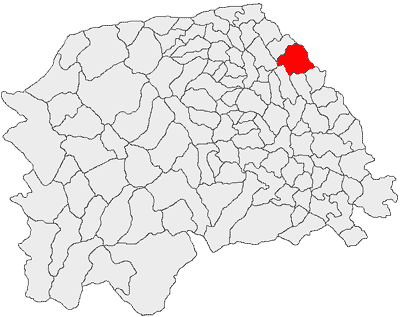


Geography and landscape
The commune lies in the broader area of historical Moldavia, characterized by rolling hills, agricultural land and patches of mixed forest. Its local terrain and climate are typical for the region: temperate continental with warm summers and cold winters. The surroundings support small-scale farming and traditional rural settlements rather than dense urban development.
Administration and composition
As a commune, Zvoriştea is governed by a mayor and a communal council elected by residents. Romanian communes usually comprise several villages; each village preserves its own local identity while sharing public services and administration at the commune level. Public amenities typically include a town hall, primary schools, a parish church and communal infrastructure.
History and cultural life
The area around Zvoriştea shares the long history of Moldavia: medieval settlement, Orthodox Christian traditions and rural folk culture. Local life centers on seasonal agricultural work and community events. Religious holidays, folk music and traditional costumes remain important expressions of cultural identity in many such communities.
Economy, services and transport
The local economy is dominated by agriculture, animal husbandry and small-scale forestry. Many inhabitants combine farming with work in nearby towns. Transport is provided by county roads linking the commune to larger urban centers; public services include basic education, local health points and small businesses serving daily needs.
Notable aspects
- Typical rural administration and community life within Suceava County.
- Part of the historical and cultural landscape of Moldavia.
- Serves as a local center for surrounding villages, preserving regional traditions.
For official statistics such as population or detailed administrative lists it is best to consult county records or national census data, which provide up-to-date figures and legal information about each commune and its constituent villages.
Related articles
Author
AlegsaOnline.com Zvoriştea — commune in Suceava County, Romania Leandro Alegsa
URL: https://en.alegsaonline.com/art/110794