
Ze (Cyrillic letter З)
Ze (З, з) is a Cyrillic consonant representing the voiced alveolar fricative /z/. It appears in many Slavic and non‑Slavic Cyrillic alphabets and is derived from Greek zeta.
Ze (uppercase З, lowercase з) is a letter of the Cyrillic script used to represent the voiced alveolar fricative sound /z/. In modern Russian orthography it is the ninth letter; many other languages that use Cyrillic — such as Ukrainian, Bulgarian, Serbian and Belarusian — also include this letter with the same basic value. Visually, the uppercase form resembles the digit 3, which often leads to informal comparisons.
Image gallery
2 Images
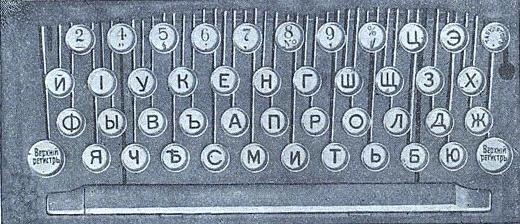
Pronunciation and phonetic behavior
Phonetically, З most commonly denotes /z/. It can be palatalized before front vowels or the soft sign and realized as [zʲ] in languages like Russian (for example, зима "zima" meaning "winter"). Phonological processes affect its surface pronunciation: in word‑final position and before voiceless consonants it may devoice to [s] (final devoicing and regressive assimilation), and it participates in common consonant clusters such as /zv/ in звезда ("star").
History and origin
The letter descends from the Greek letter zeta, incorporated into the early Cyrillic alphabet created in the 9th–10th centuries by the followers of Saints Cyril and Methodius. Early handwritten and printed forms evolved over time; the characteristic three‑stroke shape of З became standardized in modern typefaces while cursive handwriting often produces a simpler looped form.
Usage, transliteration and encoding
- Common transliteration into Latin script is the letter Z, used in many romanization systems and practical orthographies.
- Unicode code points: U+0417 for З and U+0437 for з, enabling consistent digital representation.
- Present in most Cyrillic alphabets that represent the /z/ sound; absent only where a different orthographic tradition applies.
Notable distinctions include visual similarity to the Cyrillic letter Э (which denotes the vowel /e/) and to the numeral 3; careful type design and handwriting conventions help avoid confusion. As a frequent consonant in Slavic vocabularies, З appears in many common roots and loanwords and plays a regular role in native phonotactics and morphology.
Related articles
Author
AlegsaOnline.com Ze (Cyrillic letter З) Leandro Alegsa
URL: https://en.alegsaonline.com/art/110445