
Zhuyin (Bopomofo): Chinese phonetic notation and its uses
Zhuyin (bopomofo) is a phonetic system for Mandarin Chinese used mainly in Taiwan to teach pronunciation, annotate characters, and as an input method. It has a dedicated Unicode block and extended forms.
Overview
Zhuyin Fuhao, commonly called zhuyin or bopomofo, is a phonetic notation system used to represent the pronunciation of Chinese syllables. The informal name "bopomofo" comes from the first four symbols in its conventional order — "bo", "po", "mo" and "fo" — and is frequently used by speakers introduced to the system as their primary label for it. Zhuyin is primarily associated with Mandarin and appears alongside Chinese characters to indicate pronunciation, especially in materials for beginning readers and learners.
Image gallery
10 Images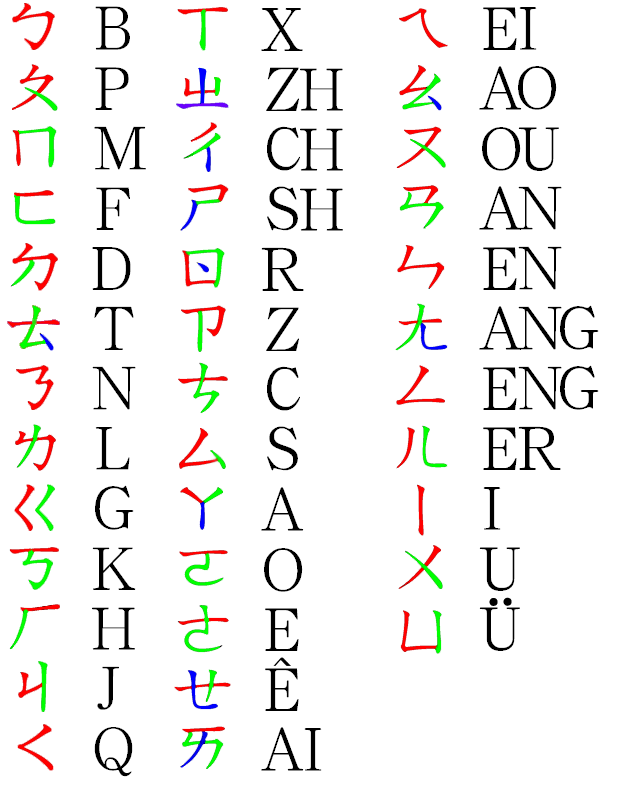





Characteristics and structure
Zhuyin is a symbol-based (rather than alphabetic in the Roman sense) phonetic scheme. It represents the basic building blocks of Mandarin syllables — initials (consonant onsets), finals (vowel and final consonant combinations), and tone marks — with distinct characters. It is commonly described as having a core set of symbols plus diacritic tone marks. These symbols are glyphs that resemble strokes found in regular Chinese calligraphic forms and are designed to be written alongside characters as small annotation marks.
- Function: marks pronunciation of single Chinese characters or entire words.
- Components: separate symbols for initial and final elements; additional marks indicate tones.
- Presentation: often used as ruby text (phonetic annotations written beside or above characters) and in educational materials.
History and development
Zhuyin was developed in the early 20th century as part of broader efforts to standardize Chinese pronunciation and improve literacy. It was created to provide a practical way to teach spoken Mandarin and to record pronunciation without using Latin script. During the 20th century different regions adopted different systems: the People’s Republic of China promoted Hanyu Pinyin (a Romanization) for many official uses, while the Republic of China (Taiwan) retained zhuyin as a teaching and input standard. Over time, extensions and adaptations of the original set of symbols were proposed to cover regional varieties such as Taiwanese Hokkien and Hakka.
Uses and examples
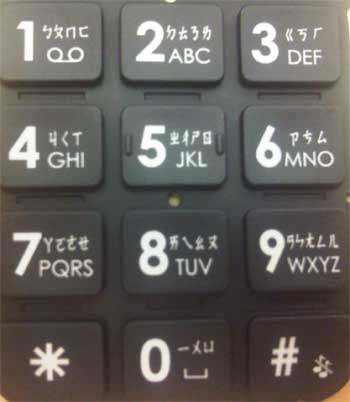
Zhuyin is widely used in Taiwan in elementary education, childrens’ books, dictionaries, and language-learning resources. It is also a popular input method for typing Chinese on keyboards and touchscreens: users enter zhuyin symbols which are then converted into Chinese characters by input software. Teachers and learners of Mandarin use it to clarify pronunciation, especially tones and syllable boundaries, in ways that directly align with the spoken language rather than with Romanized spellings.
- Primary education: serves as the first formal introduction to Mandarin pronunciation for many children in Taiwan.
- Dictionaries and textbooks: provides a consistent way to indicate pronunciation next to characters.
- Input methods: foundation for many Taiwanese keyboard layouts and input software.
Notable facts and distinctions
The label bopomofo derives from the sequence of its first four syllable symbols, and the name is often used interchangeably with zhuyin. While similar in purpose to Romanization systems like Pinyin (both aim to represent pronunciation), zhuyin uses distinct, non-Latin symbols that many learners find more directly tied to Chinese orthographic conventions. Zhuyin characters are encoded in Unicode; the primary block for these symbols occupies a defined range (commonly cited in technical references). Typographically, the glyphs are typically rendered to resemble brush-drawn forms from Chinese regular script and are included in many Chinese font families for that reason; see font and encoding notes for technical details.
Scholars and educators sometimes compare zhuyin with other phonetic systems and phonemic inventories when discussing Chinese dialects and teaching methods; for general descriptions of phonetic notation systems see related phonetic systems. For background on the characters and language context, the reader can consult general introductions to Chinese language and script sources.
Because it remains an active teaching tool and a practical input mechanism, zhuyin continues to be an important element of modern Chinese language education and digital text entry in regions where it is established. It also serves as a cultural touchstone: its distinctive symbols are recognizable to speakers from communities that learned reading with zhuyin, and its use reflects historical choices about language standardization and pedagogy.
Questions and answers
Q: What is Zhuyin Fuhao?
A: Zhuyin Fuhao is a type of sound-based writing for the Chinese language.
Q: What is another name for Zhuyin Fuhao?
A: Zhuyin Fuhao is commonly called bopomofo.
Q: What are "bo", "po", "mo" and "fo" in the Chinese language?
A: "Bo", "po", "mo" and "fo" are the first four of the conventional ordering of available syllables in the Chinese language.
Q: How have the four syllables of "bo", "po", "mo" and "fo" been used?
A: The four syllables together have been used to refer to many different phonetic systems.
Q: What does "bopomofo" mean for Chinese speakers who were first introduced to the Zhuyin system?
A: For Chinese speakers who were first introduced to the Zhuyin system, "bopomofo" means Zhuyin Fuhao.
Q: How are the Zhuyin characters represented in typographic fonts?
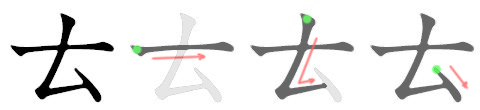
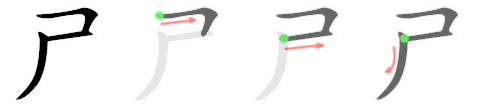
A: The Zhuyin characters are represented in typographic fonts as if drawn with an ink brush (as in Regular Script).
Q: Where are the Zhuyin characters encoded in Unicode?
A: The Zhuyin characters are encoded in Unicode in the bopomofo block, in the range U+3105 ... U+312D.
Related articles
Author
AlegsaOnline.com Zhuyin (Bopomofo): Chinese phonetic notation and its uses Leandro Alegsa
URL: https://en.alegsaonline.com/art/110580
Sources
- unicode.org : "Unihan data for U+ 20000"
- omniglot.com : "Zhuyin fuhao / Bopomofo"
- newyorker.com : "Oracle Bones"