
Zanskar Gorge
Deep, narrow gorge carved by the Zanskar River in the Zanskar region of Ladakh. Known for near-vertical cliffs, a frozen winter route called the Chadar Trek, and remote high‑altitude landscape.
Overview
The Zanskar Gorge is a dramatic river-cut canyon in the Zanskar region, long associated with the Himalaya’s high plateaus and valleys. Carved by the Zanskar River, a tributary of the Indus system, the gorge is renowned for its steep walls and remote setting. Historically this landscape formed a natural barrier between communities, and in winter the frozen river becomes a temporary passage linking settlements that are otherwise isolated.
Image gallery
10 Images




Physical characteristics
The gorge is defined by near-vertical cliffs that rise as high as 600 m in places. The river below is extraordinarily constricted in some sections—narrowing to only a few metres across—so that where the water freezes solid it can form an ice sheet bridge along the valley floor. Over geological time the river’s erosive power cut the deep channel through uplifted mountain rock, producing sheer faces and a sequence of rapids and frozen cascades.
Winter access and the Chadar Trek
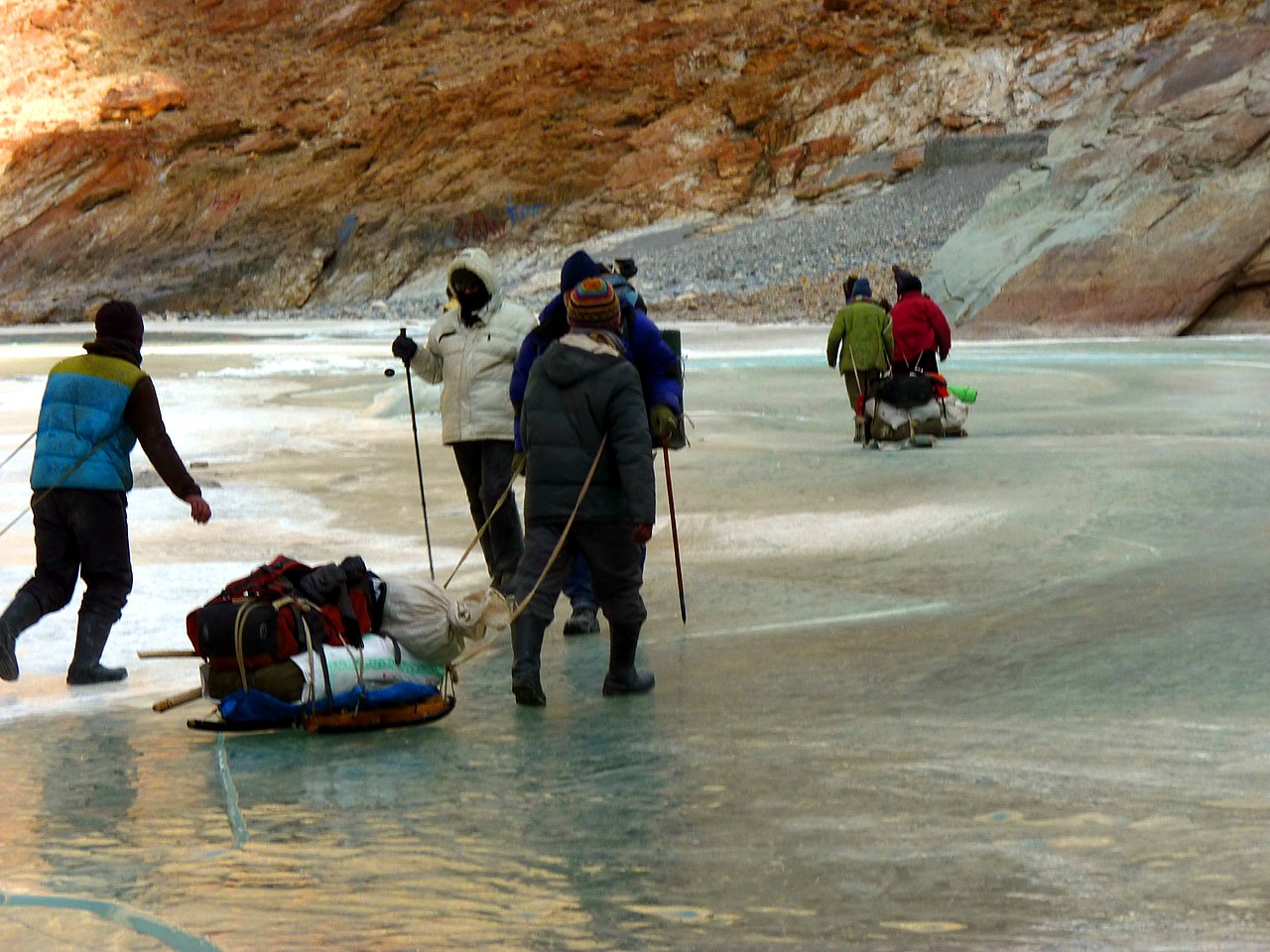
When temperatures drop in mid- to late winter, the surface of the Zanskar River freezes, allowing foot passage along the ice. This seasonal trail, popularly known as the Chadar Trek, attracts trekkers for its unusual environment: walking on a river amid towering cliffs and narrow passages. The route has traditionally been an essential supply line for villages of the Zanskar Valley when roads are impassable, and today combines cultural significance with adventure tourism.
Human use and history
For centuries local inhabitants relied on the river corridor for communication and trade in winter months. The town of Padum and other settlements in the valley have long-standing cultural ties to the landscape. Modern interest in the gorge increased with the rise of adventure trekking, and the area has become better known through travel accounts and organized expeditions.
Ecology, safety and changing conditions
The gorge’s microclimate and high elevation support a fragile mountain environment. Winters are extremely cold and conditions on the ice can change rapidly; thin or unstable ice, falling rock, and avalanche risk are real hazards. Climatic shifts affect freeze-thaw cycles and can shorten or make the ice route unpredictable. Visitors are advised to travel with experienced guides, respect local regulations, and plan for emergency contingencies.
Practical notes and distinctions
Today the Zanskar River is recognized as an important tributary in the Indus basin (tributary of the Indus River) and the gorge stands out for its extreme vertical relief and seasonal transformation. Those interested in visiting should prepare for remote high-altitude travel, obtain local guidance, and consider environmental and cultural impacts when planning trips. The frozen river route remains one of the most unusual winter treks anywhere, combining natural spectacle with living mountain culture.
Related articles
Author
AlegsaOnline.com Zanskar Gorge Leandro Alegsa
URL: https://en.alegsaonline.com/art/110379