
Yemenite architecture: forms, materials, history, and regional styles
Overview of Yemenite architecture: its materials, tower houses, regional variations (Hadhramaut, Sana'a, highlands), historical roots, social uses, and preservation issues.
Yemenite architecture refers to the built traditions and styles that developed on the Arabian Peninsula within the territory of modern Yemen. It spans pre‑Islamic antiquity through the Islamic era to the present day, and is widely recognized for its distinctive multi‑storey homes, fortifications and urban layouts adapted to a range of climates from mountain highlands to desert wadis and coastal plains.
Image gallery
10 Images

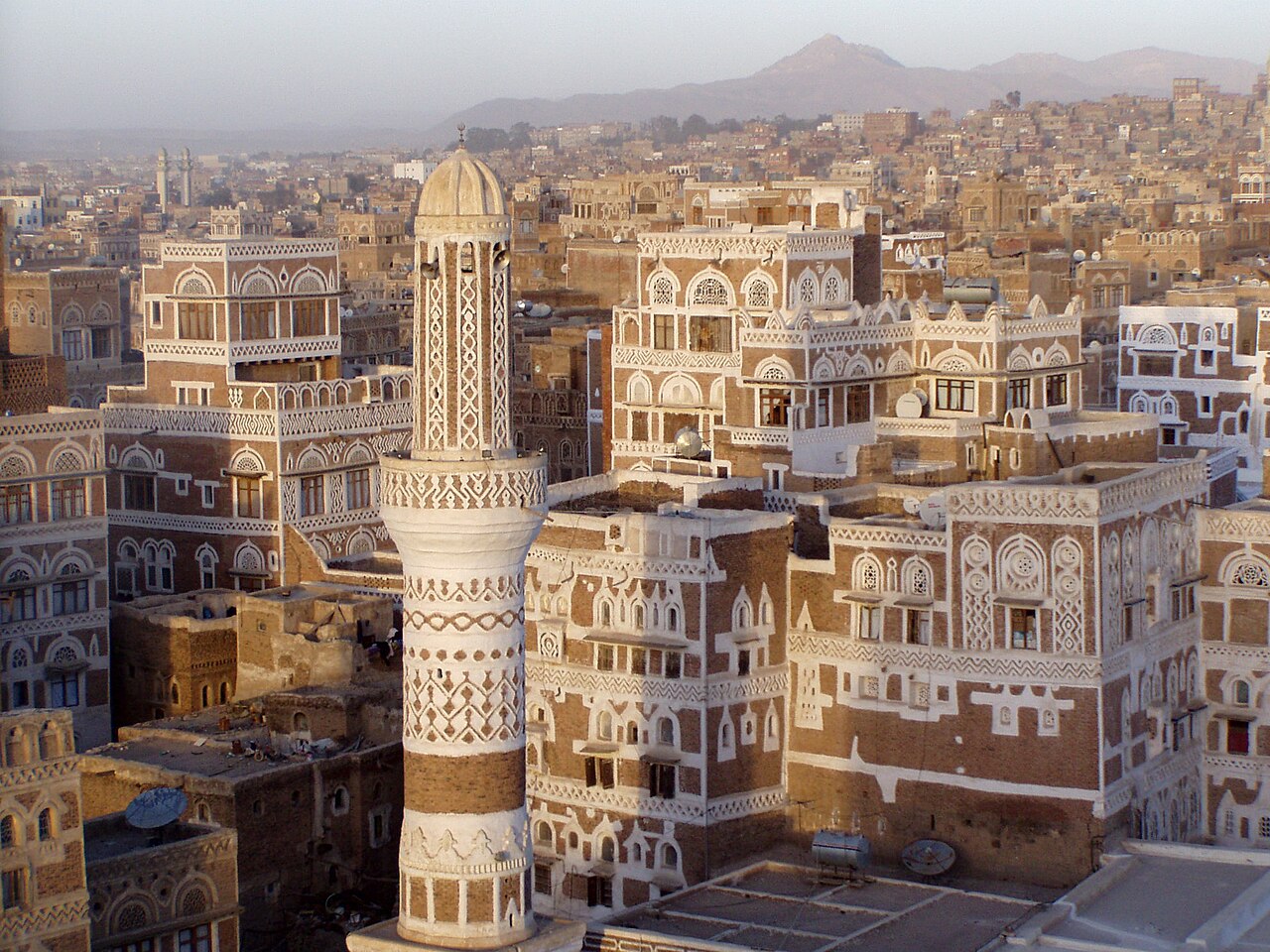


Key characteristics
- Primary materials: adobe and mudbrick (rammed earth), local stone in highlands, and timber for structural reinforcement and decorative elements.
- Vertical domestic architecture: dense, multi‑storey tower houses—sometimes called tower dwellings—built to conserve land, provide security and use natural cooling.
- Climate response: thick walls, small openings, inner courtyards and rooftop terraces that moderate heat and support household activities.
- Decorative practice: patterned plasterwork, carved wooden doors and window screens, and geometric motifs that combine functional and aesthetic roles.
The expression of these features varies with local resources and needs. Mudbrick is typical of the Hadhramaut valley and many wadi settlements, whereas the western highland towns favor dressed stone and mortar. Coastal cities show influences from Indian Ocean trade in ornament and building detail.
Historical context and development
Architectural forms in the region grew from the urbanism of ancient South Arabian kingdoms and were reshaped after the arrival of Islam. Longstanding trade, agricultural engineering (such as irrigation systems) and defensive requirements all shaped settlement patterns. Over centuries, artisans refined techniques for earthen construction and decorative plaster that became characteristic of local identities.
Notable historic examples include dense walled towns and spectacular mudbrick towers that have attracted international attention and conservation efforts. Traditional construction methods emphasize local materials and incremental, family‑based expansion of houses, producing layered streetscapes and close social cohesion.
Regional varieties, uses and modern concerns
- Hadhramaut valley: famous for tall adobe towns where vertical housing maximizes limited arable land.
- Sana'a and highlands: compact stone and plaster houses with ornate facades clustered within historic city cores.
- Coastal and border areas: ports and villages reflect wider maritime and cross‑border influences, and settlements near the border with southern Saudi Arabia sometimes share stylistic traits.
Yemenite architecture remains important for understanding social organization, climate adaptation and regional craft traditions. Preservation is challenged by environmental exposure, urban pressures and conflict in recent decades, making documentation and sensitive restoration a priority for cultural heritage stakeholders.
Questions and answers
Q: What is Yemenite architecture?
A: Yemenite architecture is a style of architecture that was prevalent in Yemen from the Pre-Islamic period until the Islamic period and is characterized by the use of mud bricks and construction of tall tower-like buildings and boulders intertwined between dwellings.
Q: What is notable in Yemenite architecture?
A: The design of the buildings in which Islam began to spread in Yemen is particularly notable in Yemenite architecture.
Q: What is the main material used in Yemenite architecture?
A: Mud bricks are the main material used in Yemenite architecture.
Q: What type of buildings are commonly found in Yemenite architecture?
A: Residential buildings in the form of tall towers and sometimes even large boulders intertwined between dwellings are commonly found in Yemenite architecture.
Q: Where else can a similar architectural style to Yemenite architecture be found?
A: Some villages close to the border of Yemen in southern Saudi Arabia have an architectural style similar to Yemenite architecture.
Q: What period did Yemenite architecture thrive in?
A: Yemenite architecture thrived from the Pre-Islamic period until the Islamic period.
Q: What country is Yemenite architecture associated with?
A: Yemenite architecture is associated with Yemen.
Related articles
Author
AlegsaOnline.com Yemenite architecture: forms, materials, history, and regional styles Leandro Alegsa
URL: https://en.alegsaonline.com/art/109793