
4 World Trade Center (150 Greenwich Street)
4 World Trade Center is a modern office skyscraper in Lower Manhattan, completed as part of the rebuilt World Trade Center complex. It contains retail at street level and office floors above, adjacent to the memorial.
4 World Trade Center, also known by its street address 150 Greenwich Street, is a contemporary office tower in Lower Manhattan that forms part of the rebuilt World Trade Center complex. It occupies a prominent location near the memorial and major transit hubs. The building was delivered during the multi‑phase reconstruction of the site and reflects the larger effort to rehouse offices, retail, and public amenities within a compact urban block. For context on the larger project see the World Trade Center site and its role in the revitalization of New York City.
Image gallery
10 Images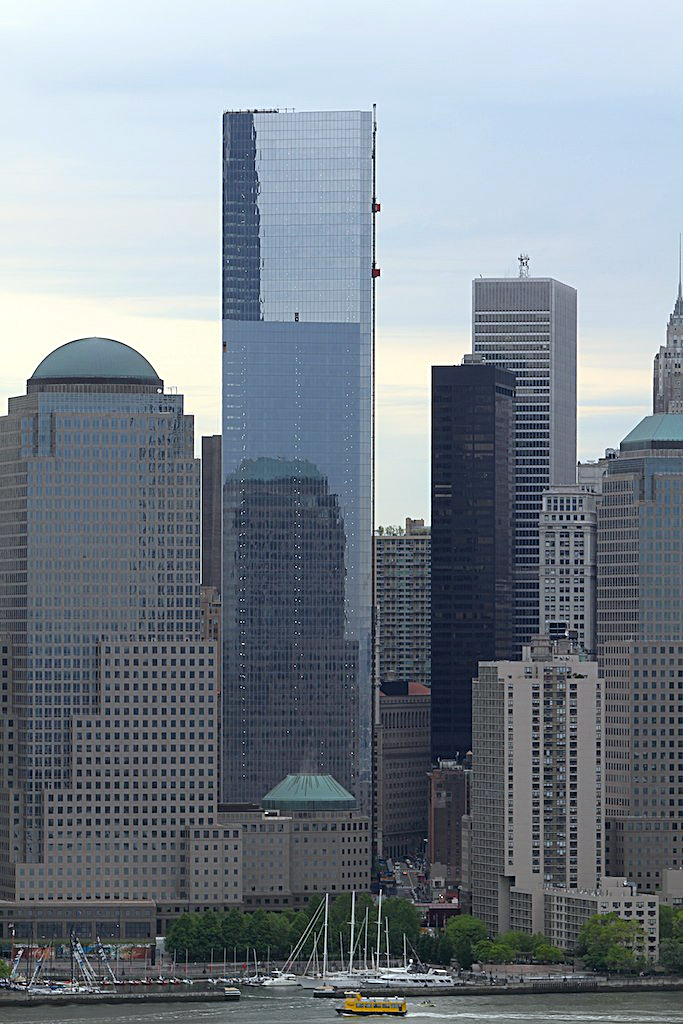


Design and structure
The tower presents a rectilinear form with a glass and metal exterior intended to produce subtle reflections of the sky and neighboring structures. Its lower levels are designed for retail and publicly accessible circulation, with entrances facing the street and plaza. Above the podium, floorplates are arranged for flexible office use, allowing a mix of single‑tenant and multi‑tenant layouts. Building systems and security measures were planned to meet contemporary standards for high‑rise commercial towers.
History and development
Constructed as part of a larger master plan to replace buildings lost at the World Trade Center site, 4 World Trade Center represents one phase in a reconstruction effort that combined private development with public planning. The project sought to balance commercial needs with memorial, civic and transportation functions. The building was developed under the oversight of major stakeholders in the site redevelopment and completed in the early 2010s.
Uses, tenants, and public role
Street‑level spaces are devoted to retail and services intended to activate the public realm and serve commuters and visitors. Upper floors are used mainly as office space by a range of organizations: private companies, non‑profit groups, and service providers. Its proximity to memorial spaces, transit connections and other towers in the complex makes it a key piece of the financial district’s mixed urban fabric.
Notable aspects
- Part of a coordinated rebuilding of a major urban site following catastrophic loss and recovery.
- Combines public retail frontage with secure, modern office environments above.
- Designed to integrate with surrounding memorial, transit and commercial infrastructure.
While it is one element among several in the reconstructed World Trade Center campus, 4 World Trade Center is often noted for its restrained, reflective design and for the way it contributes to the reactivation of Lower Manhattan’s street life. Visitors and users experience the building primarily as a workplace and shopping node that connects to larger civic and transportation networks.
Related articles
Author
AlegsaOnline.com 4 World Trade Center (150 Greenwich Street) Leandro Alegsa
URL: https://en.alegsaonline.com/art/112942
Sources
- wtc.com : "|| World Trade Center ||"
- cityroom.blogs.nytimes.com : "A 977-Foot Tower You May Not See, Assuming You've Even Heard of It"
- 4wtc.com : "Stacking Diagram | 4 World Trade Center | Silverstein Properties"
- emporis.com : 4 World Trade Center
- skyscraperpage.com : 4 World Trade Center
- en.structurae.de : 4 World Trade Center
- skyscrapercenter.com : "4 World Trade Center"
- Four World Trade Center