
Yao Qian Shu — the Chinese "money tree"
Yao qian shu (摇钱树), the Chinese "money tree", is a mythic and archaeological object: a bronze funerary sculpture from the Han era and a lasting folk symbol of wealth and good fortune.
Overview
The term yao qian shu (搖錢樹) literally means "shake money tree." In Chinese folklore it denotes a magical tree that yields coins or wealth when shaken. The phrase has both a mythic life, as a talismanic object in stories and rituals, and an archaeological presence as ornate bronze sculptures recovered from tombs.
Image gallery
3 Images

Design and components
Archaeological examples are typically cast in bronze and present a stylized tree form with a central trunk rising from a base. Branches are often terminated by disk-shaped ornaments resembling coins, and the composition is densely decorated with small human figures, birds, animals, and mythic motifs. Tops or branches sometimes carry symbols associated with immortality, longevity, or auspiciousness. These elements combine visual complexity with symbolic references to prosperity and the afterlife.
History and archaeology
Money-tree bronzes date most prominently to the Han period (c. 206 BCE–220 CE). Large numbers have been recovered from tombs in southwestern China, especially in Sichuan, where richly furnished graves yielded well-preserved examples. Archaeologists interpret them as funerary objects placed with the deceased, reflecting beliefs about wealth, status and provision in the afterlife rather than literal everyday furniture.
Uses and cultural significance
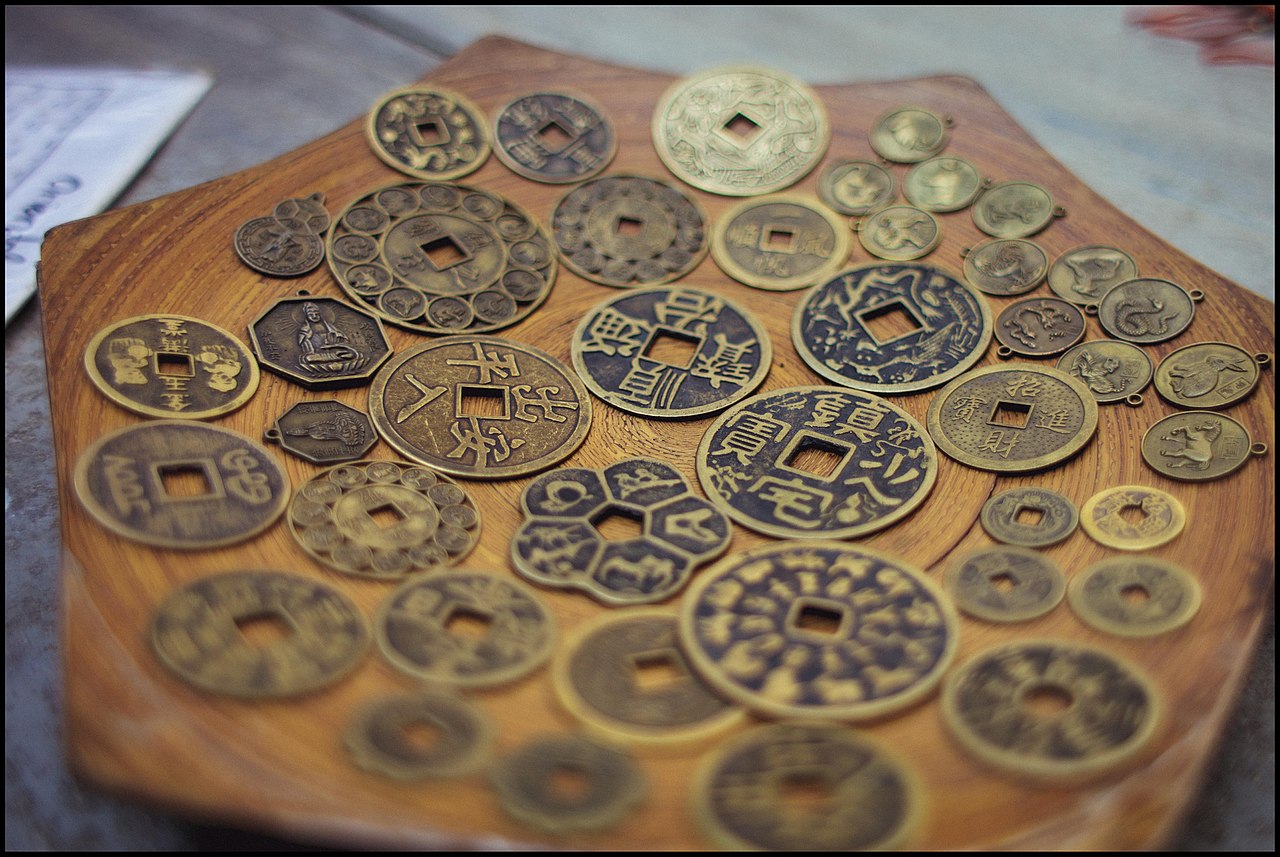
In ancient contexts, money trees seem to have functioned as symbolic offerings: they signaled the owner's social rank and expressed hopes for abundance beyond death. Over centuries the image entered popular culture and folk religion. In modern times the motif appears in decorative arts, New Year ornaments, and commercial promotions; miniature versions in ceramics, metal or jade are given as lucky gifts, and the phrase "shake the money tree" survives as a metaphor for finding an unexpected source of income.
Distinctions and notable facts
- Ancient bronze money trees are chiefly funerary and ritual in purpose, not everyday tools.
- Modern "money trees" used in feng shui or decoration are symbolic descendants rather than direct continuations of the Han objects.
- Finds from the Han era have helped scholars reconstruct regional variations in burial customs; see discussions of the Han archaeological record for wider context (Han dynasty).
Studying yao qian shu connects folklore, material culture and funerary belief: it is a clear example of how an image of prosperity can travel from ritual bronze to living popular practice while retaining layered meanings of wealth, protection and hope.
Related articles
Author
AlegsaOnline.com Yao Qian Shu — the Chinese "money tree" Leandro Alegsa
URL: https://en.alegsaonline.com/art/109637
Sources
- history.cultural-china.com : "Money Tree in the Eastern Han Dynasty - China culture"
- books.google.com : The Sinister Way: The Divine and the Demonic in Chinese Religious Culture