
Whatcheeria — an early Mississippian tetrapod genus
Whatcheeria is an extinct genus of early tetrapod from the early Mississippian (~340 Ma) known from fossils in a limestone quarry at Delta, Iowa; it helps illuminate the water-to-land transition.
Overview
Whatcheeria is an extinct genus of early tetrapod whose remains come from the early Mississippian rocks of Iowa. Fossils were recovered from an old limestone quarry near the town of Delta, and have been dated to roughly 340 million years ago. The type species, W. deltae, was formally named in 1995 and represents one of the clearer records of tetrapods after the Devonian period.
Image gallery
10 Images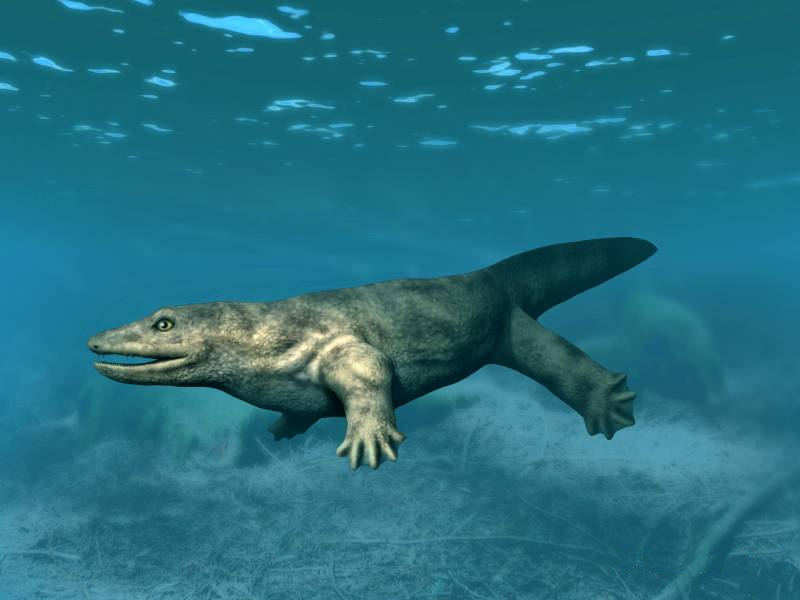

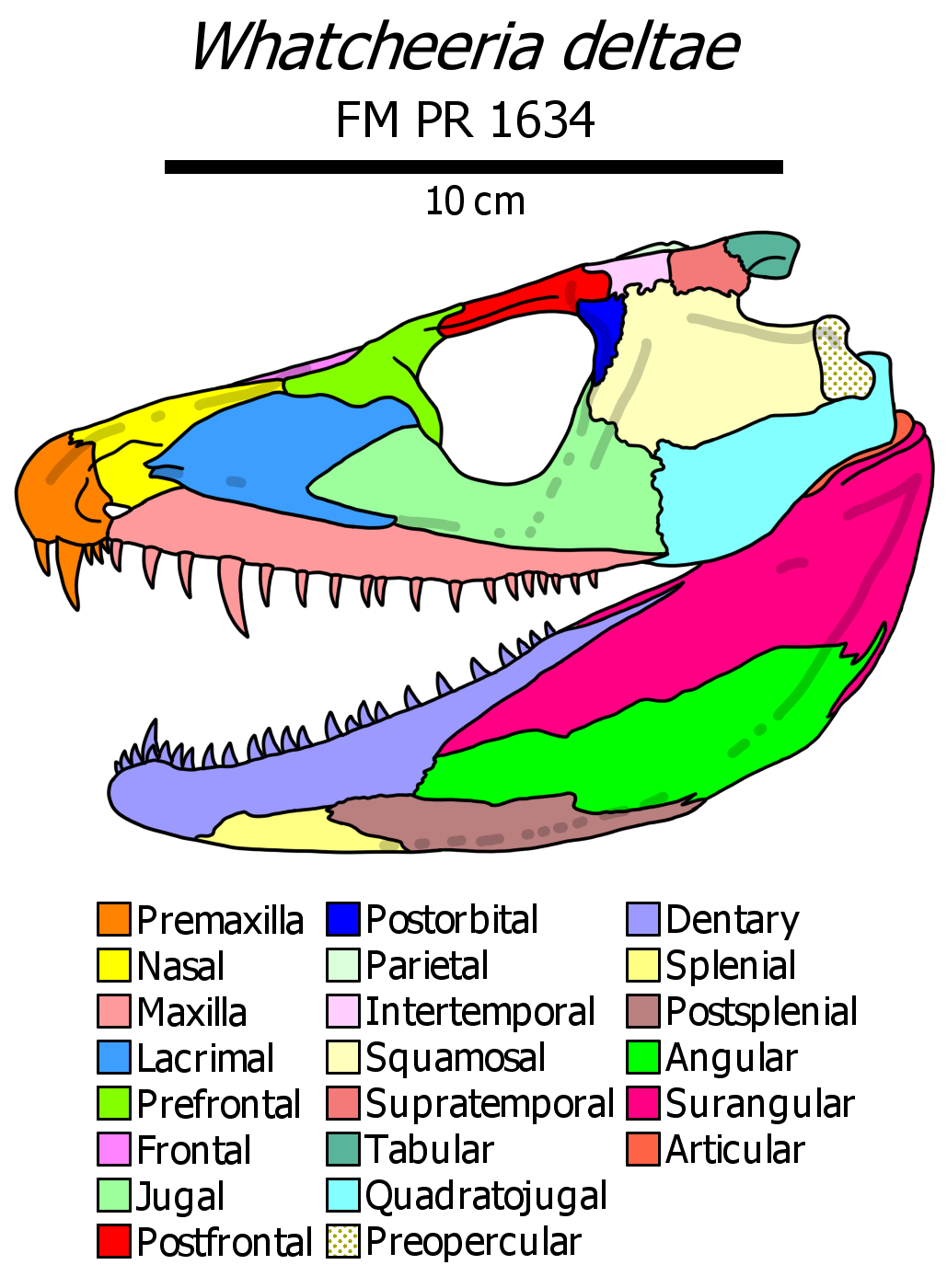


Characteristics
Whatcheeria displays a mix of ancestral and more derived traits typical of early tetrapods. Its skull is relatively robust and shows bone patterns that paleontologists interpret as adaptations for feeding at or near the water's edge. Limb bones and girdles indicate capable, though not fully terrestrial, locomotion: the animal was likely largely aquatic or amphibious, able to move in shallow water and make limited excursions onto land.
Discovery and geological context
The Delta quarry site produced the specimens that allowed the genus to be described. Quarry deposits preserving Whatcheeria span marine-influenced coastal and lagoonal settings common in the Mississippian, providing a context in which early tetrapods could exploit both aquatic and emergent habitats. The preservation at this site has been valuable for understanding post-Devonian tetrapod diversity.
Classification and relationships
In taxonomic treatments Whatcheeria is placed with close relatives such as Pederpes in the family Whatcheeriidae. This grouping highlights a lineage of early tetrapods that diversified after the end of the Devonian and retained a combination of primitive skull and limb features alongside innovations that anticipated later fully terrestrial forms.
Importance and notable facts
- Whatcheeria provides insight into the early Carboniferous recovery and radiation of tetrapods following Devonian ecosystems.
- Its mix of traits helps researchers trace the sequence of anatomical changes involved in the transition to land.
- Specimens are relatively rare, making each find important for reconstructing paleobiology and paleoecology.
Overall, Whatcheeria occupies an informative position in vertebrate evolutionary history: it is not a direct ancestor of modern amphibians or amniotes but represents a successful and distinctive branch of early limbed vertebrates that thrived in nearshore Mississippian environments.
Questions and answers
Q: What is Whatcheeria?
A: Whatcheeria is an extinct genus of early tetrapod.
Q: Where were the fossils of Whatcheeria found?
A: Fossils of Whatcheeria were found in an old limestone quarry in the town of Delta.
Q: When did Whatcheeria live?
A: Whatcheeria lived 340 million years ago (mya).
Q: What is the name of the type species of Whatcheeria?
A: The type species of Whatcheeria is W. deltae.
Q: When was the type species of Whatcheeria named?
A: The type species of Whatcheeria was named in 1995.
Q: What is the classification of Whatcheeria?
A: Whatcheeria is classified with the closely related Pederpes in the family Whatcheeriidae.
Q: In which period did Whatcheeria live?
A: Whatcheeria lived in the early Mississippian epoch.
Related articles
Author
AlegsaOnline.com Whatcheeria — an early Mississippian tetrapod genus Leandro Alegsa
URL: https://en.alegsaonline.com/art/107678
Sources
- palaeontology.palass-pubs.org : "A new primitive tetrapod, Whatcheeria deltae, from the Lower Carboniferous of Iowa"