
Yakuza: Organized crime syndicates in Japan
An overview of the yakuza: names and origins, structure and rituals, typical activities, legal responses and cultural perceptions, with notable facts and distinctions.
The yakuza are criminal syndicates originating in Japan, known variously as yakuza (ヤクザ) and gokudō (極道, "the extreme path"). Members sometimes describe themselves as ninkyō dantai (chivalrous organizations), while police and the media commonly use the term bōryokudan (violence group). Historically concentrated in Japan, many syndicates operate across borders and have been described as part of transnational organized crime networks. Some of the largest and most widely known groups include the Yamaguchi-gumi, Sumiyoshi-kai and Inagawa-kai, which have shaped public awareness and law-enforcement policy for decades. For the Japanese-language form of the name see ヤクザ, and for information on organized crime in general see organized crime. A general context for their national presence is available at Japan.
Image gallery
8 Images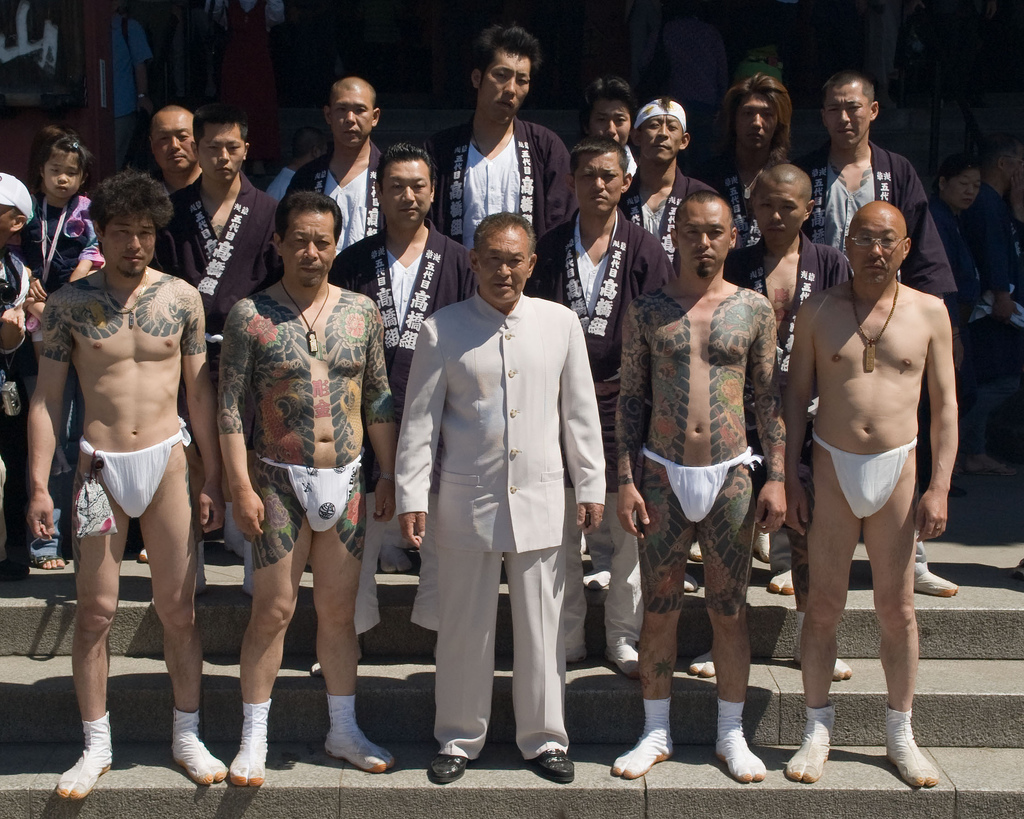



Structure, rituals and visible signs
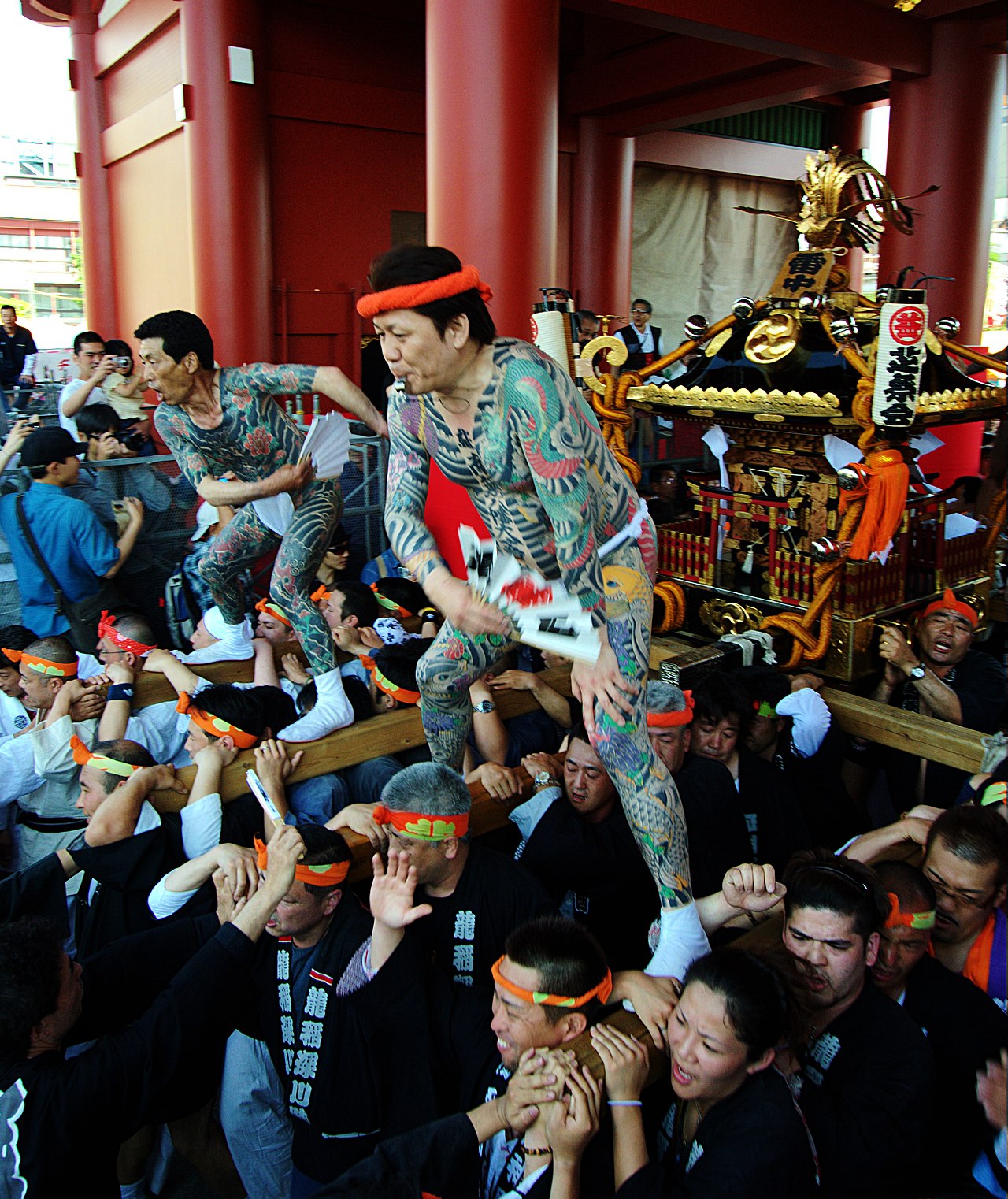
Yakuza organizations are typically hierarchical and family-like, organized under an oyabun (boss) with kobun (members) forming subordinate relationships. Loyal bonds are often formalized through rituals such as sakazuki (a shared sake-cup ceremony) that symbolizes adoption into a family. Physical markers associated with yakuza include extensive traditional tattoos (irezumi) and the ritual of yubitsume (self-amputation of a finger joint) historically used to atone for offenses. Syndicates maintain both illegal operations and legitimate business fronts, and in some places they have maintained semi-open offices and signboards that make them more visible than many clandestine criminal groups.
Origins and historical development
The roots of the yakuza reach back to the early modern period in Japan. Two commonly cited antecedents are tekiya (street peddlers and market stall managers) and bakuto (gamblers). Over centuries these groups evolved from localized, semi-tolerated communities into organized syndicates with nationwide reach. The postwar era saw a significant expansion in scale and activity as disorder and economic opportunity created new criminal markets. From the late 20th century onward, legal measures, economic change and social pressure have pushed many groups to adapt or shrink.
Typical activities and public role
Yakuza engage in a mix of illegal and quasi-legal activities. Common criminal enterprises include extortion, loan sharking, illegal gambling, prostitution rings, narcotics trafficking, and manipulation of construction and real-estate markets. They also run legitimate enterprises used as fronts or revenue sources. Public perception is complicated: while investigative reporting and criminal prosecutions highlight violence and coercion, notable episodes—such as some groups' provision of aid after major disasters—have attracted attention. For example, following the 2011 Tōhoku earthquake and tsunami, several offices reportedly distributed supplies to affected communities; coverage of that response is part of the larger discussion about their social presence 2011 disaster.
Legal countermeasures and contemporary trends
Japanese authorities and municipalities have enacted a range of measures since the late 20th century to reduce the yakuza's influence. These include laws and ordinances that restrict business dealings with designated groups, increase penalties for organized-crime offenses, and allow civil and administrative steps to limit their activities. Financial institutions and companies increasingly refuse to do business with known syndicates. As a result, many organizations have seen membership decline and aging demographics among remaining members, while some elements have migrated to less visible or more transnational forms of crime.
Distinctions and cultural representation
The yakuza occupy a complex place in Japanese culture and international imagination. They have been glorified, condemned, and fictionalized in films, literature and games, often emphasizing codes of honor and ritual alongside brutality. Important distinctions include the contrast between how members portray themselves—as guardians of a certain order—and how the law frames them as violent criminal enterprises. Ongoing debates concern the balance between policing and social measures to prevent exploitation, the effects of anti-organized-crime policies, and the broader social forces that produce and sustain organized criminal groups.
- Common rituals: sakazuki (sake ceremony), yubitsume (finger ritual), initiation oaths.
- Common signs: irezumi (full-body tattoos), clan offices, formalized hierarchical titles.
- Notable trends: stricter legal restrictions since the 1990s, membership decline, diversification of criminal activity.
For further reading on terminology and legal classification in Japanese sources see ヤクザ and on the international dimensions of organized crime consult material indexed under organized crime and country-specific studies of Japan. Contemporary reporting on disaster responses and public interactions includes accounts linked to the 2011 Tōhoku earthquake and tsunami.
Related articles
Author
AlegsaOnline.com Yakuza: Organized crime syndicates in Japan Leandro Alegsa
URL: https://en.alegsaonline.com/art/109565
Sources
- npa.go.jp : npa.go.jp
- businessinsider.com : "US Treasury Freezes Assets Of Top Gangsters From Around The World"
- japantimes.co.jp : "Kiyoshi Nakabayashi: Ex-Tokyo cop speaks out on a life fighting gangs — and what you can do"
- thedailybeast.com : "Yakuza to the Rescue"