
Advaita Vedanta
Advaita Vedanta is a non-dual school within the Hindu tradition that teaches the essential unity of the individual self (Atman) and ultimate reality (Brahman), developed and systematized in early medieval India.
Advaita Vedanta is a classical school of Hindu philosophical thought within the broader Hindu tradition. Its central claim is non-dualism: the ultimate reality is a single, indivisible principle called Brahman, and the individual self (Atman) is not ultimately separate from that reality. Advaita offers a metaphysical framework and a path of enquiry aimed at realizing this essential unity.
Image gallery
8 Images



Core doctrines and terminology
Advaita emphasizes several interrelated ideas: the ontological identity of Atman and Brahman, the illusory or limiting nature of empirical distinctions (maya), and the role of ignorance (avidya) in sustaining the sense of separation. Liberation (moksha) is described as the direct, experiential knowledge that one's true nature is not the finite ego but the infinite Brahman.
Key concepts
- Atman: the inner self or consciousness.
- Brahman: the supreme, attributeless reality.
- Maya: the apparent power that veils reality and creates diversity.
- Jnana: liberating knowledge obtained through study, reflection, and meditation.
Advaita does not deny the empirical world but treats it as contingent and relatively real; spiritual practice combines ethical living, scriptural study, reasoning, and meditative insight to remove ignorance. Textual sources include the Upanishads, the Bhagavad Gita, and the Brahma Sutras, which Advaita interprets through its non-dual lens.
History and development
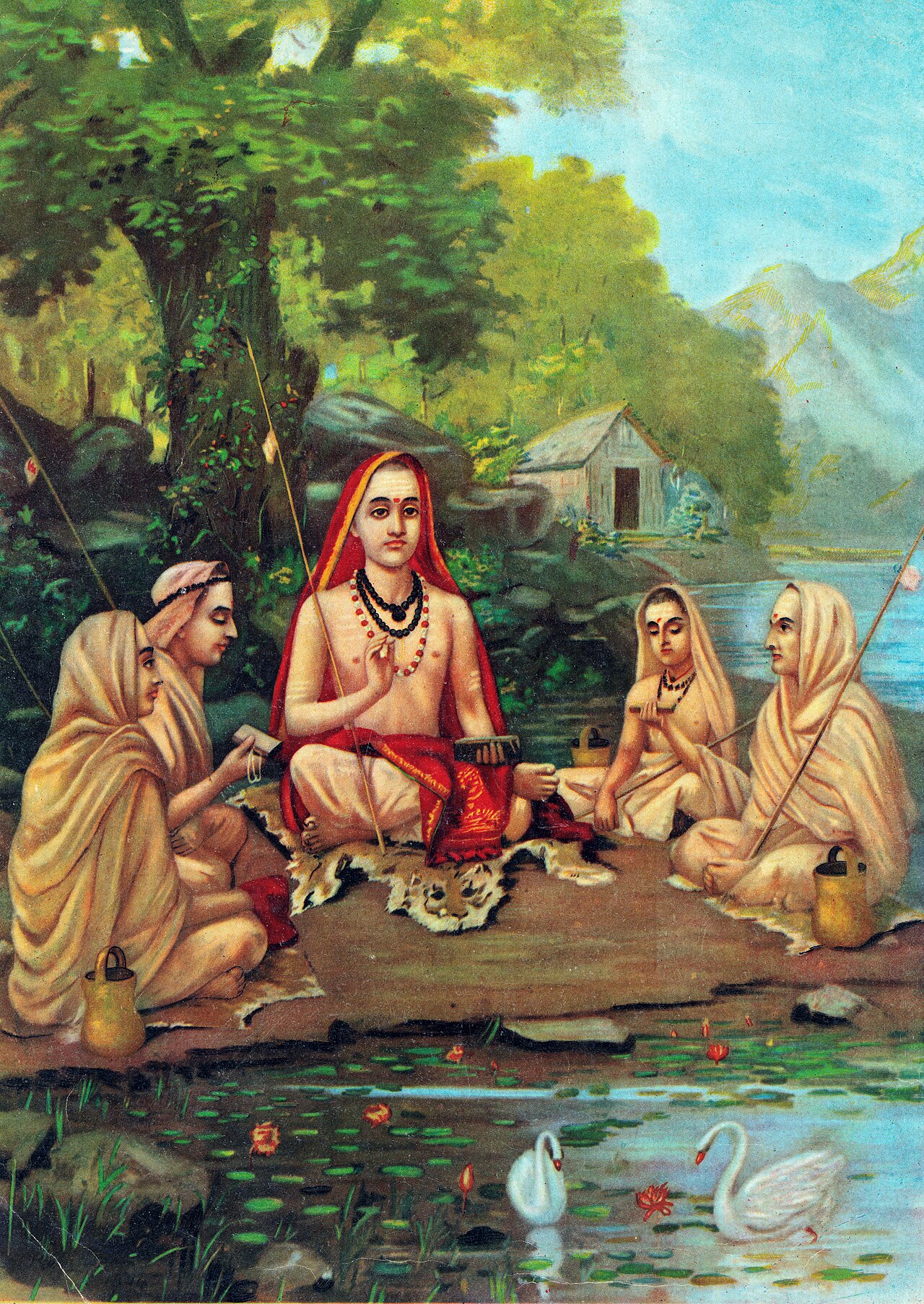
The teachings associated with Advaita were articulated over centuries and were systematized by influential commentators. One of the most widely known proponents is Adi Shankara, a philosopher and teacher from early medieval India, who composed commentaries and works that clarified the school's methods. After his era, Advaita evolved through monastic traditions, regional teachers, and modern interpreters who have adapted its insights to new contexts.
Advaita Vedanta has had a broad cultural and religious impact: it shaped devotional practices, informed philosophical debates within and beyond Hinduism, and influenced modern spiritual movements. Distinctive features include its rigorous use of scriptural exegesis, emphasis on discriminative knowledge (viveka), and a contemplative route to liberation that remains influential in both traditional and contemporary spiritual discourse.
For further reading and entry points into primary texts and commentaries, see introductory resources and translations that present the Upanishadic and Vedantic corpus from both classical and modern perspectives.
Related articles
Author
AlegsaOnline.com Advaita Vedanta Leandro Alegsa
URL: https://en.alegsaonline.com/art/1093