
Alea iacta est: the Latin phrase 'the die has been cast' — meaning and history
Latin phrase attributed to Julius Caesar during the 49 BC crossing of the Rubicon; signifies an irreversible decision. Overview, origins, linguistic notes, and modern uses.
Overview
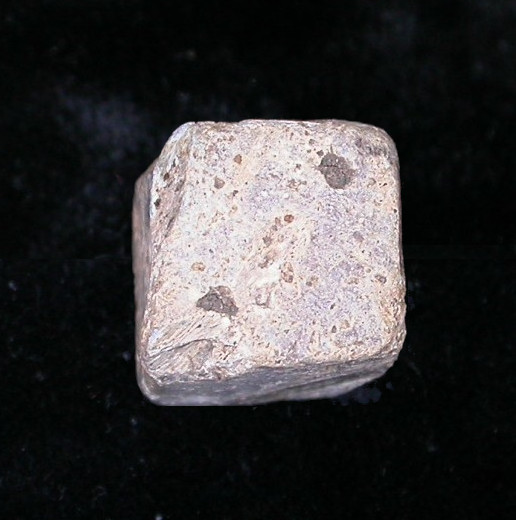
Alea iacta est is a short Latin expression often translated as "the die has been cast". In ordinary use it denotes that a decisive and irreversible action has been taken. The phrase functions as a metaphor: once a die is thrown, its outcome cannot be altered, and in the same way a committed decision cannot be undone.
Image gallery
4 Images


Historical origin
The saying is traditionally credited to Julius Caesar. Classical historians recorded that Caesar spoke the words when he led his army across the Rubicon River in January 49 BC, an act that precipitated civil war in the Roman Republic. The account is preserved in sources such as Suetonius, which attribute the utterance to Caesar at that decisive moment. Crossing the Rubicon was a deliberate breach of Roman law and custom, so the reported phrase captures the awareness of irrevocability.
Language and variants
Linguistically, alea means a die or game of chance and iacta is the perfect passive participle of iacio, "to throw." The most familiar word order is Alea iacta est, but ancient writers sometimes record variant phrasing. Some biographers render the sentiment in Greek rather than in Latin. Because the report comes through literary historians, scholars treat the exact original wording with caution; what survives is the well-known Latin formulation rather than an incontrovertible verbatim quote.
Context: Rubicon and Rome
The river crossed by Caesar is the Rubicon, a small boundary stream in northern Italy. In Roman practice possession and movement of armies within Italy were tightly regulated. By leading troops across that boundary Caesar committed himself to confrontation with his political rivals; for that reason ancient authors present his remark as emblematic of a point of no return.
Uses and cultural significance
The phrase has endured as a succinct way to mark a turning point. It appears in political rhetoric, literary titles, mottoes, and everyday speech when someone wishes to emphasize that a choice cannot be reversed. Writers and speakers employ it to convey determination, risk, or the finality of an action. It has also been adopted as a decorative or symbolic motto in various modern contexts.
Notable distinctions and caution
Although popularly quoted as if contemporary with Caesar, the phrase reaches us through later historians and should be regarded as a preserved literary formulation rather than an exact transcript. Its power lies less in philological certainty than in its usefulness as a compact image of irrevocable commitment. For further reading on the phrase and its sources, consult specialist studies of Roman historiography and biographies of Caesar.
See also: Alea iacta est (phrase) and translations such as "the die has been cast" for more on idiomatic use.
Questions and answers
Q: What is the meaning of the Latin phrase "Alea iacta est"?
A: "Alea iacta est" means "the die has been cast (thrown)."
Q: Who is credited with saying "Alea iacta est"?
A: Suetonius credits Julius Caesar with saying "Alea iacta est."
Q: When did Julius Caesar say "Alea iacta est"?
A: Julius Caesar said "Alea iacta est" on January 10, 49 B.C.
Q: What was happening when Julius Caesar said "Alea iacta est"?
A: Julius Caesar said "Alea iacta est" when he led his army across the Rubicon river in Northern Italy.
Q: What does "Alea iacta est" mean in practical terms?
A: "Alea iacta est" means that things have happened that can't be changed back.
Q: Can "Alea iacta est" be applied to everyday life?
A: Yes, "Alea iacta est" can be applied to everyday life when referring to irreversible decisions or actions.
Q: What is the significance of Julius Caesar saying "Alea iacta est"?
A: Julius Caesar saying "Alea iacta est" is significant because it marked a turning point in history, as he was crossing a point of no return in his quest for power.
Tags
Related articles
Author
AlegsaOnline.com Alea iacta est: the Latin phrase 'the die has been cast' — meaning and history Leandro Alegsa
URL: https://en.alegsaonline.com/art/2244