
Wolfgang Pauli
Austrian-born theoretical physicist known for the Pauli exclusion principle, Pauli matrices, the neutrino hypothesis, and major contributions to quantum mechanics; Nobel Prize in Physics (1945).
Overview
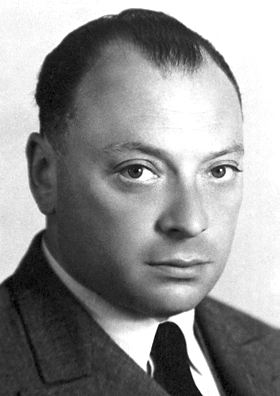
Wolfgang Ernst Pauli (25 April 1900 in Vienna – 15 December 1958 in Zurich) was a leading theoretical physicist whose work shaped twentieth-century quantum theory. He is best known for the Pauli exclusion principle, a fundamental rule of quantum mechanics that determines the allowed quantum states of electrons and other fermions. Pauli's ideas influenced atomic physics, solid-state physics and chemistry, and he was awarded the Nobel Prize in Physics in 1945 for his discovery.
Image gallery
7 Images


Major contributions
Pauli formulated several concepts that remain central to quantum theory. The Pauli exclusion principle explains why electrons occupy distinct energy levels and underlies the structure of the periodic table and chemical behavior. Pauli introduced the set of 2×2 matrices now known as Pauli matrices, which provide a compact representation of spin-1/2 degrees of freedom and are widely used in the description of electron spin and two-level quantum systems. In 1930 he proposed the existence of a neutral, very light particle to account for energy spectra in beta decay; this idea anticipated the particle later known as the neutrino.
- Exclusion principle: forbids identical fermions from occupying the same quantum state, with broad implications from atomic structure to astrophysics.
- Pauli matrices and spin theory: algebraic tools for representing intrinsic angular momentum of spin-1/2 particles; see resources on spin theory.
- Neutrino hypothesis: an early theoretical proposal that stimulated experimental searches and the development of particle physics.
Career and context
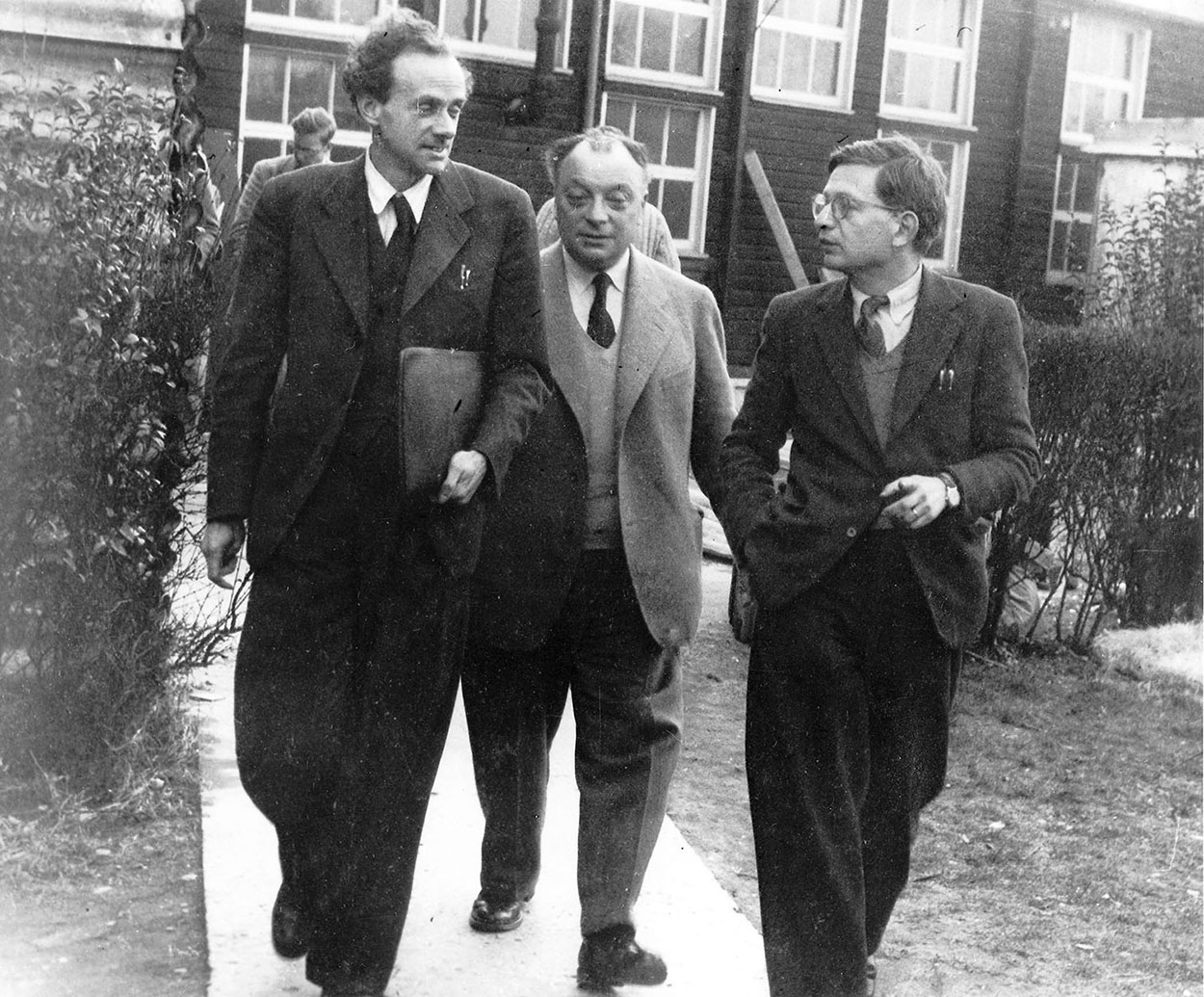
Pauli trained and worked within the vibrant European physics community of the 1920s and 1930s, corresponded with figures such as Niels Bohr and Werner Heisenberg, and spent much of his professional life in Switzerland where he became a central figure in theoretical physics. His precise, critical style and high standards influenced generations of physicists. He also spent periods collaborating internationally and engaged in interdisciplinary conversations, notably with the psychologist Carl Jung on questions of symbolism and dreams.
Impact and legacy
The exclusion principle is responsible for the electronic structure of atoms and the stability and diversity of chemical elements; it also produces electron degeneracy pressure that stabilizes white dwarf stars. Pauli's formalism remains standard in quantum mechanics teaching and research. His name appears in many concepts and effects in physics, and his hypotheses and methods helped set directions for later experimental and theoretical work. For accessible discussions of the exclusion principle see detailed discussions, and for perspectives on its role in chemistry and materials see related material.
Notable personal notes
Pauli was noted for a sharp intellect, an exacting critical manner, and a dry wit. Anecdotes about the so-called "Pauli effect"—the humorous attribution of laboratory breakdowns to his presence—reflect his reputation among experimentalists. He died in Zurich in 1958, leaving a legacy that continues to influence physics and chemistry.
Related articles
Author
AlegsaOnline.com Wolfgang Pauli Leandro Alegsa
URL: https://en.alegsaonline.com/art/108819
Sources
- iopscience.iop.org : iopscience.iop.org
- jinfo.org : www.jinfo.org
- commons.wikimedia.org : Nobel Prize in Physics