
Wolfenstein 3D — 1992 pioneering first-person shooter by id Software
Wolfenstein 3D (1992) is id Software's early first-person shooter that popularized the genre with a fast ray-cast engine, shareware release model, WWII setting, and lasting influence on games like Doom and Quake.
Overview
Wolfenstein 3D is a landmark 1992 first-person shooter video game developed by id Software. Players control the Allied agent William "B.J." Blazkowicz as he infiltrates Nazi strongholds to escape and sabotage enemy plans. The game is widely credited with popularizing the first-person shooter format and bringing fast, action-oriented gameplay to personal computers.
Image gallery
6 Images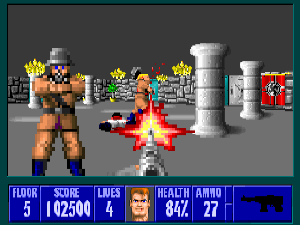





Gameplay and technical approach
The design uses a fast ray-cast rendering technique to create a convincing pseudo-3D environment: walls are textured, enemies are 2D sprites, and level layouts are grid-based rather than fully three-dimensional. Typical objectives include finding keys, locating exits, collecting weapons and ammunition, and defeating bosses. Secret rooms, varied enemy types and resource management add tactical depth to otherwise direct combat encounters.
Development and release
Produced by a small team at id Software, Wolfenstein 3D first appeared on the IBM-compatible PC on May 5, 1992. id used a shareware distribution model that released an initial episode freely, encouraging wide distribution and driving sales of the full game. The title draws its name and basic premise from earlier 1980s Muse Software games such as Castle Wolfenstein and Beyond Castle Wolfenstein, but it reimagined the experience with real-time action and first-person perspective.
Platforms and versions
After its PC debut, Wolfenstein 3D was ported to numerous systems. Notable home and handheld releases appeared on platforms including Apple personal computers, Nintendo consoles and handhelds, and later compilations for modern systems. The Super NES and Game Boy Advance versions, for example, introduced platform-specific censorship and modifications to meet console policies and regional regulations.
Legacy and influence
Wolfenstein 3D's commercial success helped establish conventions of the shooter genre: fast movement, level-based progression, and emphasis on reflex combat. Its engine and design influenced later id titles such as Doom and Quake and inspired countless authors and studios. A related retail prequel, Spear of Destiny, extended the setting and showed the commercial potential of expansion content.
Notable facts and controversies
- Historical setting: The game uses a World War II backdrop and Nazi iconography, which led to edits or bans in some releases and regions; some ports replaced or removed explicit symbols.
- Shareware model: Early distribution as shareware played a key role in the game's reach and later served as a business model example for other developers.
- Technical milestone: Its efficient rendering approach and emphasis on speed demonstrated how action-oriented 3D-like experiences could run on consumer hardware in the early 1990s.
For historical context, contemporary retrospectives and further reading are available from developer histories and preservation projects; introductory resources include general articles and archive pages that document the game's development, releases, and cultural impact. See also developer interviews and preservation sites for deeper technical analysis and oral histories (further reading).
Related articles
Author
AlegsaOnline.com Wolfenstein 3D — 1992 pioneering first-person shooter by id Software Leandro Alegsa
URL: https://en.alegsaonline.com/art/108807