
Wolf Point, Chicago — River confluence and historical neighborhood
Wolf Point is the triangular parcel where the three branches of the Chicago River meet; historically a focal point for early settlement, commerce and river crossings, now a site of redevelopment.
Overview
Wolf Point is the triangular junction where the North, South and Main Branches of the Chicago River join. The site sits at the meeting point of Chicago's Near North Side, the Loop and the Near West Side and has been a distinctive geographic and urban landmark since the city's beginnings. Its prominence derives from position rather than size: the confluence created easy access to inland waterways and helped shape patterns of settlement and trade.
Image gallery
10 Images




Physical characteristics and setting
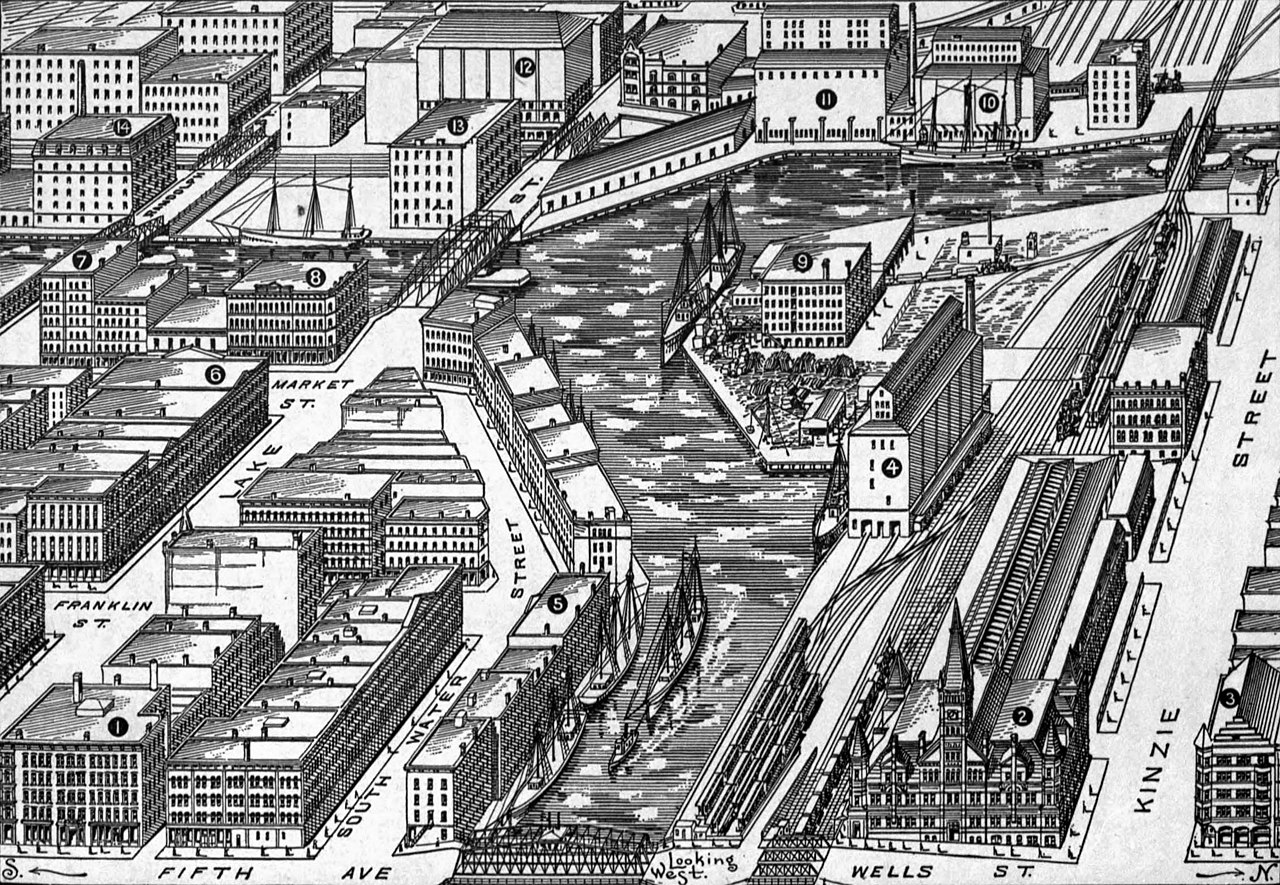
The area called Wolf Point is defined by the river's sharp bend and a small peninsula that projects into the junction. Historically the riverside terrain included marshes and shallow banks that were favorable for small docks, ferries and temporary settlements. Over time the shoreline was stabilized, bridged and filled to accommodate roads, bridges and later large-scale construction along the riverfront.
Historical importance
Wolf Point played a central role in early Chicago's growth as a trading and transport hub. It hosted several of the community's earliest services and infrastructure, which helped the settlement evolve into a regional center. Notable early features included:
- Some of Chicago's first taverns and meeting places for traders and settlers.
- The Sauganash Hotel, often cited as the settlement's first hotel and a focal point for visitors and visiting officials.
- The community's first ferry operations, which carried people and goods across the river before the construction of permanent bridges.
- Early civic institutions such as the first drug store, the first church congregation, and the first bridges that connected the emerging neighborhoods.
Name and cultural notes
The origin of the name "Wolf Point" is not settled. One widely told explanation attributes it to a Native American leader whose name translated to "wolf". Other local traditions suggest the name came from wolf sightings in the area or from a descriptive Native term transposed into English. Whatever its linguistic origins, the name has remained in use and is closely associated with Chicago's foundational period.
Modern development and significance
In recent decades Wolf Point has been the focus of urban redevelopment because of its dramatic riverside location and views of downtown. The site combines historic associations with contemporary uses: office buildings, residential towers and riverfront promenades have been proposed and constructed, with debates often balancing preservation of heritage against new construction. The junction also remains visible on river tours and is a recognizable waypoint in the city's layout, illustrating how a small geographic feature can exert long-term influence on urban form.
For those exploring Chicago's early geography and urban evolution, Wolf Point offers a compact story of transportation, commerce and neighborhood formation at the very heart of the city's river system. Its past role as a site for pioneers, traders and early public works links directly to the riverfront revitalization efforts of today.
See also nearby community descriptions for the Near North Side and the Near West Side for broader context about the neighborhoods that meet at Wolf Point.
Related articles
Author
AlegsaOnline.com Wolf Point, Chicago — River confluence and historical neighborhood Leandro Alegsa
URL: https://en.alegsaonline.com/art/108794
Sources
- emporis.com : "Wolf Point"
- emporis.com : "Wolf Point Apartments"