
William of Ockham
14th-century English Franciscan philosopher and theologian, known for nominalism and the methodological principle known as Occam's razor.
Overview
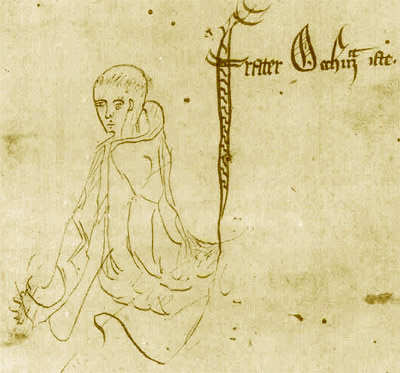
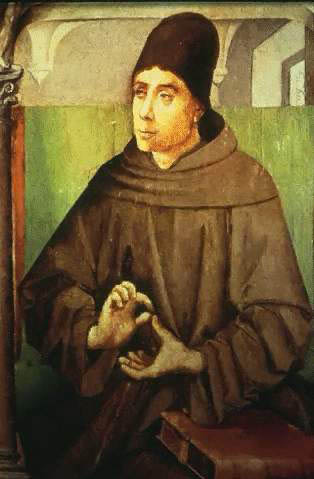
William of Ockham (c. 1285–1347) was an English Franciscan religious scholar and friar active in the early 14th century. He is most widely remembered for the methodological principle commonly called Occam's razor, and for contributions across logic, metaphysics and theology. Ockham's work marked a turning point in late medieval thought by challenging some established Scholastic positions and emphasizing economy in explanation.
Image gallery
10 Images


Life and historical context
Ockham was born near the village of Ockham in Surrey, England, around the late 13th century and received his higher education at the University of Oxford. He studied and taught in the tradition of Scholasticism, focusing on questions in theology and philosophy. During the 1320s and 1330s his positions brought him into conflict with papal authorities; he faced accusations and court proceedings that some contemporaries described as charges of heresy. In the 1320s he left England and later lived under the protection of the Holy Roman Emperor, spending his final years in Munich, where he died in 1347.
Philosophy and major ideas
Ockham is commonly associated with nominalism, the view that universals or general terms do not have independent, substantial existence apart from particular things. He argued that abstract entities need not be postulated to explain shared features among individuals. His approach emphasized clarity in language and thought and a critical scrutiny of unnecessary assumptions. He wrote on logic, epistemology, metaphysics and ethics, treating each area with attention to how language, concepts and evidence support claims.
Works and methods
Ockham produced a number of scholastic texts, including commentaries and treatises that were used by later medieval and early modern thinkers. His logical writings examine supposition theory and propositions; his theological and political writings explore the limits of ecclesiastical power and the relation between church and state. He favored concise explanations and argued that one should not multiply entities or hypotheses beyond what is needed to account for observed phenomena.
Legacy and influence
Ockham's insistence on explanatory economy influenced later developments in science and philosophy; the heuristic often attributed to him—prefer simpler theories when they account for the same data—remains a common principle in scientific reasoning and theory choice. His challenge to realist accounts of universals contributed to debates that shaped modern metaphysics and philosophy of language. Politically and theologically, his writings on authority and the rights of secular rulers helped frame later discussions about the balance between religious and civil power.
Selected themes and further reading
- Nominalism: the denial that universals exist as real entities beyond particulars.
- Parsimony in explanation: methodological caution against unnecessary assumptions (Occam's razor).
- Church and state: arguments limiting papal authority and defending secular jurisdiction.
For introductions and editions of his writings see standard scholarly collections and translations; many overviews and commentaries situate his thought within the later medieval transition toward early modern philosophy. Additional resources can be found through university libraries and specialized studies of medieval logic and theology (teaching texts and surveys), as well as compiled bibliographies and critical editions (logic, epistemology, metaphysics, ethics). Historical accounts of his conflict with the papacy and his flight to the Continent are available in studies of medieval church politics, which discuss the proceedings often labeled as accusations of heresy.
Academic introductions and online summaries can provide accessible starting points: see general entries and university resources (Franciscan context, friary life, 14th-century setting, Munich) for cultural and biographical background.
Related articles
Author
AlegsaOnline.com William of Ockham Leandro Alegsa
URL: https://en.alegsaonline.com/art/108279