
William Orpen (1878–1931)
Irish-born portrait painter William Orpen was a leading portraitist and official British war artist during WWI; his work is known for luminous finish, formal elegance, and a large donation to the Imperial War Museum.
William Orpen (27 November 1878 – 29 September 1931) was an Irish-born artist best known for refined, highly finished portraiture and for his service as an official British war artist during World War I. Trained in Ireland and London, Orpen worked mainly in the British capital and became one of the most sought-after portrait painters of his generation. His career combined private commissions for families and public figures with ambitious paintings made in the aftermath of conflict and national events.
Image gallery
10 Images


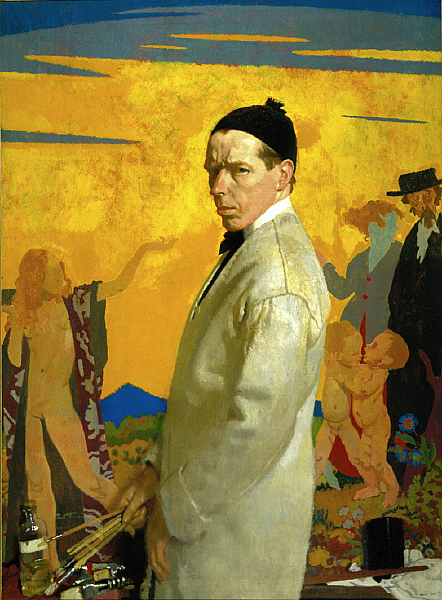


Style and subjects
Orpen’s portraits are noted for smooth surfaces, careful modelling of faces and a polished, sometimes photographic realism. He favored formal, often elegant settings that emphasized social status and character. While best remembered for society and family portraits, his output also included figure pieces, studies and works reflecting his wartime experience. He sometimes used contemporary photographic methods as a compositional aid and was praised for his handling of skin tones and fabrics.
Career and honours
After training in Dublin and at the Slade, Orpen established himself in London and exhibited widely. He was elected to the Royal Academy and received official recognition for his contributions. In the aftermath of his war work he was appointed a Knight Commander of the Order of the British Empire in 1918. His election to institutional positions and royal commissions confirmed his standing in British art circles.
War work and legacy
As an official artist attached to the British war effort, Orpen produced a substantial body of work documenting officers, medical scenes and the effects of war on landscapes and people. He presented a large group of paintings—138 in total—to the British government; these pieces, framed simply in white, are kept together at the Imperial War Museum in London and remain an important visual record of the conflict. His wartime paintings combine documentary intent with the compositional discipline of his portrait practice.
Collections and notable facts
- Many of Orpen’s portraits are held in public collections and private estates across Britain and Ireland.
- He is frequently discussed alongside other prominent portrait painters of the early 20th century for his technical skill and social commissions.
- His works reflect both the private world of portraiture and the public demands of commemoration after conflict.
For more context on his life and art, see resources on his Irish background (Irish art), the nature of portrait painting in his era, and institutional histories in honours and the Royal Academy. Images and catalogues of his works are available through major museum collections and specialist studies.
Questions and answers
Q: Who was William Orpen?
A: William Orpen was an Irish portrait painter who worked mainly in London.
Q: What was William Orpen's profession?
A: William Orpen was a portrait painter.
Q: How many of his works did William Orpen give to the British Government?
A: William Orpen gave 138 of his works to the British Government.
Q: Where are most of William Orpen's works kept?
A: Most of William Orpen's works are kept together in the Imperial War Museum in London.
Q: What was William Orpen's contribution during World War I?
A: William Orpen was an official war artist during World War I.
Q: What was William Orpen's recognition for his war work?
A: William Orpen was made a Knight Commander of the Order of the British Empire (KBE) in the 1918 King's birthday honours list for his war work.
Q: In what type of portraits was William Orpen seen at his best?
A: William Orpen was seen at his best in personal family portraits.
Related articles
Author
AlegsaOnline.com William Orpen (1878–1931) Leandro Alegsa
URL: https://en.alegsaonline.com/art/108281
Sources
- commons.wikimedia.org : William Orpen
- thegazette.co.uk : "No. 30730"
- babel.hathitrust.org : "Orpen, Sir William Newenham Montague (1878 - 1931)"