
William Dobell: Australian portrait painter and landmark Archibald controversy
Biography of Sir William Dobell (1899–1970), his art, the 1943 Archibald Prize court case, stylistic traits, later life by Lake Macquarie, and his place in Australian art history.
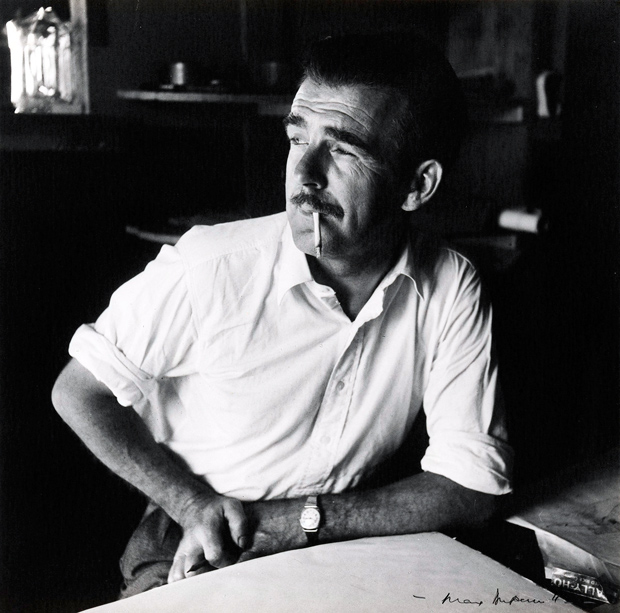
Sir William Dobell (1899–1970) was a prominent Australian artist best known for his portraiture and the public controversy that surrounded one of his most famous works. Working in the mid-20th century, Dobell combined careful draftsmanship with expressive distortion, producing portraits that balanced likeness with psychological intensity. He is remembered both for his technical skill and for the heated debate his art provoked about the boundary between portrait and caricature.
Image gallery
3 Images

Early life and training
Born in Newcastle, New South Wales, Dobell developed an early interest in drawing. He undertook formal training in Sydney art schools, gaining grounding in observational drawing and painting techniques that informed his later work. Over his career he painted portraits, landscapes and occasional still lifes, and drew on a range of influences from academic realism to modernist simplification.
Style and notable work
Dobell's portraits are often marked by intensified facial planes, condensed forms and a focus on expressive detail that aims to reveal character rather than only surface likeness. This approach made his work distinctive: the sitters remained identifiable, yet the artist used exaggeration to suggest temperament or mood. While portraiture formed the core of his reputation, he also painted landscapes, particularly scenes around Lake Macquarie, which later became his home.
The 1943 Archibald Prize controversy
In 1943 Dobell won a major Australian portrait award with a portrait of fellow artist Joshua Smith. The painting sparked a legal challenge from two artists who argued that Dobell's work was a caricature rather than a portrait and therefore ineligible for the prize. The dispute was argued in court and attracted significant public attention, raising broader questions about artistic freedom, taste and the definition of portraiture. Dobell successfully defended the work in court, but the affair took a heavy personal toll: he suffered from stress and retreated from public life for a period.
Later life and legacy
After the trial Dobell withdrew from the Sydney social and exhibition scene and spent much of his time at the family holiday home at Wangi Wangi on Lake Macquarie, where he continued to paint in a quieter setting. His later output includes sensitive local landscapes and further portraits that demonstrate a maturation of his expressive language. Over time, critics and scholars have reassessed the Archibald episode as a pivotal moment in Australian cultural life, one that helped expand public understanding of modern approaches to figurative art.
Further reading and resources
- Biographical and museum entries: Artist profile
- Detailed discussion of the Archibald case: Archibald Prize controversy
- Gallery collections and images: Representative works
- Local history and Lake Macquarie connection: Regional background
- Academic analysis of style and influence: Critical essays
Dobell occupies a complex place in Australian art history: celebrated for his craft and ability to capture psychological presence, yet also at the centre of one of the country's most famous debates about what a portrait can be. His career illustrates how questions of taste and definition can have profound effects on artists' lives and on public perceptions of modern art.
Related articles
Author
AlegsaOnline.com William Dobell: Australian portrait painter and landmark Archibald controversy Leandro Alegsa
URL: https://en.alegsaonline.com/art/108213
Sources
- adb.anu.edu.au : "Sir William Dobell"