
Wilhelm Steinitz: First World Chess Champion and Architect of Modern Positional Play
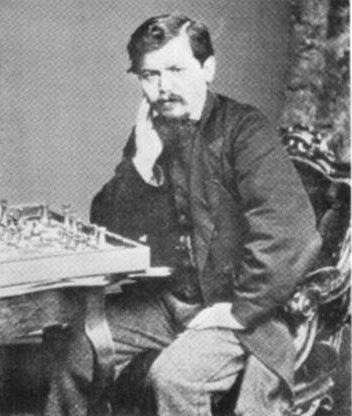
Wilhelm (William) Steinitz (1836–1900), born in Prague and later resident in London and New York, was the first undisputed World Chess Champion and a pioneer of modern positional chess theory.
Overview
Wilhelm Steinitz (later anglicized as William Steinitz) was born in Prague on 17 May 1836 and died in New York on 12 August 1900. A leading 19th‑century player, he emigrated to London and later to the United States. Widely recognized as the first undisputed World Chess Champion, he held the official title from 1886 until 1894 and had claimed de facto supremacy among top players in the decade before the formal title match.
Image gallery
7 Images




Playing style and contributions
Steinitz is remembered less for dazzling combinations than for laying the foundations of modern positional play. He argued that chess is governed by objective balances — when material, pawn structure, and piece activity are equal, attacks fail. By advocating steady accumulation of small advantages and careful defense, he shifted the game away from Romantic sacrificial play toward strategic planning. His ideas appear in his writings and annotated games and influenced later masters who developed positional theory further.
Career highlights and major matches
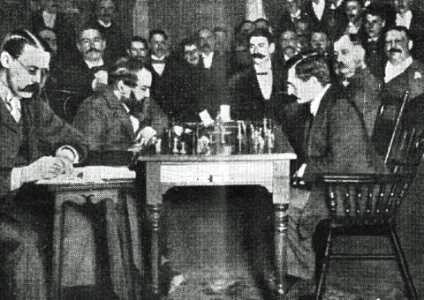
Steinitz rose to prominence through strong tournament and match results in Europe and America. His most notable encounter for the world title was the 1886 match against Johannes Zukertort, which established him as the first undisputed champion. He later lost the title to Emanuel Lasker in 1894 and was defeated again in a subsequent rematch. These contests shaped the formal cycle of championship matches that followed.
Writings, teaching and legacy
Beyond play, Steinitz was an active writer and analyst: he produced game annotations, theoretical articles and instructional material that spread his concepts. His work helped professionalize chess study, encouraging systematic evaluation of positions and deeper opening and endgame research. Modern strategic thinking in chess still traces many basic principles to his reformulation of positional play.
Notable facts and later life
- He began life in the Habsburg lands and later made major moves to London and the United States, where he spent his final years.
- He claimed the world’s leading status before the 1886 match and is credited with being the first official world champion after defeating Zukertort.
- His rivalry with Emanuel Lasker (see Lasker) marked a transition to a new generation of champions.
- Late in life he experienced financial and health difficulties but left a lasting theoretical heritage.
Why Steinitz matters
Steinitz stands as a turning point in chess history: he moved the game toward scientific evaluation and positional strategy, and by occupying the first official world champion role he created a model for modern championship play. For students of the game his annotated games and essays remain recommended reading, and his influence is evident in the way high‑level chess prizes steady strategic attention as much as tactical flair. For further reference see contemporary game collections and historical accounts of the early world championships (chess histories and tournament records).
Questions and answers
Q: Who was Wilhelm Steinitz?
A: Wilhelm (later William) Steinitz was an Austrian chess grandmaster.
Q: When was he born and when did he die?
A: He was born on May 17, 1836, and died on August 12, 1900.
Q: Where did he emigrate and settle?
A: He emigrated first to London, then to the USA, where he settled.
Q: What was his achievement in the game of chess?
A: Wilhelm Steinitz was the first undisputed World Chess Champion and held the title from 1886 to 1894, unofficially from 1872.
Q: Who did Wilhelm Steinitz beat to become the World Chess Champion?
A: Steinitz won the title by beating Johannes Zukertort in a match in 1886.
Q: Who took the World Chess Championship title from Wilhelm Steinitz?
A: The title was taken from Wilhelm Steinitz by Emanuel Lasker in 1894.
Q: Did Wilhelm Steinitz ever have a rematch with Emanuel Lasker?
A: Yes, Wilhelm Steinitz had a rematch with Emanuel Lasker in 1897, which he lost.
Related articles
Author
AlegsaOnline.com Wilhelm Steinitz: First World Chess Champion and Architect of Modern Positional Play Leandro Alegsa
URL: https://en.alegsaonline.com/art/108131
Sources
- chesshistory.com : Winter E. Early uses of 'World chess champion'
- query.nytimes.com : "William Steinitz dead"
- rookhouse.com : "Steinitz Obituary (Part 1 of 2)"
- rookhouse.com : "Steinitz Obituary (Part 2 of 2)"