
Wii Speak — Nintendo Wii microphone accessory
Wii Speak is a USB microphone accessory for the Nintendo Wii that enables room-based voice chat. Released with Animal Crossing: City Folk, it saw limited game support but offered group conversation features.
Overview
Wii Speak is a dedicated microphone accessory for the Nintendo Wii. Launched in 2008, it was designed to let players carry on voice conversations while using the console, especially for social and casual titles. Rather than a headset, Wii Speak is a small tabletop unit intended to pick up multiple voices in the same room.
Image gallery
4 Images


Design and characteristics
The device connects to the Wii via a USB port for power and audio, and sits on a short pedestal so it can capture sound around a living-room setting. Its microphone element and onboard electronics are optimized for group use, with features intended to reduce background noise and focus on voices. A simple LED indicates when the unit is active. Because it is a freestanding mic, multiple people can speak without wearing individual headsets.
History and release
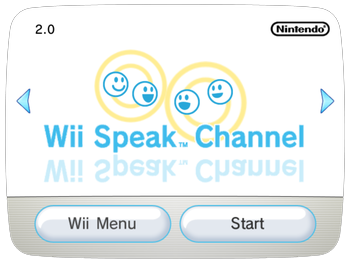
Wii Speak was revealed in 2008 and was bundled in some regions with Animal Crossing: City Folk, which offered in-game voice chat support. Nintendo also offered a Wii Speak Channel to enable voice conversations outside specific games. Despite the initial push, the peripheral never became a widespread standard across the Wii library.
Uses, compatibility and examples
Its primary use was in social titles that emphasized multiplayer conversation. The most prominent example was Animal Crossing: City Folk, which integrated chat features with the microphone. Outside of a handful of first- and third-party releases, support remained limited; many popular Wii games did not implement Wii Speak functionality.
Notable points and distinctions
- Unlike personal headsets, Wii Speak is designed for group, room-based audio rather than one-to-one private chat.
- Adoption was modest: the peripheral was useful for its intended niche but never became a universal Wii accessory.
- Software support — such as the Wii Speak Channel — enabled broader voice chat but depended on downloads and game integration.
Wii Speak remains an example of Nintendo's experiments with social, living-room communication on the Wii, illustrating both the appeal and the limits of a shared, non-headset microphone approach.
Related articles
Author
AlegsaOnline.com Wii Speak — Nintendo Wii microphone accessory Leandro Alegsa
URL: https://en.alegsaonline.com/art/108012