
Wireless: principles, types, history and applications
Overview of wireless communication and technology: definitions, key components, historical development, common types (radio, Wi‑Fi, cellular, satellite), uses, advantages and challenges.
The term "wireless" describes transmission or control of electrical or electronic signals without a continuous physical conductor between endpoints. In broad usage it covers any system that exchanges information by electromagnetic waves or other non‑wired means. For basic distinctions see electrical and electronic contexts; contrast these with systems that rely on physical wires for connectivity.
Image gallery
6 Images



Core characteristics and components
Typical wireless systems include a transmitter, a medium for signal propagation, and a receiver. Antennas or optical transceivers convert electrical signals to electromagnetic energy and back. Important characteristics are frequency or wavelength, bandwidth (data capacity), range, power consumption, and susceptibility to interference. Propagation can be via radio waves, microwaves, infrared light, or other portions of the spectrum.
Common types and examples
- Broadcast radio and television: wide‑area distribution of audio/video using long, medium, or short waves.
- Cellular networks: wide‑area mobile telephony and data provided by networks of base stations.
- Wi‑Fi and local wireless LANs: high‑speed indoor networking for devices in homes and offices.
- Bluetooth and personal area networks: short‑range connections for peripherals and sensors.
- Satellite links: long‑distance communications and navigation via orbiting spacecraft.
- Infrared remote controls and Li‑Fi experiments: optical wireless for short‑range control or data transfer.
History and development
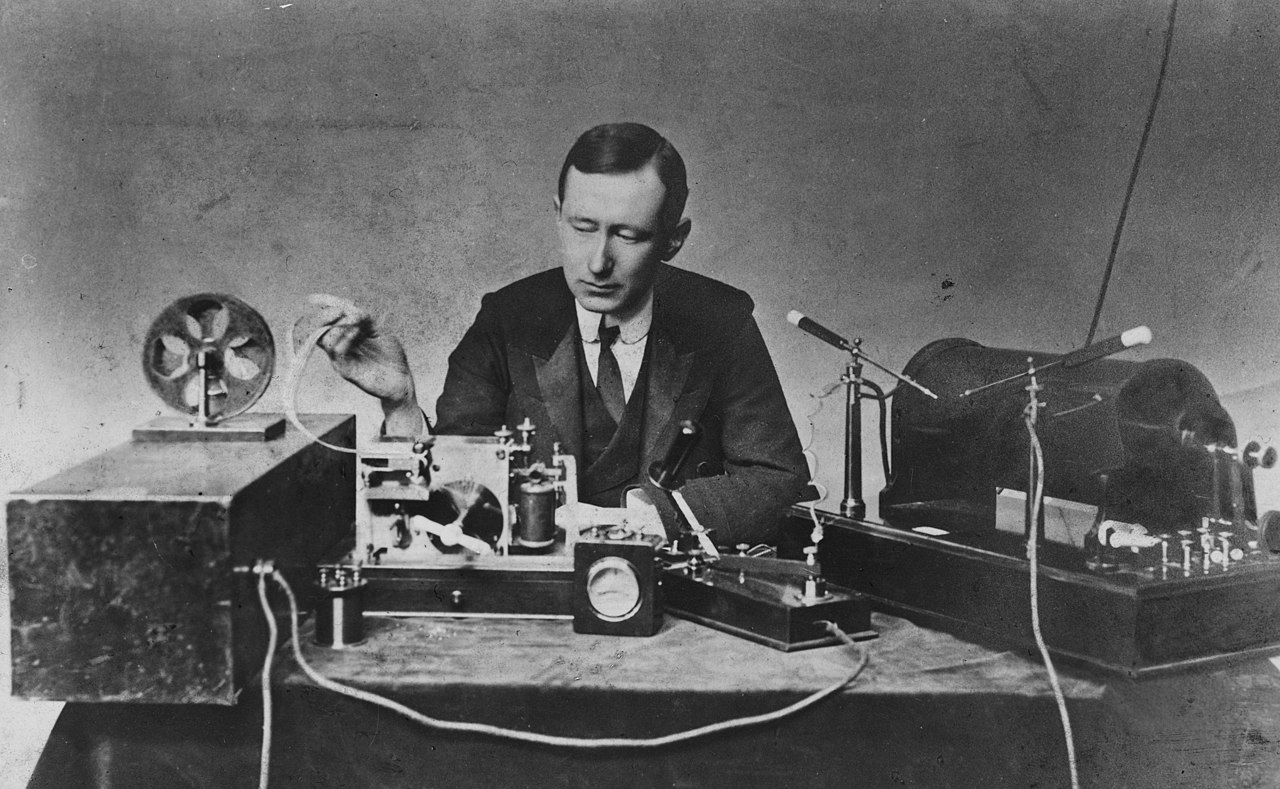
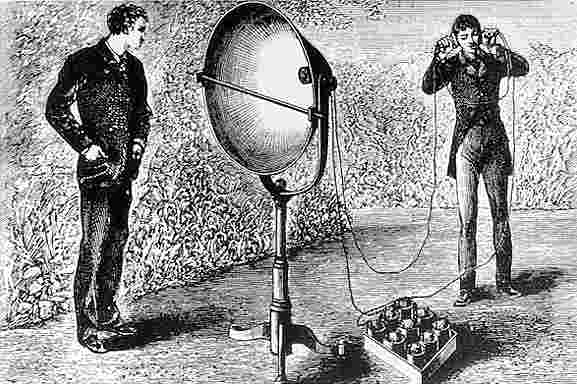
Practical wireless communication emerged from late 19th‑ and early 20th‑century experiments in electromagnetic radiation and radio transmission. Early pioneers demonstrated that information could travel without a physical conductor, and subsequent technological advances led to commercial broadcasting, radar, and the mobile networks and Wi‑Fi standards that underpin modern connectivity.
Uses, benefits and limitations
Wireless technology enables mobility, rapid deployment, and connectivity in locations where wiring is impractical. It supports everyday services (voice, internet, streaming), industrial telemetry, emergency response, and the growing Internet of Things. Drawbacks include limited spectral resources, variable reliability in challenging environments, latency considerations, and security risks such as eavesdropping or unauthorized access. Ongoing work in standards, encryption, spectrum management and new radio generations seeks to improve capacity, efficiency and robustness.
Notable distinctions and current trends
Wireless is not a single technology but a family of approaches chosen by range, capacity and power constraints. Trends include densification of networks, higher frequencies for increased bandwidth, edge computing to reduce latency, and expanded machine‑to‑machine communication. These developments continue to broaden where and how wireless systems are used in society.
Related articles
Author
AlegsaOnline.com Wireless: principles, types, history and applications Leandro Alegsa
URL: https://en.alegsaonline.com/art/108672
Sources
- qz.com : "More people around the world have cell phones than ever had land-lines"
- infoage.umwblogs.org : infoage.umwblogs.org
- about.att.com : "Technology, Research & Museum"