
White Cliffs of Dover
Famous coastal chalk cliffs at Dover, England, notable for their bright white face, geological origin, wildlife-rich chalk grassland, cultural symbolism and ongoing coastal erosion.
Overview
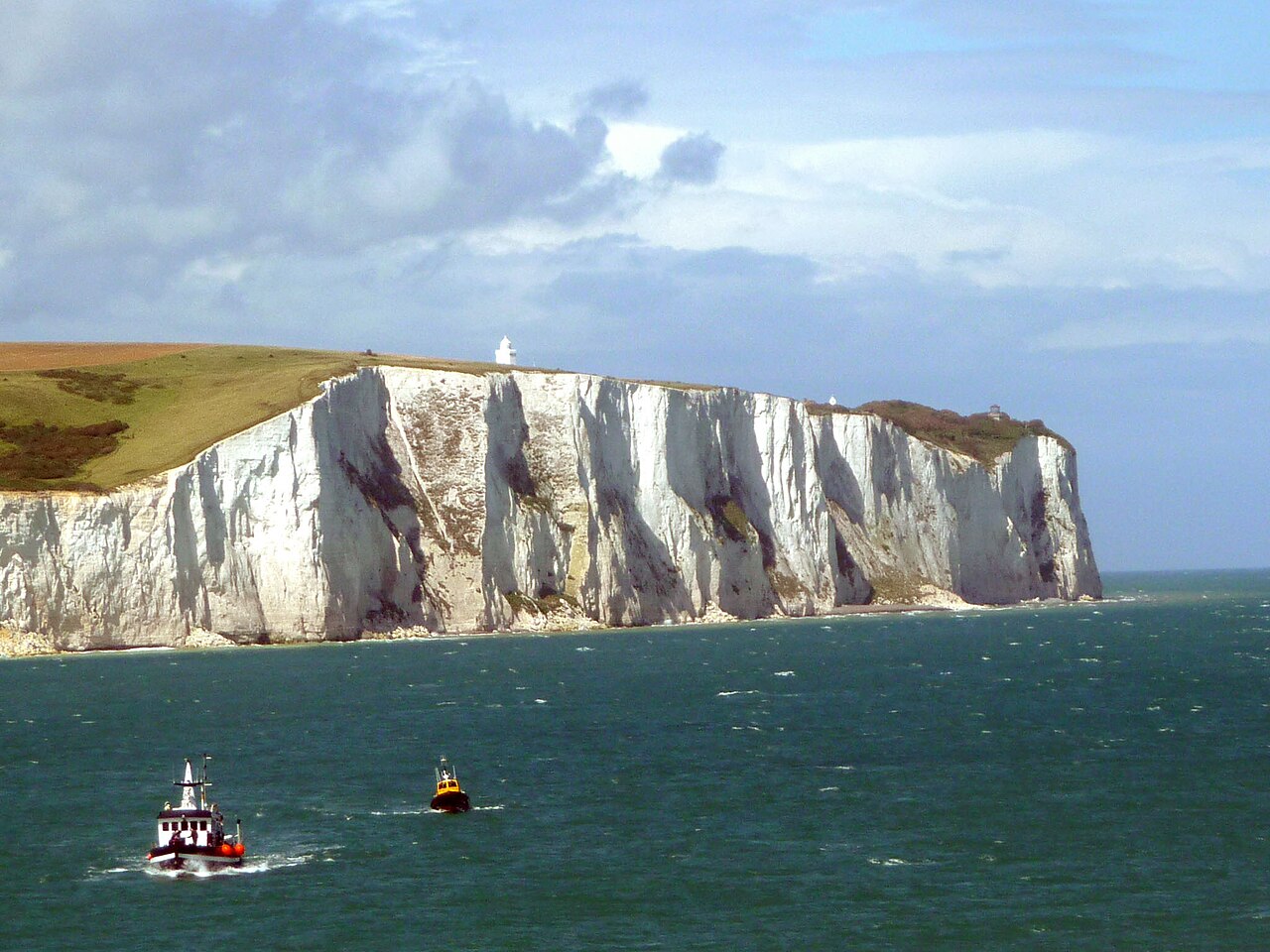
The White Cliffs of Dover form an iconic stretch of coastline above the English Channel near the town of Dover. They present a striking vertical face of pale rock that has become a symbol of the British coastline and a familiar landmark for ships approaching the English shore. The cliffs form part of a longer escarpment known as the North Downs, which runs across southeast England.
Image gallery
10 Images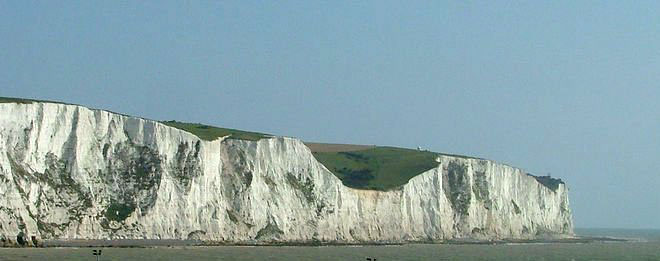




Geology and appearance
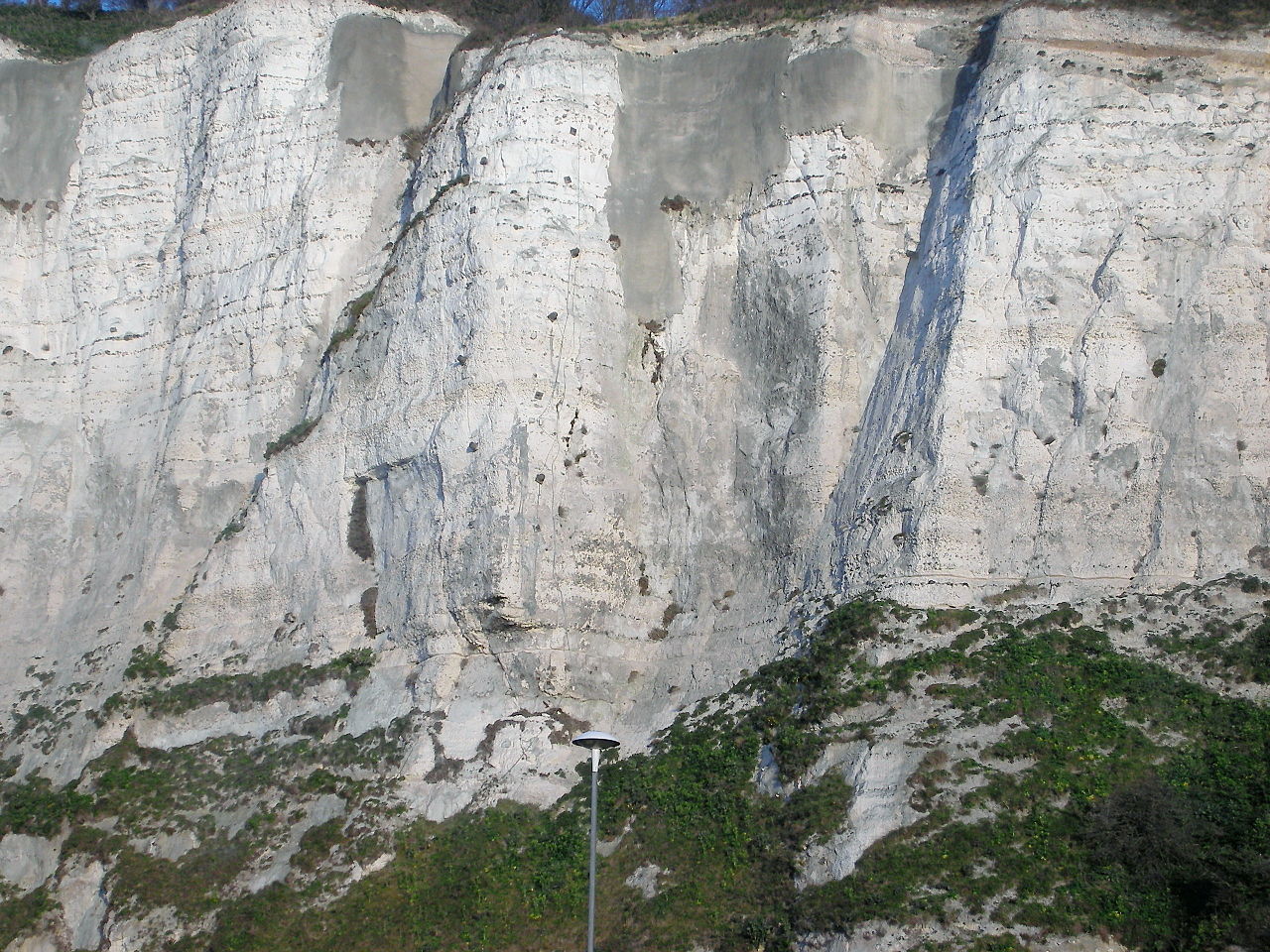
The bright colour of the cliffs comes from extensive layers of chalk, a soft, white, fine-grained limestone laid down in warm shallow seas during the Late Cretaceous. Within the chalk are darker bands and scattered nodules of flint, a harder silica-rich rock that formed after deposition. The combination of these materials, together with the action of waves and weather, gives the cliffs their steep profile and the distinctive contrast between white slopes and darker pebbly beaches below.
Ecology
Chalk cliffs and their adjoining downs support specialized habitats. Thin, well-drained soils over chalk sustain species-rich chalk grassland with low-growing wildflowers and herbs adapted to alkaline conditions. These areas provide food and breeding sites for butterflies and other invertebrates, while the cliff faces and ledges are used by seabirds and raptors for nesting. The fragile nature of these habitats makes them ecologically valuable and sensitive to disturbance.
History and cultural significance
The cliffs have long featured in literature, art and popular culture as a symbol of arrival and departure. During the 20th century they acquired strong wartime associations and are celebrated in song and remembrance as an emblem of homeland and resilience. Nearby historical sites, including fortifications on and behind the cliffs, reflect the strategic importance of this stretch of coast over many centuries.
Visitor access and importance
The White Cliffs are a major tourist destination attracting walkers, birdwatchers and visitors interested in geology and history. Paths along the cliff top offer panoramic views across the Channel and towards the European coastline on clear days. Facilities and routes are managed to balance public access with protection of fragile habitats; sections are cared for by conservation organizations and landowners who work to maintain paths, interpretive signs and safe viewpoints.
Conservation and ongoing change
Like all soft-rock coastlines, the White Cliffs are affected by natural erosion and intermittent rock falls. Their shoreline is gradually changing as the sea undercuts the base of the cliffs and weather weakens exposed faces. That process is part of the cliffs' natural evolution but raises questions about managing visitor safety, preserving habitats and responding to coastal change. The cliffs are often cited among the most prominent coastal features in Britain and are sometimes described as some of the largest chalk cliffs in the country, a distinction that underlines their national prominence and the need for active conservation attention. Notable facts about the cliffs are summarized at local information points and heritage sites.
- Location: near Dover, visible from ferry routes and the Channel.
- Materials: primarily chalk with bands of flint.
- Value: natural, historical and cultural significance.
- Management: maintained for both recreation and habitat protection.
For further practical details on access, guided walks, conservation projects and visitor guidance consult local resources and management bodies that oversee the cliffs and surrounding downs. Dover visitor information and regional conservation bodies provide maps and safety advice for those planning to explore the area. Additional context on the North Downs and the geology of chalk landscapes can be found via regional geology guides and educational materials. North Downs resources, chalk geology summaries and flint formation notes offer accessible introductions for general readers. Historical and cultural interpretations are available through museum displays and interpretive trails that highlight the cliffs' role in national history and culture; see local heritage pages for organized visits and seasonal events. Visitor services list current arrangements, while conservation updates and research summaries can be obtained from environmental organizations and regional authorities. Further reading and official guides provide authoritative, up-to-date information on safety, access and the natural history of the White Cliffs.
Related articles
Author
AlegsaOnline.com White Cliffs of Dover Leandro Alegsa
URL: https://en.alegsaonline.com/art/107802